

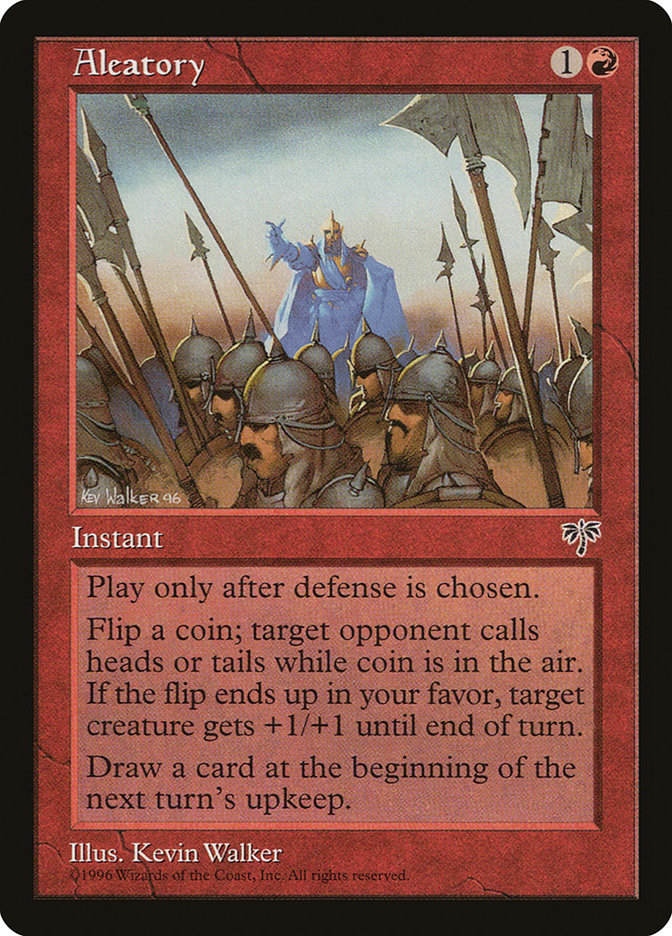
Aleatory is one of those cards players keep asking about. Here is, in plain words, what its official text says, the rulings published by Wizards of the Coast, and the combos players actually run.
Official card text
Cast this spell only during combat after blockers are declared. Flip a coin. If you win the flip, target creature gets +1/+1 until end of turn. Draw a card at the beginning of the next turn's upkeep.
Complete guide
Aleatory is a high-stakes combat trick that relies on the flip of a coin to potentially tip the scales in your favor. This red instant rewards lucky players with a power boost and a delayed card draw to keep the momentum going. Because it requires specific timing, understanding the flow of combat is essential for maximizing its impact.
Restricted Combat Timing
You cannot cast Aleatory whenever you like; it has a specific casting restriction. It can only be cast during the combat phase after the Declare Blockers step has begun. This means you must wait until your opponent has chosen their blockers (or chosen not to block) before you can put this spell on the stack. If a turn has multiple combat phases, you may cast it in any of those phases, provided blockers have already been declared.
Resolution and the Coin Flip
When you cast Aleatory, you must choose a target creature immediately. However, you do not flip the coin yet. The coin flip happens only as the spell resolves. If you win the flip, the targeted creature receives +1/+1 until the end of the turn. Even if you lose the flip and the creature gets no bonus, the second part of the spell—the delayed triggered ability to draw a card—will still be created.
Drawing Your Card
Aleatory provides a 'slow' cantrip effect. Instead of drawing a card immediately upon resolution, the spell sets up a delayed trigger. You will draw a card at the beginning of the very next turn's upkeep. This means if you cast it on your turn, you'll draw during your opponent's upcoming upkeep. If you cast it on their turn, you will draw during your own next upkeep.
Interaction examples
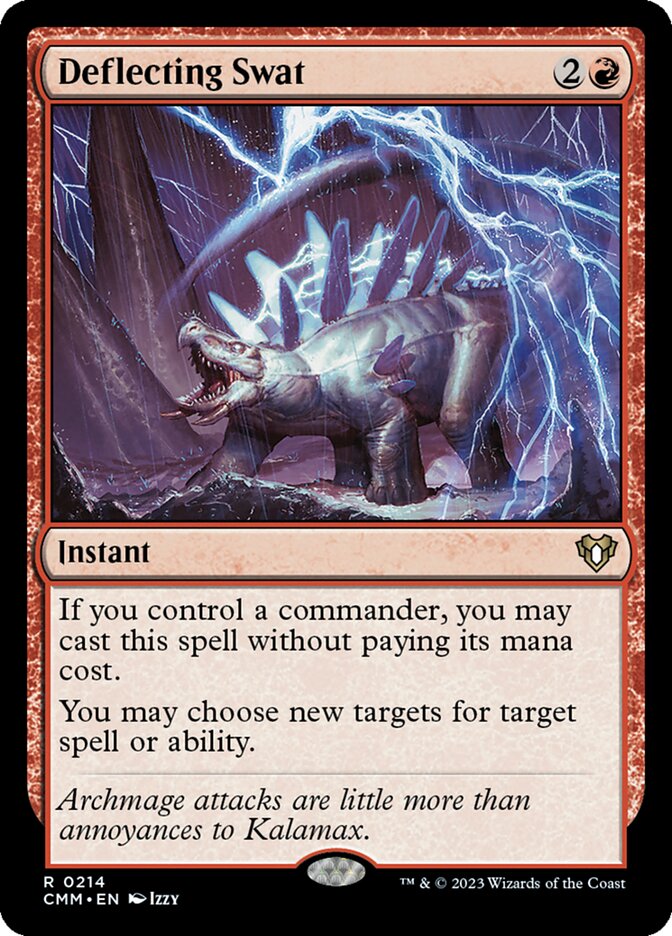 Deflecting Swat
You cast Aleatory targeting your attacking creature. In response, your opponent casts Deflecting Swat. Since the target of Aleatory is chosen upon casting, your opponent can use Deflecting Swat to change that target to one of their own blockers. When Aleatory resolves, the coin is flipped; if the flip is won, your opponent's creature gets the +1/+1 bonus instead of yours.
 Chaos Warp
You target a creature with Aleatory. Before it resolves, your opponent casts Chaos Warp on that same creature, shuffling it into your library. When Aleatory tries to resolve, it finds its only target is missing and is removed from the stack (fizzles). Because the spell does not resolve, you do not flip a coin, and you do not get to draw a card during the next upkeep.
Guide written with AI from the official text and rulings. Official English text prevails.
How it works : Aleatory
Original English text — Wizards of the Coast / Scryfall
- #1· Wizards of the Coast
If a turn has multiple combat phases, this spell can be cast during any of them as long as it’s after the beginning of that phase’s Declare Blockers Step.
No other card is named in this ruling.
- #2· Wizards of the Coast
You pick the target on announcement and flip the coin on resolution.
No other card is named in this ruling.
Legal formats
Commentaires
- Sois le premier à commenter cette carte.
Read next
Meta decks with Aleatory
No archived Top 8 deck with this card yet.