

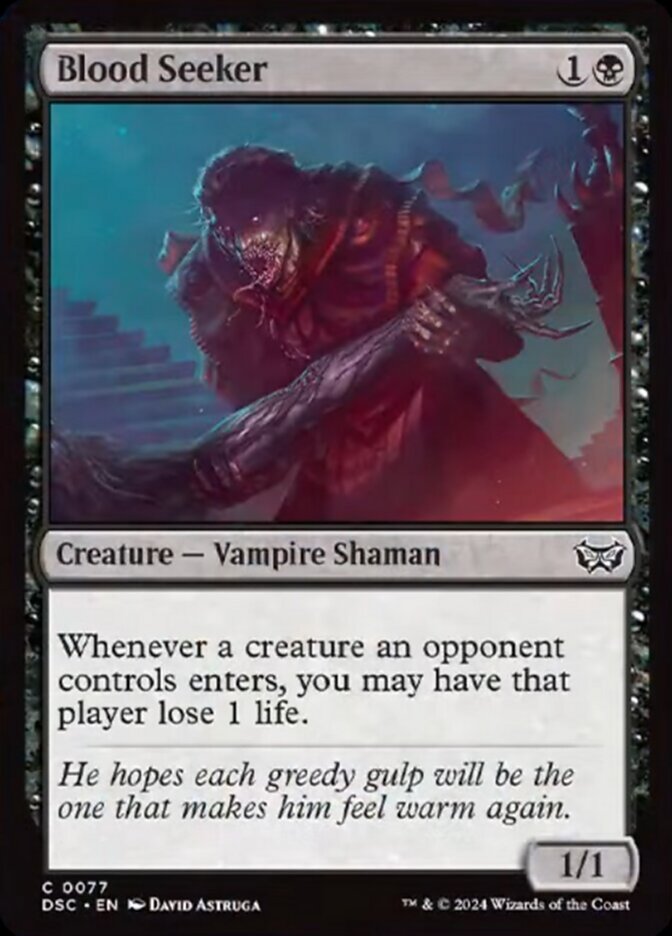
Blood Seeker is one of those cards players keep asking about. Here is, in plain words, what its official text says, the rulings published by Wizards of the Coast, and the combos players actually run.
Official card text
Whenever a creature an opponent controls enters, you may have that player lose 1 life.
Complete guide
Blood Seeker is a classic Vampire Shaman that punishes opponents for expanding their presence on the battlefield. It serves as a persistent drain effect, making every creature your opponent summons a potential threat to their own life total. This card is particularly effective against aggressive decks that rely on playing multiple small creatures to overwhelm the board.
What It Does
Blood Seeker features a triggered ability that monitors the battlefield for any creature entering under an opponent's control. Unlike mandatory effects, this ability is optional, as indicated by the word "may." When the condition is met, you choose whether the player who just played the creature loses 1 life. Note that this is life loss, not damage, which means it bypasses effects that prevent damage but does not trigger abilities that specifically look for damage being dealt.
Step-by-Step Resolution
First, an opponent must have a creature enter the battlefield under their control. This triggers Blood Seeker's ability, which is then placed on the stack. When the ability begins to resolve, you decide whether to apply the effect. If you choose to do so, the opponent who controls the new creature loses 1 life. Because the ability triggers upon entering, the life loss happens after the creature is already on the field.
Common Mistakes
A frequent misconception is that Blood Seeker deals damage. It does not; it causes life loss. This is an important distinction for cards with mechanics like Bloodthirst, which require an opponent to have been dealt damage to activate. Additionally, remember that this ability only triggers for creatures controlled by an opponent. If you play a creature, Blood Seeker does nothing. Finally, as an optional trigger, if you forget to announce the life loss before the game state moves forward significantly, you may miss your chance to use it.
When to Play It
Blood Seeker is most effective in the early game where it can tax an opponent's health for every step of their setup. It is especially potent against 'go-wide' strategies or decks that utilize frequent token generation. In a multiplayer game, it scales well because it monitors all opponents, not just one, allowing you to chip away at everyone's health simultaneously.
Interaction examples
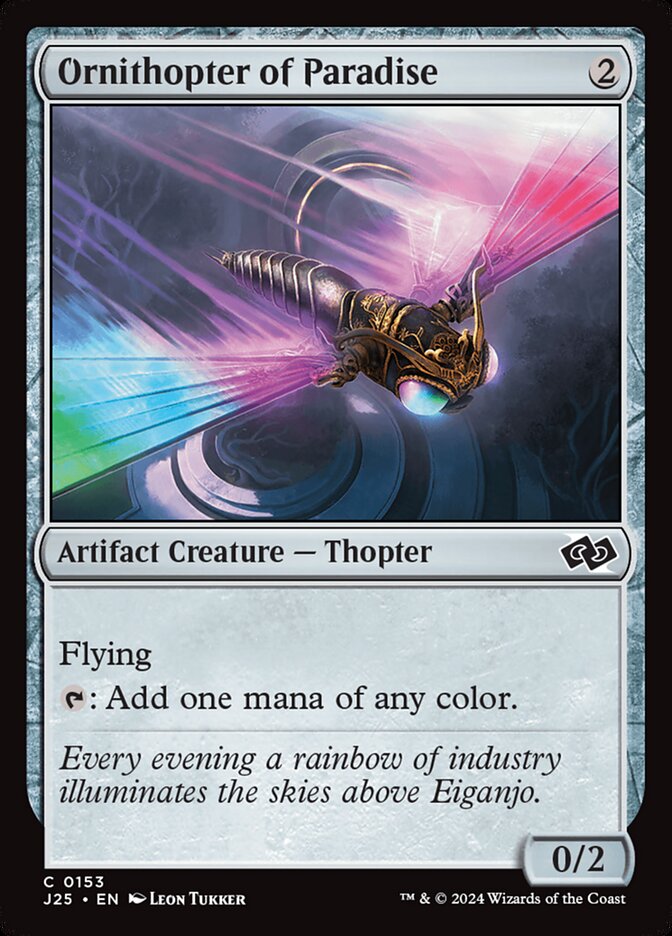 Ornithopter of Paradise
If your opponent casts Ornithopter of Paradise, Blood Seeker's ability triggers the moment the Thopter enters the battlefield. You can then choose to have your opponent lose 1 life, effectively making their mana acceleration come at a cost to their health.
 Blood Artist
With both Blood Seeker and Blood Artist on your side, you create a lose-lose situation. When an opponent's creature enters, Blood Seeker triggers to take 1 life. If that creature later dies, Blood Artist triggers, causing the player to lose another life while you gain 1. This double-down on life loss makes it very difficult for opponents to maintain a board state without losing the game.
Guide written with AI from the official text and rulings. Official English text prevails.
How it works : Blood Seeker
Original English text — Wizards of the Coast / Scryfall
- #1· Wizards of the Coast
Life loss is not the same as damage. Blood Seeker's ability will not cause creatures with bloodthirst to enter with +1/+1 counters.
No other card is named in this ruling.
Legal formats
Commentaires
- Sois le premier à commenter cette carte.
Read next
Meta decks with Blood Seeker
No archived Top 8 deck with this card yet.