

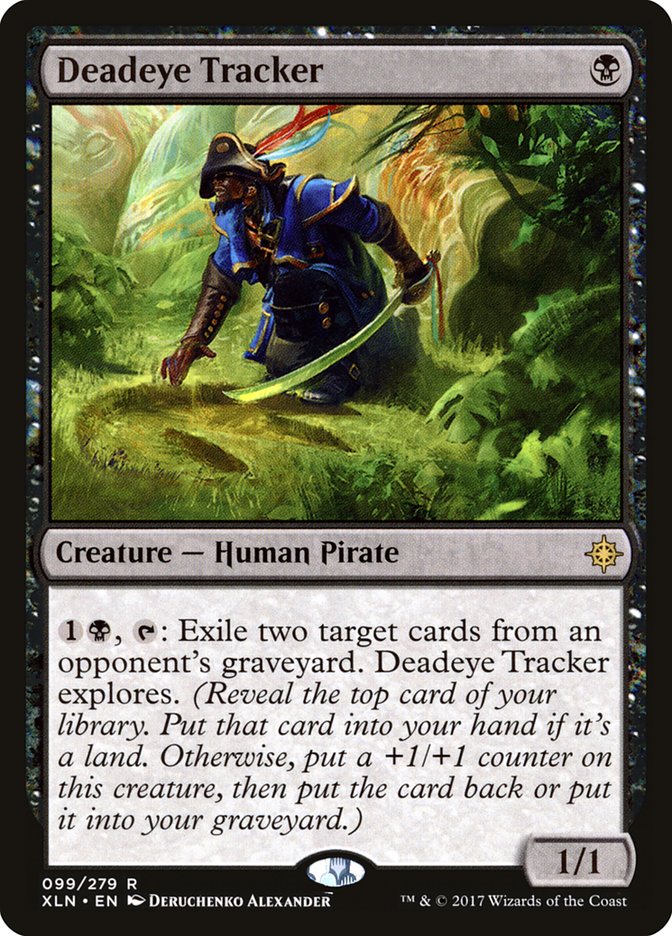
Deadeye Tracker is one of those cards players keep asking about. Here is, in plain words, what its official text says, the rulings published by Wizards of the Coast, and the combos players actually run.
Official card text
,
: Exile two target cards from an opponent's graveyard. This creature explores. (Reveal the top card of your library. Put that card into your hand if it's a land. Otherwise, put a +1/+1 counter on this creature, then put the card back or put it into your graveyard.)

Complete guide
Deadeye Tracker is a versatile utility creature that provides graveyard hate and card selection all in one package. For just two mana and a tap, this Pirate ensures your opponents lose their most dangerous resources while helping you dig for lands or grow your creature.
Exiling and Exploring
When you activate Deadeye Tracker, you must choose two target cards in a single opponent's graveyard. As the ability resolves, those cards are exiled, and then Deadeye Tracker explores. This means you reveal the top card of your library; lands go to your hand, while nonland cards grant a +1/+1 counter and can be left on top or sent to the graveyard.
The Resolution Process
First, the game checks if the targets are still legal. If both targets are gone, the ability fails and the creature does not explore. If at least one target is still legal, it is exiled, and the exploration begins. Even if Deadeye Tracker is removed from the battlefield in response, the ability still resolves: you still exile the cards and reveal your top card, though no +1/+1 counter can be placed on a missing creature.
Common Mistakes
A common error is trying to activate the ability with only one card in an opponent's graveyard; the rules strictly require two targets to activate. Additionally, remember that opponents cannot intervene once the exploration starts. Once you reveal a nonland card, it is too late for an opponent to destroy the Tracker to prevent the +1/+1 counter from being placed.
Strategic Timing
Because Deadeye Tracker requires tapping, it is often best used during an opponent's end step to maximize your mana. However, if you are looking for a specific card or a land drop, using it during your own turn before your combat phase can help grow the Tracker into a more formidable attacker or fix your next draw.
Interaction examples
 Blood Artist
Suppose your opponent has two copies of Blood Artist in their graveyard. You pay {1}{B} and tap Deadeye Tracker, targeting both. Upon resolution, both Blood Artist cards are exiled. You then reveal the top card of your library. If it is a land, you put it in your hand. If it is not, Deadeye Tracker becomes a 2/2 creature and you choose whether to keep the revealed card on top of your library.
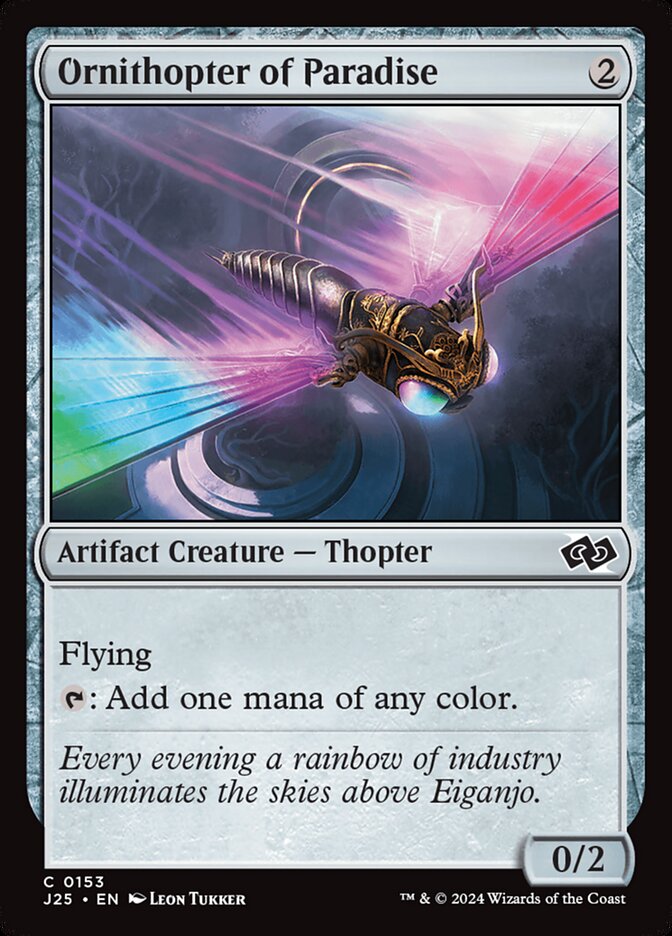 Ornithopter of Paradise
If you need more mana, you can use Ornithopter of Paradise to help pay for Deadeye Tracker's activation cost. If the card you reveal while exploring is a land, it goes straight to your hand, effectively using your opponent's graveyard to ensure you hit your next land drop while the Ornithopter provides the color fixing needed for the activation.
Guide written with AI from the official text and rulings. Official English text prevails.
How it works : Deadeye Tracker
Original English text — Wizards of the Coast / Scryfall
- #1· Wizards of the Coast
If a resolving spell or ability instructs a specific creature to explore but that creature has left the battlefield, the creature still explores. If you reveal a nonland card this way, you won't put a +1/+1 counter on anything, but you may put the revealed card into your graveyard. Effects that trigger "whenever a creature you control explores" trigger if appropriate.
No other card is named in this ruling.
- #2· Wizards of the Coast
If a resolving spell or ability instructs a specific creature to explore but that creature has left the battlefield, the creature still explores. If you reveal a nonland card this way, you won't put a +1/+1 counter on anything, but you may put the revealed card into your graveyard. Effects that trigger "whenever a creature explores" trigger as appropriate.
No other card is named in this ruling.
- #3· Wizards of the Coast
Some spells or abilities might cause a creature to explore multiple times in a row. If you reveal a nonland card when a creature explores and leave it on top of your library, then the creature explores again immediately afterwards, you'll reveal the same card again.
No other card is named in this ruling.
- #4· Wizards of the Coast
In some unusual cases, noncreature permanents may explore. For example, if the creature card returned by Defossilize is somehow not a creature once it's on the battlefield, it can still explore. You'll take all the same actions, and you may end up putting a +1/+1 counter on the permanent. (Note that some effects target a creature, and those effects would still require a legal target to have it explore.)
No other card is named in this ruling.
- #5· Wizards of the Coast
If an ability instructs a creature to explore, its controller reveals the top card of their library. If it's a land card, they'll put it into their hand. Otherwise, they'll put a +1/+1 counter on that creature, then choose to either leave that card on top of their library or put it into their graveyard.
No other card is named in this ruling.
- #6· Wizards of the Coast
Once an ability that causes a creature to explore begins to resolve, no player may take any other actions until it's done. Notably, opponents can't try to remove the exploring creature after you reveal a nonland card but before it receives a counter.
No other card is named in this ruling.
- #7· Wizards of the Coast
If no card is revealed, most likely because that player's library is empty, the exploring creature receives a +1/+1 counter.
No other card is named in this ruling.
- #8· Wizards of the Coast
If one target card is an illegal target by the time Deadeye Tracker's ability resolves, the remaining legal target is exiled and Deadeye Tracker explores.
No other card is named in this ruling.
- #9· Wizards of the Coast
If each target card is an illegal target by the time Deadeye Tracker's ability resolves, the entire ability doesn't resolve. Deadeye Tracker won't explore.
No other card is named in this ruling.
- #10· Wizards of the Coast
You can't activate Deadeye Tracker's ability without targeting two cards in a single opponent's graveyard.
No other card is named in this ruling.
Legal formats
Commentaires
- Sois le premier à commenter cette carte.
Read next
Meta decks with Deadeye Tracker
No archived Top 8 deck with this card yet.