


Eirdu, Carrier of Dawn // Isilu, Carrier of Twilight is one of those cards players keep asking about. Here is, in plain words, what its official text says, the rulings published by Wizards of the Coast, and the combos players actually run.
Official card text
Flying, lifelink Creature spells you cast have convoke. (Your creatures can help cast those spells. Each creature you tap while casting a creature spell pays foror one mana of that creature's color.) At the beginning of your first main phase, you may pay
. If you do, transform Eirdu. Flying, lifelink Each other nontoken creature you control has persist. (When it dies, if it had no -1/-1 counters on it, return it to the battlefield under its owner's control with a -1/-1 counter on it.) At the beginning of your first main phase, you may pay
. If you do, transform Isilu.
Complete guide
Eirdu and Isilu represent the eternal dance of dawn and twilight, shifting your strategy between resource acceleration and unyielding resilience. As a dual-faced Elemental God, this card provides powerful tools to build a massive board and ensure your creatures never truly stay down.
Dual Nature of the God
Eirdu, Carrier of Dawn enters as a flying lifelinker that grants all your creature spells convoke, allowing your board to serve as mana sources. At the start of your first main phase, you can pay {B} to transform it into Isilu, Carrier of Twilight. Isilu keeps the flying and lifelink but swaps convoke for a defensive aura, granting your other nontoken creatures persist. You can pay {W} during your next first main phase to transform it back to the dawn side.
Understanding Convoke and Persist
When casting creature spells with Eirdu on the field, you can tap untapped creatures to pay for {1} or one mana of that creature's color. This works even if the creature has summoning sickness. On the flip side, Isilu grants persist: when a nontoken creature dies without a -1/-1 counter, it returns with one. Note that if a creature dies while having both a +1/+1 counter and a -1/-1 counter (before state-based actions can remove them), persist will not trigger because the game checks the creature's state as it last existed on the battlefield.
Timing and State-Based Actions
Transforming occurs via a triggered ability at the start of your first main phase. If an effect causes this to trigger twice, paying the cost for the second resolution won't do anything because the permanent has already transformed. Additionally, remember that while Isilu is active, the persist ability only looks at the card in the graveyard; if the card is exiled from the graveyard before the persist trigger resolves, it will not return to the battlefield.
Strategic Deployment
Use Eirdu's dawn form early to ramp out heavy hitters by tapping smaller utility creatures. Once your board is established, transform into Isilu during your main phase to protect your army from board wipes. Because the transformation happens in the first main phase, you must decide whether you want the mana advantage of convoke or the protection of persist before you take most of your actions for the turn.
Interaction examples
 Solemn Simulacrum
With Isilu, Carrier of Twilight on the battlefield, you cast Solemn Simulacrum. If the Simulacrum dies, persist triggers. It returns to the battlefield with a -1/-1 counter, allowing you to search for another basic land. When it dies again (now having a -1/-1 counter), persist will not trigger, but you still get to draw a card from its own death ability.
 Roaming Throne
If you control Roaming Throne and named 'Elemental', Eirdu's transformation ability triggers twice at the start of your first main phase. You could pay {B} for the first trigger to transform Eirdu into Isilu. When the second trigger resolves, even if you pay {B} again, the permanent will not transform back to Eirdu because it already transformed during the resolution of the first trigger.
With Eirdu, Carrier of Dawn on the battlefield, your Roaming Throne spell has convoke. You can tap Eirdu (paying for {W} or {1}) and other creatures to reduce the cost of Roaming Throne. This allows you to deploy the Throne much earlier than its ward cost would normally suggest, setting up your triggered ability synergies.
Guide written with AI from the official text and rulings. Official English text prevails.
How it works : Eirdu, Carrier of Dawn // Isilu, Carrier of Twilight
Original English text — Wizards of the Coast / Scryfall
- #1· Wizards of the Coast
You can tap any untapped creature you control to convoke a spell, even one you haven't controlled continuously since the beginning of your most recent turn.
No other card is named in this ruling.
- #2· Wizards of the Coast
If a creature with persist that has +1/+1 counters on it receives enough -1/-1 counters to cause it to be destroyed by lethal damage or put into its owner's graveyard for having 0 or less toughness, persist won't trigger and the card won't return to the battlefield. That's because persist checks the creature as it last existed on the battlefield, and it still had -1/-1 counters on it at that point.
No other card is named in this ruling.
- #3· Wizards of the Coast
In some rare cases, this permanent might transform while its triggered ability that allows you to pay mana to transform it is still on the stack. (For example, another effect might cause that ability to trigger an additional time.) In such a case, even if you pay mana as the triggered ability resolves, this permanent won't transform because it already transformed while the triggered ability was on the stack.
No other card is named in this ruling.
- #4· Wizards of the Coast
A nonmodal double-faced card enters with its front face up by default, unless a spell or ability instructs you to put it onto the battlefield transformed or allows you to cast it transformed, in which case it enters with its back face up.
No other card is named in this ruling.
- #5· Wizards of the Coast
Once persist returns the creature, it's considered a new object with no relation to the object that it was. Auras that were attached to it won't return to the battlefield. Equipment that was attached to it will remain unattached. Any counters that were on it won't be put on the new creature.
No other card is named in this ruling.
- #6· Wizards of the Coast
In the Commander variant, a double-faced card's color identity is determined by the mana costs and mana symbols in the rules text of both faces combined. If either face has a color indicator or basic land type, those are also considered. For example, Oko, Lorwyn Liege's color identity is green and blue, since its front face is blue, its rules text contains a green mana symbol, and its back face has a green color indicator as well as a blue mana symbol in its rules text.
No other card is named in this ruling.
- #7· Wizards of the Coast
A token that is created as a copy of a double-faced permanent or a double-faced card in another zone is a double-faced token. It will have both the front face and back face of whatever object it's copying. If it's copying a double-faced permanent whose back face is up, the token will enter with its back face up. It can transform if instructed to do so.
No other card is named in this ruling.
- #8· Wizards of the Coast
The back face of a nonmodal double-faced card usually has a color indicator that defines its color.
No other card is named in this ruling.
- #9· Wizards of the Coast
If a creature has +1/+1 counters and -1/-1 counters on it, state-based actions remove the same number of each so that it has only one kind of those counters on it. A creature's persist ability can bring it back again if its -1/-1 counters are removed this way.
No other card is named in this ruling.
- #10· Wizards of the Coast
If you are instructed to put a card that isn't a double-faced card onto the battlefield transformed, it will not enter at all.
No other card is named in this ruling.
- #11· Wizards of the Coast
Each nonmodal double-faced card in this release is cast face up. In every zone other than the battlefield, consider only the characteristics of its front face. If it is on the battlefield, consider only the characteristics of the face that's up; the other face's characteristics are ignored.
No other card is named in this ruling.
- #12· Wizards of the Coast
When calculating a spell's total cost, include any alternative costs, additional costs, or anything else that increases or reduces the cost to cast the spell. Convoke applies after the total cost is calculated. Convoke doesn't change a spell's mana cost or mana value.
No other card is named in this ruling.
- #13· Wizards of the Coast
If a card with persist is removed from the graveyard after it dies but before the triggered ability resolves, it won't be returned to the battlefield.
No other card is named in this ruling.
- #14· Wizards of the Coast
The mana value of a nonmodal double-faced card is the mana value of its front face, no matter which face is up.
No other card is named in this ruling.
- #15· Wizards of the Coast
If a creature you control has a mana ability with
 in the cost, activating that ability while casting a spell with convoke will result in the creature being tapped before you pay the spell's costs. You won't be able to tap it again for convoke. Similarly, if you sacrifice a creature to activate a mana ability while casting a spell with convoke, that creature won't be on the battlefield when you pay the spell's costs, so you won't be able to tap it for convoke.
No other card is named in this ruling.
- #16· Wizards of the Coast
If you sacrifice Eirdu while casting a creature spell (to activate a mana ability, for example), the spell won't have convoke when you pay its costs unless it has convoke some other way.
No other card is named in this ruling.
- #17· Wizards of the Coast
Each face of a nonmodal double-faced card has its own set of characteristics: name, types, subtypes, abilities, and so on. While a double-faced permanent is on the battlefield, consider only the characteristics of the face that's currently up. The other set of characteristics is ignored.
No other card is named in this ruling.
- #18· Wizards of the Coast
Tapping an untapped creature that's attacking or blocking to convoke a spell won't cause that creature to stop attacking or blocking.
No other card is named in this ruling.
Popular combos
Real combos played by the community, sorted by popularity.


Eirdu, Carrier of Dawn // Isilu, Carrier of Twilight + Luminous Broodmoth + Viscera Seer
- 1Activate Viscera Seer by sacrificing another nontoken creature that doesn't have flying.
- 2When the creature dies, Luminous Broodmoth triggers, returning the creature from your graveyard to the battlefield with a flying counter on it.
- 3Activate Viscera Seer by sacrificing the creature with a flying counter on it.
- 4When the creature dies, its persist ability triggers, returning it from your graveyard to the battlefield with a -1/-1 counter on it.
- 5Resolve the Viscera Seer abilities from step 1 and 3.
- 6Repeat.
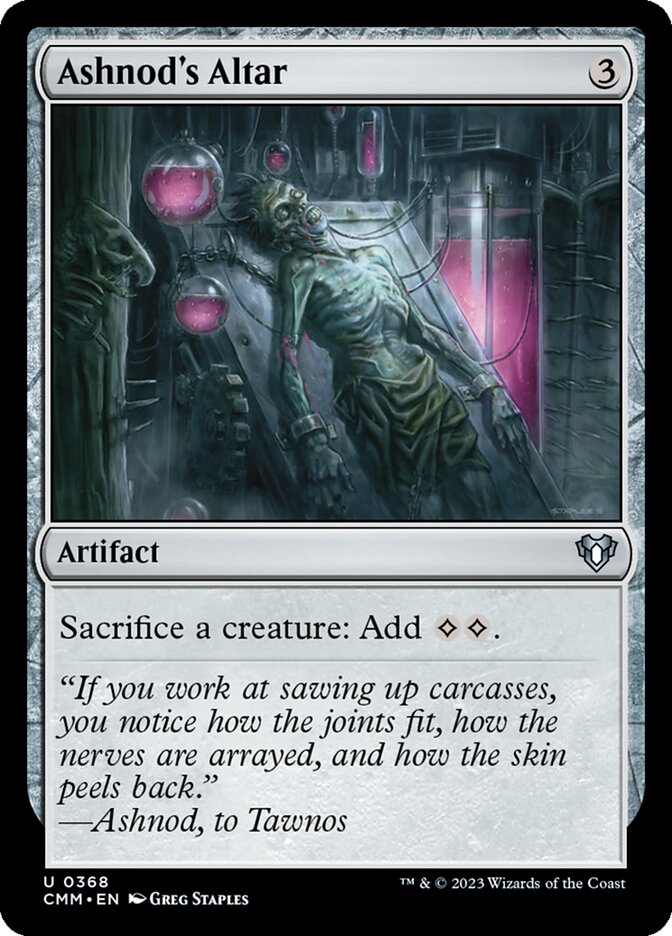
Eirdu, Carrier of Dawn // Isilu, Carrier of Twilight + Luminous Broodmoth + Ashnod's Altar
- 1Activate Ashnod's Altar by sacrificing another nontoken creature that doesn't have flying.
- 2When the creature dies, Luminous Broodmoth triggers, returning the creature from your graveyard to the battlefield with a flying counter on it.
- 3Activate Ashnod's Altar by sacrificing the creature with a flying counter on it.
- 4When the creature dies, its persist ability triggers, returning it from your graveyard to the battlefield with a -1/-1 counter on it.
- 5Repeat.

Eirdu, Carrier of Dawn // Isilu, Carrier of Twilight + Viscera Seer + Marionette Apprentice
- 1Activate Viscera Seer by sacrificing Marionette Apprentice.
- 2When Marionette Apprentice dies, its persist ability triggers, returning it from your graveyard to the battlefield with a -1/-1 counter on it.
- 3When Marionette Apprentice enters, its fabricate ability triggers, putting a +1/+1 counter on it.
- 4Resolve the Viscera Seer ability.
- 5Repeat.

Eirdu, Carrier of Dawn // Isilu, Carrier of Twilight + Mikaeus, the Unhallowed + Ashnod's Altar
- 1Activate Ashnod's Altar by sacrificing another nontoken non-Human creature
- 2When the creature dies, its undying ability triggers, returning the creature from your graveyard to the battlefield with a +1/+1 counter on it.
- 3Activate Ashnod's Altar by sacrificing the creature with a +1/+1 counter on it.
- 4When the creature dies, its persist ability triggers, returning it from your graveyard to the battlefield with a -1/-1 counter on it.
- 5Repeat.

Eirdu, Carrier of Dawn // Isilu, Carrier of Twilight + Vizier of Remedies + Viscera Seer
- 1Activate Viscera Seer by sacrificing it.
- 2When Viscera Seer dies, its persist ability triggers, returning it from your graveyard to the battlefield without a -1/-1 counter on it due to Vizier of Remedies.
- 3Resolve the Viscera Seer ability.
- 4Repeat.

Eirdu, Carrier of Dawn // Isilu, Carrier of Twilight + Luminous Broodmoth + Umbral Collar Zealot
- 1Activate Umbral Collar Zealot by sacrificing another nontoken creature that doesn't have flying.
- 2When the creature dies, Luminous Broodmoth triggers, returning the creature from your graveyard to the battlefield with a flying counter on it.
- 3Activate Umbral Collar Zealot by sacrificing the creature with a flying counter on it.
- 4When the creature dies, its persist ability triggers, returning it from your graveyard to the battlefield with a -1/-1 counter on it.
- 5Resolve the Umbral Collar Zealot abilities from step 1 and 3.
- 6Repeat.
Eirdu, Carrier of Dawn // Isilu, Carrier of Twilight + Ashnod's Altar + Marionette Apprentice
- 1Activate Ashnod's Altar by sacrificing Marionette Apprentice.
- 2When Marionette Apprentice dies, its persist ability triggers, returning it from your graveyard to the battlefield with a -1/-1 counter on it.
- 3When Marionette Apprentice enters, its fabricate ability triggers, putting a +1/+1 counter on it.
- 4Repeat.
Eirdu, Carrier of Dawn // Isilu, Carrier of Twilight + Mikaeus, the Unhallowed + Viscera Seer
- 1Activate Viscera Seer by sacrificing another nontoken non-Human creature
- 2When the creature dies, its undying ability triggers, returning the creature from your graveyard to the battlefield with a +1/+1 counter on it.
- 3Activate Viscera Seer by sacrificing the creature with a +1/+1 counter on it.
- 4When the creature dies, its persist ability triggers, returning it from your graveyard to the battlefield with a -1/-1 counter on it.
- 5Resolve the Viscera Seer abilities from step 1 and 3.
- 6Repeat.
Legal formats
Commentaires
- Sois le premier à commenter cette carte.
Read next
Meta decks with Eirdu, Carrier of Dawn // Isilu, Carrier of Twilight
No archived Top 8 deck with this card yet.