

Kellan, Inquisitive Prodigy // Tail the Suspect is one of those cards players keep asking about. Here is, in plain words, what its official text says, the rulings published by Wizards of the Coast, and the combos players actually run.
Official card text
Flying, vigilance Whenever Kellan attacks, destroy up to one target artifact. If you controlled that permanent, draw a card. Investigate. You may play an additional land this turn. (Then exile this card. You may cast the creature later from exile.)
Complete guide
Kellan, Inquisitive Prodigy brings a versatile blend of ramp and removal to the table, perfectly suited for players who love to solve puzzles on the battlefield. Whether you are using his Adventure side to jump ahead in resources or flying in for the attack, Kellan ensures you always have the upper hand in card advantage. This Legendary Human Faerie Detective is a powerhouse in any Simic-based strategy that values efficiency and flexibility.
Dual Roles: Sorcery and Creature
Kellan begins his journey with Tail the Suspect, an Adventure sorcery that grants you a Clue token through investigation and allows for an extra land play. Once this resolves, Kellan enters exile, waiting for you to cast his creature form. As a creature, Kellan is a 3/4 with Flying and Vigilance, making him an excellent attacker and blocker who provides ongoing artifact removal every time he swings into combat.
Step-by-Step Resolution
When you cast Tail the Suspect, you first create a Clue token. Then, a continuous effect is created that allows you to play an additional land during your current turn. After the sorcery finishes, the card is exiled as part of the Adventure mechanic. Later, when Kellan attacks, his triggered ability goes on the stack. You choose up to one target artifact. As the ability resolves, the artifact is destroyed; if you were the one who controlled that artifact, you immediately draw a card.
Common Pitfalls
A common mistake involves Indestructible artifacts. If you target your own Indestructible artifact, it won't be destroyed, but you still draw a card because the ability only checks if you controlled the target, not if it successfully reached the graveyard. Also, remember that playing an extra land is an action you must take during your main phase; casting the Adventure does not automatically put a land from your hand onto the battlefield.
Strategic Timing
Cast Tail the Suspect early in the game when you have extra lands in hand to maximize your mana development. Once Kellan is on the battlefield, look for targets that provide 'death triggers.' By destroying your own artifacts that want to die, you effectively turn Kellan's attack trigger into a double draw engine, clearing the way while keeping your hand full of answers.
Interaction examples
 Kellan, Inquisitive Prodigy // Tail the Suspect
On turn two, you cast Tail the Suspect. You create a Clue token and gain the ability to play a second land for the turn. You play a Forest, then use your extra land slot to play an Island. You now have three mana available for turn three, with Kellan waiting in exile to be cast as a creature.
 Solemn Simulacrum
You have Solemn Simulacrum on the battlefield and attack with Kellan. You target your own Simulacrum with Kellan's ability. The Simulacrum is destroyed, triggering its own ability to draw a card. Simultaneously, Kellan's ability notes you controlled the destroyed artifact, letting you draw a second card. You just drew two cards and cleared space for a fresh play!
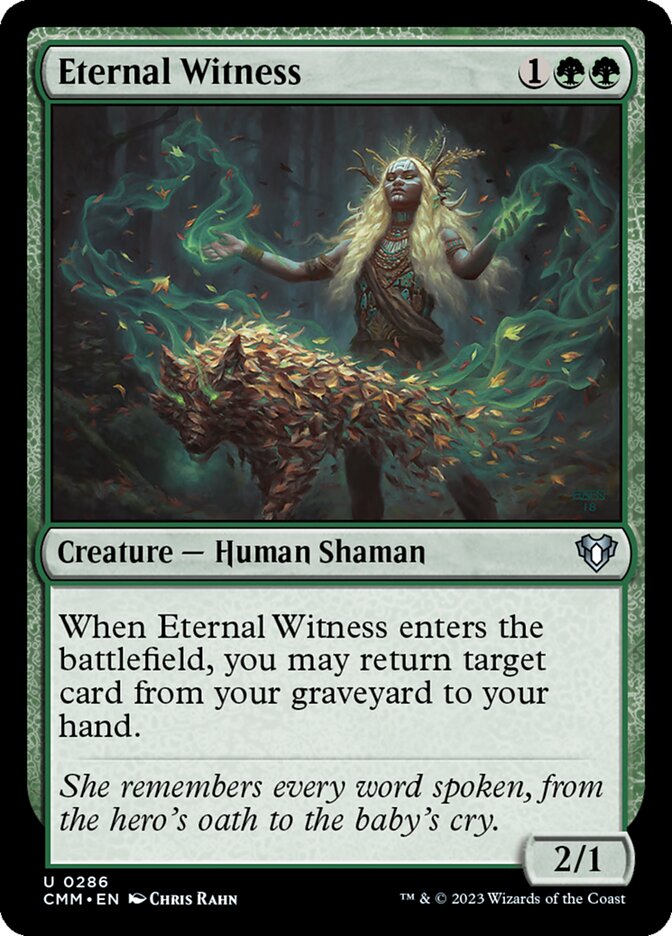 Eternal Witness
If Kellan is put into your graveyard from the battlefield, you can cast Eternal Witness to return him to your hand. This allows you to cast Tail the Suspect again, gaining another Clue and another extra land drop, before eventually re-casting Kellan as a creature to resume your aerial assault.
Guide written with AI from the official text and rulings. Official English text prevails.
How it works : Kellan, Inquisitive Prodigy // Tail the Suspect
Original English text — Wizards of the Coast / Scryfall
- #1· Wizards of the Coast
If the artifact you target with Kellan, Inquisitive Prodigy's triggered ability isn't destroyed (perhaps because it's indestructible), you will still draw a card as long as you control the artifact.
No other card is named in this ruling.
- #2· Wizards of the Coast
The effect of Tail the Suspect that allows you to play an additional land is cumulative with similar effects. For example, on a turn where you cast two Tail the Suspects, you'll be able to play three lands.
No other card is named in this ruling.
- #3· Wizards of the Coast
Clue is an artifact type. Even though it appears on some cards with other permanent types, it's never a creature type, a land type, or anything but an artifact type.
Card named in this ruling
- #4· Wizards of the Coast
If an effect refers to a Clue, it means any Clue artifact, not just a Clue artifact token. For example, you can sacrifice Wrench to pay for Alquist Proft, Master Sleuth's activated ability.
Card named in this ruling
- #5· Wizards of the Coast
You can't sacrifice a Clue to pay multiple costs. For example, you can't sacrifice a Clue token to activate its own ability and also to activate Alquist Proft, Master Sleuth's ability.
Card named in this ruling
- #6· Wizards of the Coast
Some spells and abilities that investigate may require targets. If each target chosen is an illegal target as that spell or ability tries to resolve, it won't resolve. You won't create any Clue tokens.
Card named in this ruling
- #7· Wizards of the Coast
Some abilities trigger "whenever you sacrifice a Clue". Those abilities trigger whenever you sacrifice a Clue for any reason, not just to activate a Clue's activated ability.
Card named in this ruling

Related cards and tokens
Legal formats
Commentaires
- Sois le premier à commenter cette carte.
Read next
Meta decks with Kellan, Inquisitive Prodigy // Tail the Suspect
