


Liability is one of those cards players keep asking about. Here is, in plain words, what its official text says, the rulings published by Wizards of the Coast, and the combos players actually run.
Official card text
Whenever a nontoken permanent is put into a player's graveyard from the battlefield, that player loses 1 life.
Complete guide
Liability is a punishing Black enchantment that transforms the natural cycle of the game into a painful ordeal for every player. By taxing the movement of cards from the battlefield to the graveyard, it ensures that every destroyed creature or sacrificed permanent comes with a blood price. This card is a staple for attrition-based strategies that want to punish opponents for playing the game.
A Tax on Mortality
Liability features a triggered ability that monitors the status of all nontoken permanents on the battlefield. Unlike many similar effects that only care about creatures, Liability triggers when any nontoken permanent—including lands, enchantments, and artifacts—is moved from the battlefield to its owner's graveyard. It is important to note that this is a global effect affecting all players, including the controller of Liability.
The Anatomy of a Trigger
The ability triggers the moment a nontoken permanent is put into a graveyard. First, the game checks if the object was a permanent on the battlefield and not a token. Second, it confirms the destination is the graveyard. If these conditions are met, the trigger goes on the stack. When it resolves, the player who owned that permanent loses 1 life. This life loss does not target, so it bypasses Hexproof or Shroud on players.
Common Mistakes to Avoid
A frequent error is trying to trigger Liability with tokens. Since tokens are not 'cards' and the text explicitly specifies 'nontoken,' the creation and subsequent destruction of Treasure or Creature tokens will not cause life loss. Additionally, Liability does not trigger if a permanent is exiled or returned to a player's hand, as the card must specifically reach the graveyard to satisfy the condition.
When to Deploy Liability
Liability is most effective in decks that force sacrifices or utilize board wipes. Because it affects all players, you should play it when you have a higher life total than your opponents or when your deck is designed to recur permanents from the graveyard rather than letting them sit there. It acts as a clock that speeds up the game, punishing fetch lands, discarded permanents, and combat trades alike.
Interaction examples
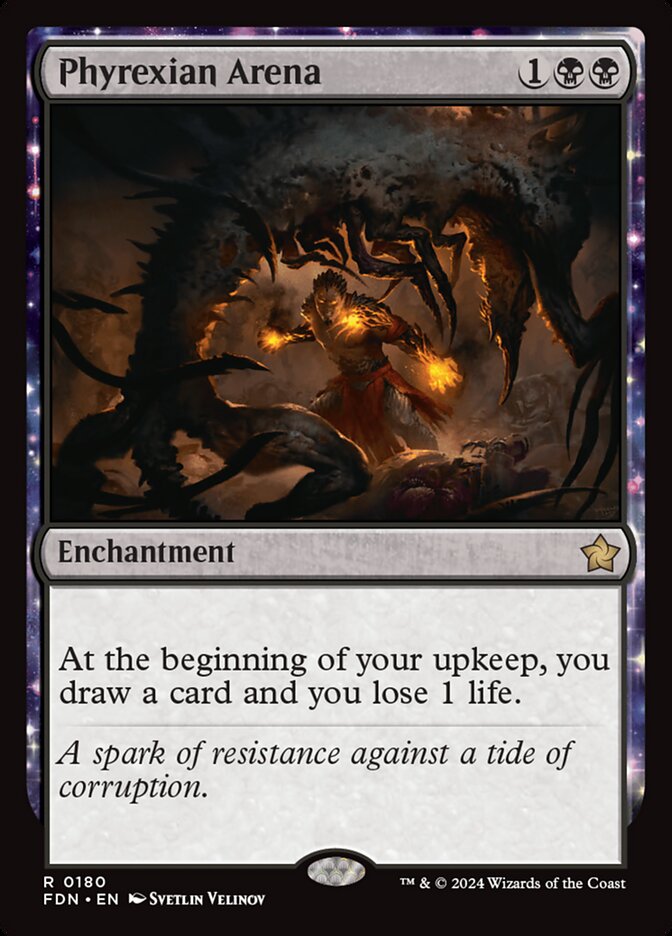 Phyrexian Arena
If you control both permanents and an opponent destroys your Phyrexian Arena with a spell like Disenchant, Liability sees a nontoken enchantment move from the battlefield to your graveyard. You will lose 1 life from the Liability trigger in addition to any life lost during your upkeep from the Arena's own effect.
 Black Market Connections
If you use Black Market Connections to create a Treasure token or a Shapeshifter token, and those tokens are later destroyed or used, Liability will NOT trigger. Because Liability specifically looks for 'nontoken' permanents, your token-heavy strategies remain safe from this enchantment's tax, while your opponents' traditional cards remain vulnerable.
Guide written with AI from the official text and rulings. Official English text prevails.
How it works : Liability
Original English text — Wizards of the Coast / Scryfall
No additional ruling has been published for this card.
Legal formats
Commentaires
- Sois le premier à commenter cette carte.
Read next
Meta decks with Liability
No archived Top 8 deck with this card yet.