


Observed Stasis is one of those cards players keep asking about. Here is, in plain words, what its official text says, the rulings published by Wizards of the Coast, and the combos players actually run.
Official card text
Flash Enchant creature an opponent controls When this Aura enters, remove enchanted creature from combat. Then draw a card for each tapped creature its controller controls. Enchanted creature loses all abilities and can't attack or block.
Complete guide
Observed Stasis is a versatile blue Aura that provides both board control and significant card advantage. By stripping a creature of its utility and punishing opponents for committing to an attack, it serves as a powerful disruptive tool in any control strategy.
What Observed Stasis Does
Observed Stasis is a four-mana Aura with Flash that targets a creature an opponent controls. Upon entering the battlefield, it removes that creature from combat and rewards you with card draws based on how many tapped creatures that player currently has. While the creature remains enchanted, it loses all abilities and is completely barred from attacking or blocking, effectively turning a major threat into a vanilla game piece.
Step-by-Step Resolution
When you cast Observed Stasis, you choose a creature an opponent controls as the target. Once it resolves and enters the battlefield, the 'enters' ability triggers. First, if the creature was attacking or blocking, it is immediately removed from combat (though it does not untap). Next, you count the number of tapped creatures that opponent controls and draw that many cards. Finally, the continuous effect of the Aura applies, suppressing all of the creature's abilities and preventing it from participating in future combat.
Common Mistakes to Avoid
A common misconception is that removing a creature from combat automatically untaps it; per official rulings, the creature stays tapped if it was already in that state. Additionally, remember that the card draw only counts creatures controlled by the enchanted creature's controller. If you enchant a creature in a multiplayer game, you won't draw cards for tapped creatures owned by your other opponents.
When to Play It
Because this card has Flash, the optimal time to play it is during your opponent's declare attackers step. By waiting until they have committed their creatures to an attack, you maximize the number of tapped creatures they control, thereby maximizing your card draw. It also serves as an effective emergency response to a creature with a dangerous activated or static ability.
Interaction examples
 Propaganda
Your opponent pays the cost for Propaganda and attacks with three creatures. You cast Observed Stasis targeting one of them. The creature is removed from combat and loses its abilities. Since the opponent has at least three tapped creatures from the attack, you draw three cards, successfully shrinking their offensive while refilling your hand.
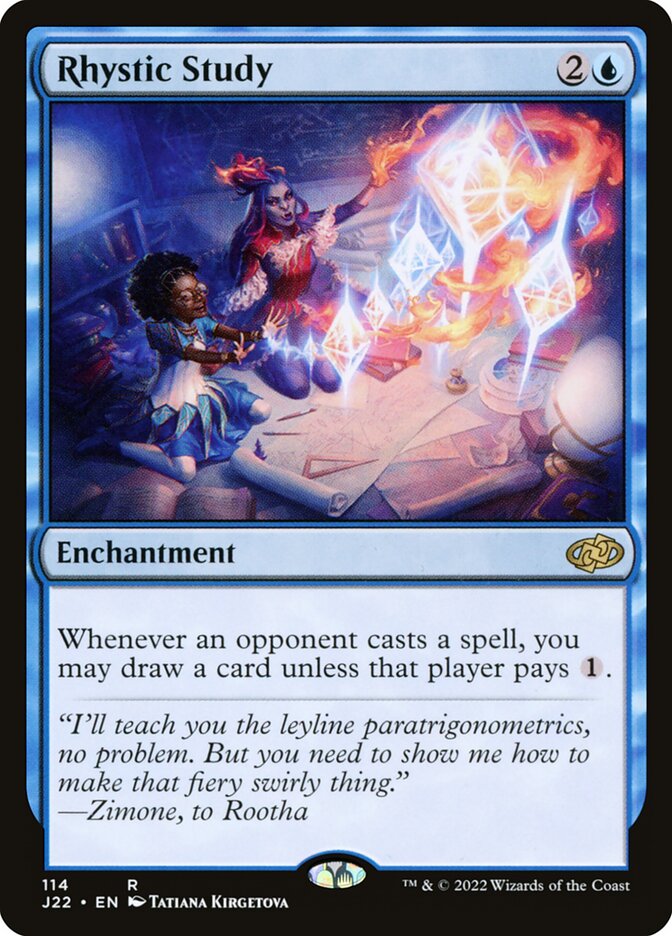 Rhystic Study
You have Rhystic Study on board to tax your opponent's spells. On their turn, after they tap creatures to cast a spell or attack, you flash in Observed Stasis. Not only do you shut down their best creature, but the burst of card draw from the tapped creatures helps you find more countermagic or taxing effects to pair with Rhystic Study.
If an opponent controls a creature with a powerful static ability that doesn't require attacking, you can cast Observed Stasis at the end of their turn. Even if they only have one tapped creature, the primary benefit here is the 'loses all abilities' clause, which permanently silences that creature's impact on the game state.
Guide written with AI from the official text and rulings. Official English text prevails.
How it works : Observed Stasis
Original English text — Wizards of the Coast / Scryfall
- #1· Wizards of the Coast
Removing the enchanted creature from combat doesn't cause it to untap.
No other card is named in this ruling.
Legal formats
Commentaires
- Sois le premier à commenter cette carte.
Read next
Meta decks with Observed Stasis
No archived Top 8 deck with this card yet.