


Ripples of Potential is one of those cards players keep asking about. Here is, in plain words, what its official text says, the rulings published by Wizards of the Coast, and the combos players actually run.
Official card text
Proliferate, then choose any number of permanents you control that had a counter put on them this way. Those permanents phase out. (To proliferate, choose any number of permanents and/or players, then give each another counter of each kind already there. Treat phased-out permanents and anything attached to them as though they don't exist until their controller's next turn.)
Complete guide
Ripples of Potential is a versatile blue instant that combines the growth of your board with a powerful defensive mechanism. By using the proliferate mechanic, it allows you to strengthen your permanents while simultaneously shielding them from harm by phasing them out. It is a unique way to turn a resource-building action into a total evasion strategy.
What It Does
Ripples of Potential performs two actions in sequence: first, you proliferate. This means you choose any number of players and/or permanents that already have counters and give each another counter of every kind they already have. Second, you choose any number of your own permanents that received a counter during that specific proliferation step and phase them out.
How It Resolves
When the spell resolves, you start by choosing the permanents or players to proliferate. You can choose your own permanents with +1/+1 counters or even an opponent's permanent with a negative counter. Once counters are placed, you select which of your permanents that just grew will phase out. Phased-out permanents are treated as though they don't exist; they cannot be targeted, they don't take damage, and their static abilities stop functioning until they phase back in at the start of your next untap step.
Common Mistakes
A common error is trying to phase out a permanent that didn't receive a counter from this specific spell. If a permanent already had a counter but you didn't choose to proliferate it, or if it couldn't receive a counter, it cannot phase out. Also, remember that phasing out does not trigger 'leaves the battlefield' abilities, nor does phasing in trigger 'enters the battlefield' effects. Tokens that phase out will still phase back in normally.
When to Play It
This card is best used in response to a board wipe or targeted removal. Since it is an instant, you can wait for your opponent to cast a spell like a board clear, proliferate your board to make your creatures stronger, and then phase them out so the removal spell has no effect on them. It is also excellent for securing the win by proliferating poison or loyalty counters before protecting your most valuable pieces.
Interaction examples
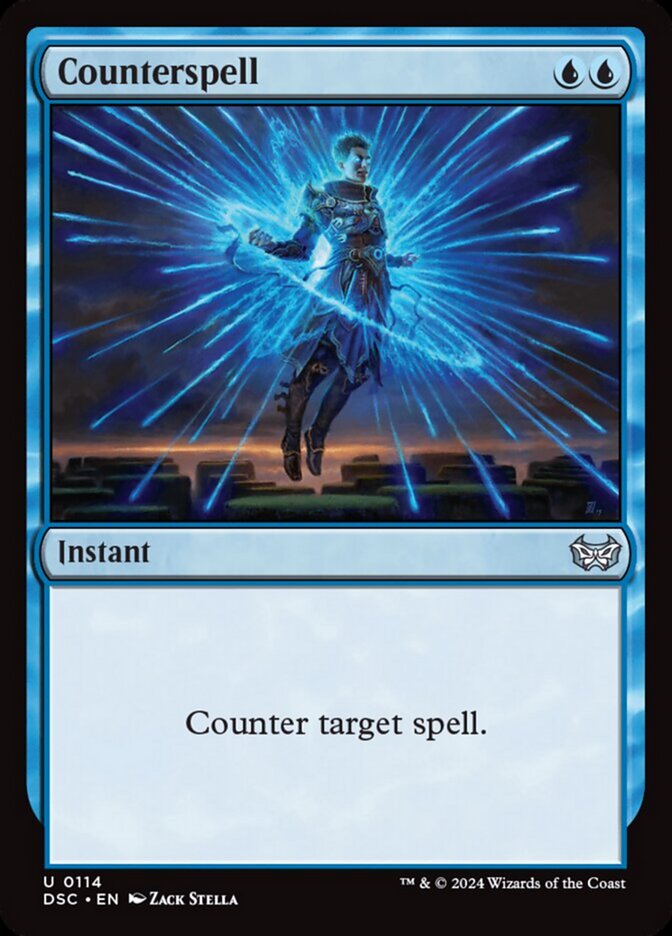 Counterspell
If you cast a powerful creature and your opponent responds with Counterspell, Ripples of Potential cannot save that creature because it is still on the stack. However, if you already have a creature with a counter on the battlefield and your opponent targets it with a destruction spell, you can cast Ripples of Potential. If they try to use Counterspell on your Ripples of Potential, your spell will be removed from the stack and no proliferation or phasing will occur.
 An Offer You Can't Refuse
Imagine you have a Planeswalker with 3 loyalty counters. You cast Ripples of Potential to increase its loyalty and phase it out to protect it from an upcoming attack. If an opponent casts An Offer You Can't Refuse to stop you, your Ripples of Potential is countered. You won't get to proliferate or phase out your Planeswalker, but you will receive two Treasure tokens as compensation for your countered spell.
You control a 2/2 creature with a +1/+1 counter. During your opponent's turn, they cast a spell to destroy your creature. You cast Ripples of Potential. You choose your creature for the proliferate effect, giving it a second +1/+1 counter. Because it received a counter this way, you choose to phase it out. The creature and its counters 'disappear' from the game, causing the opponent's spell to lose its target. At the start of your next untap step, your creature phases back in as a 3/3, ready to attack.
Guide written with AI from the official text and rulings. Official English text prevails.
How it works : Ripples of Potential
Original English text — Wizards of the Coast / Scryfall
- #1· Wizards of the Coast
An ability that triggers "Whenever you proliferate" triggers even if you chose no permanents or players while doing so.
No other card is named in this ruling.
- #2· Wizards of the Coast
A phased-out token will phase in at the beginning of its controller's untap step just like a nontoken permanent would.
No other card is named in this ruling.
- #3· Wizards of the Coast
To proliferate, you can choose any permanent that has a counter, including ones controlled by opponents. You can choose any player who has a counter, including opponents. You can't choose cards in any zone other than the battlefield, even if they have counters on them.
No other card is named in this ruling.
- #4· Wizards of the Coast
Players can respond to a spell or ability whose effect includes proliferating. Once that spell or ability starts to resolve, however, and its controller chooses which permanents and players will get new counters, it's too late for anyone to respond.
No other card is named in this ruling.
- #5· Wizards of the Coast
You don't have to choose every permanent or player that has a counter, only the ones you want to add another counter to. Since "any number" includes zero, you don't have to choose any permanents at all, and you don't have to choose any players at all.
No other card is named in this ruling.
- #6· Wizards of the Coast
Permanents phase back in during their controller's untap step, immediately before that player untaps their permanents. Creatures that phase in this way are able to attack and pay a cost of
 during that turn. If a permanent had counters on it when it phased out, it will have those counters when it phases back in.
No other card is named in this ruling.
- #7· Wizards of the Coast
Phasing out doesn't cause any "leaves the battlefield" abilities to trigger. Similarly, phasing in won't cause any "enters the battlefield" abilities to trigger.
No other card is named in this ruling.
- #8· Wizards of the Coast
Choices made for permanents as they entered the battlefield are remembered even after they phase in.
No other card is named in this ruling.
- #9· Wizards of the Coast
If a player or permanent has more than one kind of counter on it, and you choose for it to get additional counters, it must get one of each kind of counter it already has. You can't have it get just one kind of counter it already has and not the others.
No other card is named in this ruling.
- #10· Wizards of the Coast
Phased-out permanents are treated as though they don't exist. They can't be the target of spells or abilities, their static abilities have no effect on the game, their triggered abilities can't trigger, they can't attack or block, and so on.
No other card is named in this ruling.
- #11· Wizards of the Coast
As a creature is phased out, Auras and Equipment attached to it also phase out at the same time. Those Auras and Equipment will phase in at the same time that creature does, and they'll phase in still attached to that creature.
No other card is named in this ruling.
- #12· Wizards of the Coast
An attacking or blocking creature that phases out is removed from combat.
No other card is named in this ruling.
- #13· Wizards of the Coast
Any continuous effects with a "for as long as" duration ignore phased-out objects. If ignoring those objects causes the effect's conditions to no longer be met, the duration will expire.
No other card is named in this ruling.
Legal formats
Commentaires
- Sois le premier à commenter cette carte.
Read next
Meta decks with Ripples of Potential
No archived Top 8 deck with this card yet.