


Ruinous Waterbending is one of those cards players keep asking about. Here is, in plain words, what its official text says, the rulings published by Wizards of the Coast, and the combos players actually run.
Official card text
As an additional cost to cast this spell, you may waterbend. (While paying a waterbend cost, you can tap your artifacts and creatures to help. Each one pays for
.) All creatures get -2/-2 until end of turn. If this spell's additional cost was paid, whenever a creature dies this turn, you gain 1 life.
Complete guide
Ruinous Waterbending is a versatile Lesson that allows you to drain the life force from the board while leveraging your presence on the field. By utilizing the waterbend mechanic, you can turn your creatures and artifacts into resources to fuel a devastating life-gain engine.
Harnessing the Waterbend Mechanic
Waterbend is an additional cost that functions similarly to convoke or improvise. When you cast Ruinous Waterbending, you can pay an extra {4}. For each generic mana in that cost, you can tap an untapped artifact or creature you control instead of paying mana. This allows you to conserve your mana for other spells while still reaping the full benefits of the card's secondary effect.
Step-by-Step Resolution
First, as you cast the spell, you decide whether to pay the waterbend cost. If you do, you tap your permanents or pay mana to satisfy the {4} requirement. Once the spell resolves, all creatures currently on the battlefield get -2/-2 until the end of the turn. If the waterbend cost was paid, a delayed triggered ability is created: for the remainder of the turn, every time a creature dies, you gain 1 life.
Timing and Tapping Restrictions
It is important to note that you cannot double-dip with mana abilities. If you tap an artifact or creature for mana to pay for Ruinous Waterbending, that permanent is already tapped and cannot be used to pay the waterbend cost. However, you can tap creatures that have just entered the battlefield (summoning sickness does not prevent them from being tapped for waterbend) and any untapped artifacts you control.
When to Cast
As a Lesson, this card is best retrieved from your sideboard when you need a board wipe against small creatures or a way to stabilize your life total. It is most effective when you have several low-impact artifacts or creatures that can pay the waterbend cost, allowing you to clear the opponent's board while gaining significant life.
Interaction examples
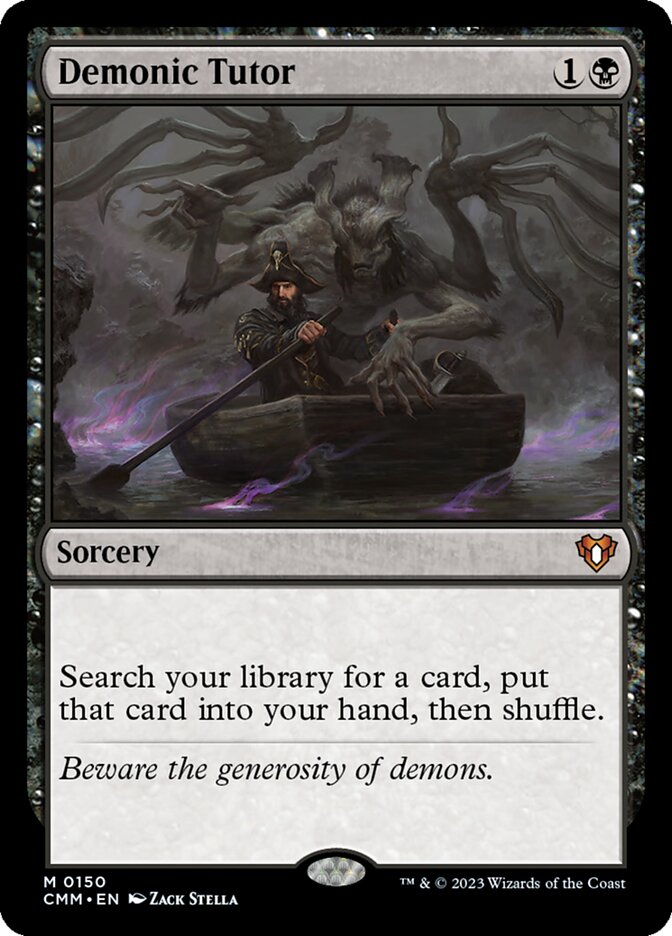 Demonic Tutor
If you have already used a Learn effect to put Ruinous Waterbending into your hand, you can use Demonic Tutor to find a way to protect your own larger creatures before casting the Waterbending. Because Ruinous Waterbending is a sorcery, you must plan your turn to ensure you have enough untapped permanents to waterbend if you want the life-gain trigger.
 Toxic Deluge
If your opponent has creatures with high toughness, you can cast Toxic Deluge first for a specific X value, then follow up with Ruinous Waterbending. If you paid the waterbend cost for Ruinous Waterbending, any creatures that die to the cumulative -X/-X and -2/-2 effects will trigger the life-gain ability, helping you recover the life spent on Toxic Deluge.
Guide written with AI from the official text and rulings. Official English text prevails.
How it works : Ruinous Waterbending
Original English text — Wizards of the Coast / Scryfall
- #1· Wizards of the Coast
"Waterbend [cost]" means "Pay [cost]. For each generic mana in that cost, you may tap an untapped artifact or creature you control rather than pay that mana."
No other card is named in this ruling.
- #2· Wizards of the Coast
If a waterbend cost is part of the total cost to cast a spell or activate an ability, you may tap an untapped artifact or creature you control rather than pay one generic mana in that total cost any number of times up to a maximum of the amount of generic mana in the waterbend component of that total cost.
No other card is named in this ruling.
- #3· Wizards of the Coast
If an artifact or creature you control has a mana ability with
 in the cost, activating that ability while casting a spell or activating an ability with waterbend will result in the artifact or creature being tapped before you pay the spell's costs. You won't be able to tap it again for waterbend. Similarly, if you sacrifice an artifact or creature to activate a mana ability to pay a cost with waterbend, that artifact or creature won't be on the battlefield when you pay the spell's costs, so you won't be able to tap it for waterbend.
No other card is named in this ruling.
- #4· Wizards of the Coast
You can tap any untapped creature or artifact you control to pay a waterbend cost, even one you haven't controlled continuously since the beginning of your most recent turn.
No other card is named in this ruling.
- #5· Wizards of the Coast
Even if the cost of the spell or ability that waterbend is part of increases or decreases, you still may only tap artifacts or creatures to pay for costs up to the amount of the generic mana in the waterbend cost.
No other card is named in this ruling.
Legal formats
Commentaires
- Sois le premier à commenter cette carte.
Read next
Meta decks with Ruinous Waterbending
No archived Top 8 deck with this card yet.