

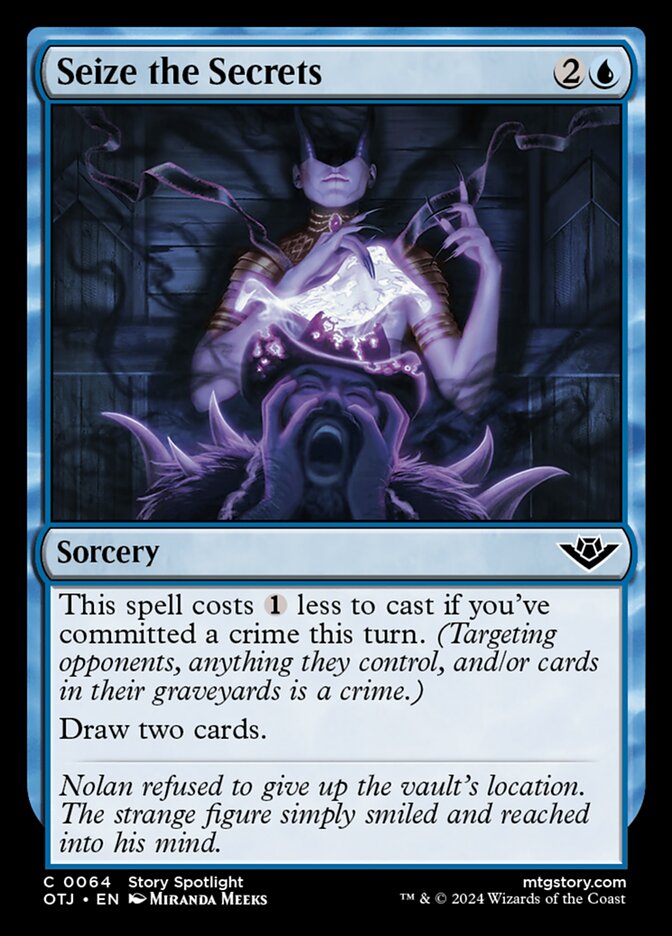
Seize the Secrets is one of those cards players keep asking about. Here is, in plain words, what its official text says, the rulings published by Wizards of the Coast, and the combos players actually run.
Official card text
This spell costsless to cast if you've committed a crime this turn. (Targeting opponents, anything they control, and/or cards in their graveyards is a crime.) Draw two cards.
Complete guide
Seize the Secrets is an efficient blue sorcery that rewards aggressive and disruptive playstyles by lowering its cost when you target your opponents. It is a fantastic tool for keeping your hand full while you interact with your opponent's board or graveyard. Understanding the 'committing a crime' mechanic is the key to unlocking this card's full potential in your deck.
What It Does
At its core, Seize the Secrets is a draw spell that provides card advantage. While its base cost is three mana, it features a cost-reduction mechanic tied to 'committing a crime.' In Magic: The Gathering, you commit a crime by targeting an opponent, anything they control (like creatures or spells on the stack), or cards in their graveyard. If you have done any of these things during your turn, this spell costs only two mana to cast.
How It Resolves Step by Step
First, the game checks if you have committed a crime this turn; if you have, the cost of Seize the Secrets is reduced by one generic mana. Once you pay the cost and the spell is on the stack, players have a chance to respond. When it resolves, you simply draw two cards from your library and put the sorcery into your graveyard. The cost reduction only checks if a crime was attempted, not if the targeting spell or ability successfully resolved.
Common Mistakes
A common point of confusion is what qualifies as a crime. Remember that choosing a target is mandatory for a crime to occur. If a spell or ability affects an opponent but does not use the word 'target'—such as an effect that says 'each opponent'—it is not a crime. Additionally, you only need to commit one crime to get the discount; committing multiple crimes does not reduce the cost further than the initial one generic mana.
When to Play It
You should play Seize the Secrets after you have already interacted with your opponent to ensure you are getting the best mana efficiency. Because it is a sorcery, you will usually cast it during your main phase. It is particularly effective in decks that use cheap removal or discard spells, as those actions naturally fulfill the crime requirement before you look to refill your hand.
Interaction examples
If you cast Seize the Secrets as your first action of the turn without targeting your opponent or their permanents, you must pay the full cost of three mana. You will then draw two cards.
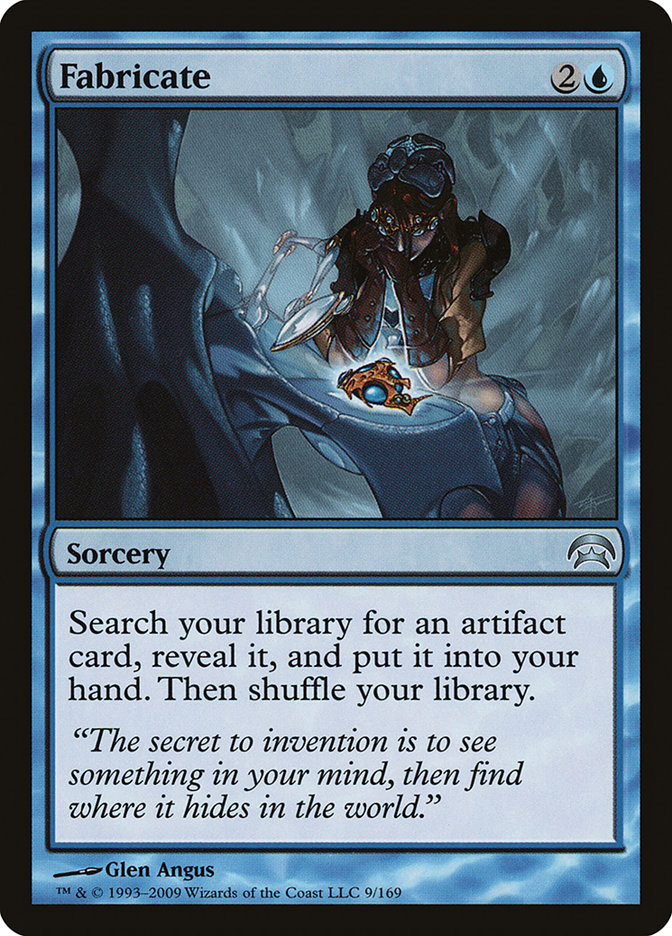 Fabricate
If you cast Fabricate, you search your library for an artifact. Since Fabricate does not target an opponent, their permanents, or their graveyard, it is not a crime. Consequently, Seize the Secrets will still cost the full three mana if this was your only other action that turn.
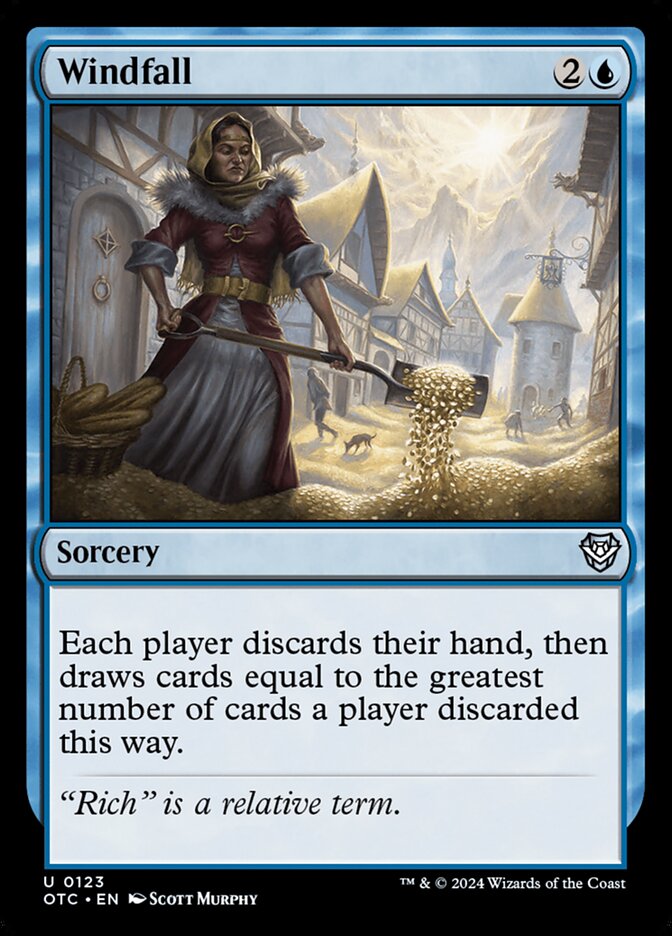 Windfall
When you cast Windfall, every player discards and draws. Crucially, Windfall does not target any players. Because no target was chosen, no crime was committed. If you wish to cast Seize the Secrets afterward, you must pay the standard cost of three mana unless you committed a crime via another spell or ability earlier in the turn.
Guide written with AI from the official text and rulings. Official English text prevails.
How it works : Seize the Secrets
Original English text — Wizards of the Coast / Scryfall
- #1· Wizards of the Coast
A player commits a crime as they cast a spell, activate an ability, or put a triggered ability on the stack that targets at least one opponent, at least one permanent, spell, or ability an opponent controls, and/or at least one card in an opponent’s graveyard.
No other card is named in this ruling.
- #2· Wizards of the Coast
The spell or ability that constituted a crime doesn’t have to have resolved yet or at all. As soon as you’re finished casting the spell, activating the ability, or putting the triggered ability on the stack, you’ve committed a crime.
No other card is named in this ruling.
- #3· Wizards of the Coast
For example, an ability that triggers when you cast a spell that targets an opponent will trigger at the same time as an ability that triggers whenever you commit a crime. Those abilities can be put on the stack in either order (if you control them both), and they’ll both resolve before the spell that caused them to trigger.
No other card is named in this ruling.
- #4· Wizards of the Coast
A player can commit only one crime per spell or ability they control. Targeting multiple opponents, permanents, spells, abilities, and/or cards with the same spell or ability doesn’t constitute committing multiple crimes.
No other card is named in this ruling.
- #5· Wizards of the Coast
Changing the target or targets of a spell or ability won’t affect whether or not the controller of that spell or ability has committed a crime. Only the initial targets chosen for that spell or ability are used to determine whether or not its controller committed a crime.
No other card is named in this ruling.
Legal formats
Commentaires
- Sois le premier à commenter cette carte.
Read next
Meta decks with Seize the Secrets
No archived Top 8 deck with this card yet.