

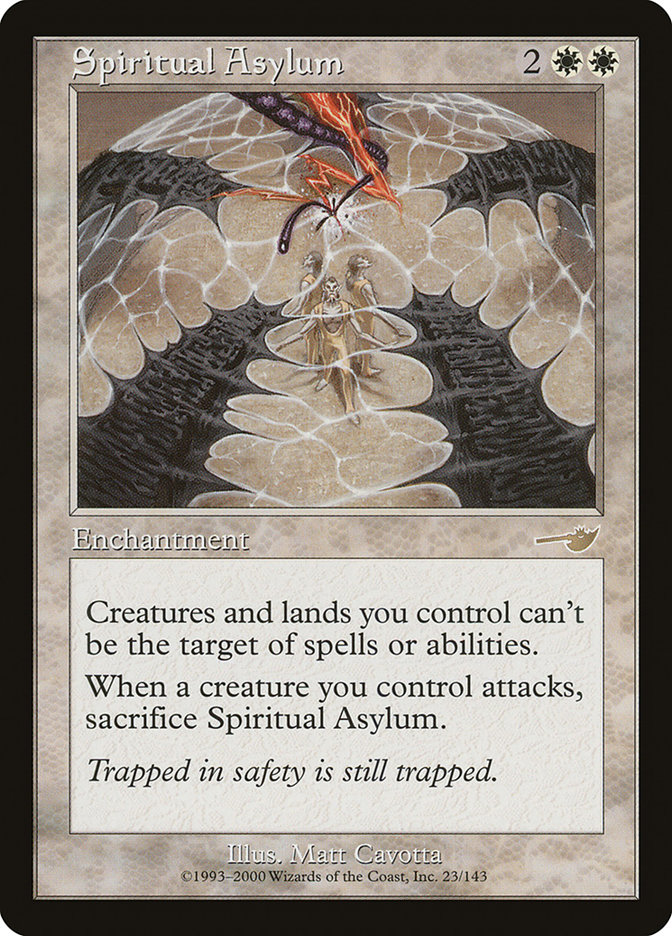
Spiritual Asylum is one of those cards players keep asking about. Here is, in plain words, what its official text says, the rulings published by Wizards of the Coast, and the combos players actually run.
Official card text
Creatures and lands you control have shroud. (They can't be the targets of spells or abilities.) When a creature you control attacks, sacrifice this enchantment.
Complete guide
Spiritual Asylum is a powerful defensive enchantment that grants a blanket of protection to your most vital assets. By providing shroud to both your creatures and your lands, it ensures your board state remains untouched by targeted removal—provided you are willing to stay on the defensive. This card is a cornerstone for control decks that want to stabilize the game without fear of losing their mana base or utility creatures.
Unpacking Shroud Protection
While Spiritual Asylum is on the battlefield, all creatures and lands you control gain shroud. This means they cannot be the target of spells or abilities, including your own. If you want to equip a creature or target your own land with a mana-fixing spell, you must do so before this enchantment enters the battlefield or after it leaves. Note that shroud does not prevent non-targeted effects, such as board wipes that say 'destroy all creatures'.
The Vow of Non-Aggression
The protection offered by Spiritual Asylum comes with a specific condition: you must refrain from attacking. The card has a triggered ability that triggers the moment you declare any creature as an attacker. As soon as a creature you control is declared as an attacker during the Declare Attackers step, the sacrifice ability goes on the stack. Even if that creature is removed from combat later, the enchantment will still be sacrificed when the ability resolves.
Strategic Timing and Common Pitfalls
A common mistake is forgetting that shroud applies to your own abilities. If you control Spiritual Asylum, you cannot use an ability that targets one of your own lands or creatures. Additionally, players often think they can sacrifice the enchantment after damage is dealt; however, the sacrifice trigger happens immediately when attackers are declared, meaning your permanents will lose shroud before the opponent even declares blockers.
When to Deploy the Asylum
Spiritual Asylum is best utilized in 'pillow fort' strategies where your goal is to win through non-combat means or by waiting out the opponent. It is exceptionally strong against decks that rely on targeted land destruction or specific creature removal. By pairing it with other taxing effects, you can create a game state where the opponent simply cannot interact with your resources while you build toward your win condition.
Interaction examples
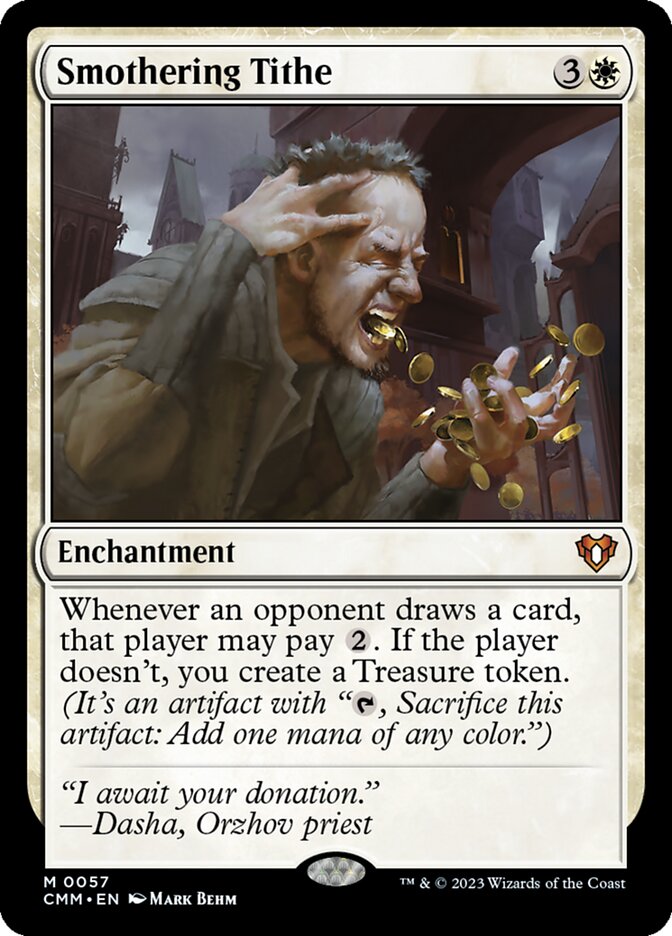 Smothering Tithe
With Spiritual Asylum on the battlefield, your lands are protected from being destroyed by targeted spells, ensuring you always have the mana available to fuel your game plan. While Smothering Tithe itself does not gain shroud (as it is neither a land nor a creature), the Treasure tokens it creates are artifacts and do not receive protection. However, any mana-producing creatures you have will be safe from 'Bolt' effects while you accumulate wealth.
 Ghostly Prison
This combination creates a difficult situation for your opponent. Ghostly Prison forces them to pay mana to attack you, while Spiritual Asylum ensures they cannot use targeted spells to destroy your creatures or the lands you use to pay for other spells. If you choose not to attack, your board remains shielded, forcing the opponent to find a non-targeted way to deal with your creatures or enchantment.
Guide written with AI from the official text and rulings. Official English text prevails.
How it works : Spiritual Asylum
Original English text — Wizards of the Coast / Scryfall
No additional ruling has been published for this card.
Legal formats
Commentaires
- Sois le premier à commenter cette carte.
Read next
Meta decks with Spiritual Asylum
No archived Top 8 deck with this card yet.