

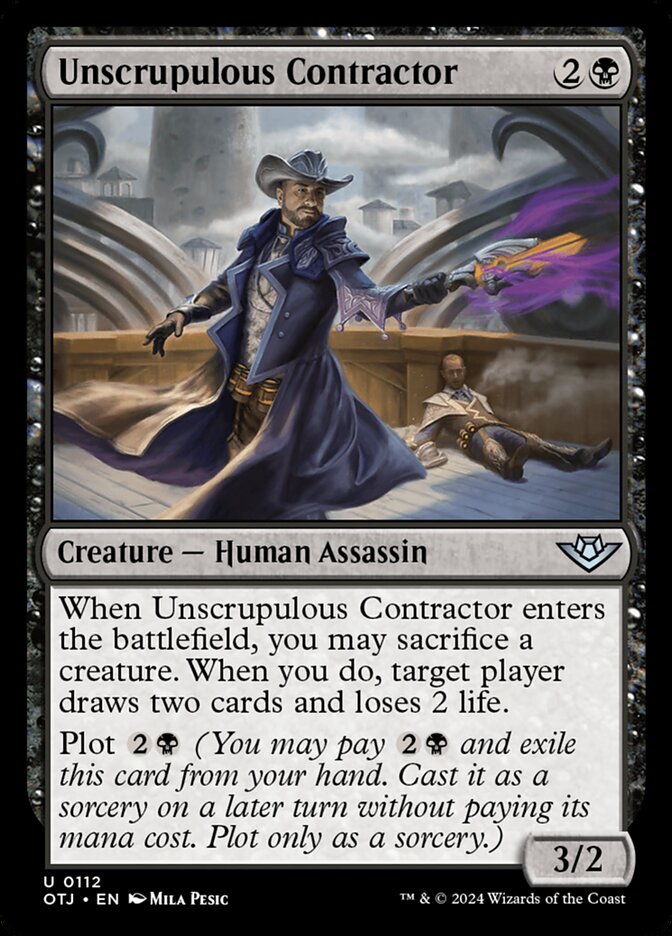
Unscrupulous Contractor is one of those cards players keep asking about. Here is, in plain words, what its official text says, the rulings published by Wizards of the Coast, and the combos players actually run.
Official card text
When this creature enters, you may sacrifice a creature. When you do, target player draws two cards and loses 2 life. Plot(You may pay

Complete guide
Unscrupulous Contractor is a versatile black creature that offers a powerful card-draw engine and sacrifice outlet. Whether you cast it normally or utilize the new Plot mechanic to set up a future turn, it provides significant board and hand advantage. This Human Assassin is perfect for decks that want to turn their small creatures into fresh resources.
The Reflexive Trigger
Unscrupulous Contractor features a special type of triggered ability called a 'reflexive' trigger. When it enters the battlefield, the initial ability triggers, asking if you would like to sacrifice a creature. You do not choose a target player yet. If you choose to sacrifice a creature, a second ability then goes on the stack. This second part is where you choose the target player who will draw two cards and lose 2 life. This means your opponent cannot know who you are targeting until after you have already committed to the sacrifice.
Mastering the Plot
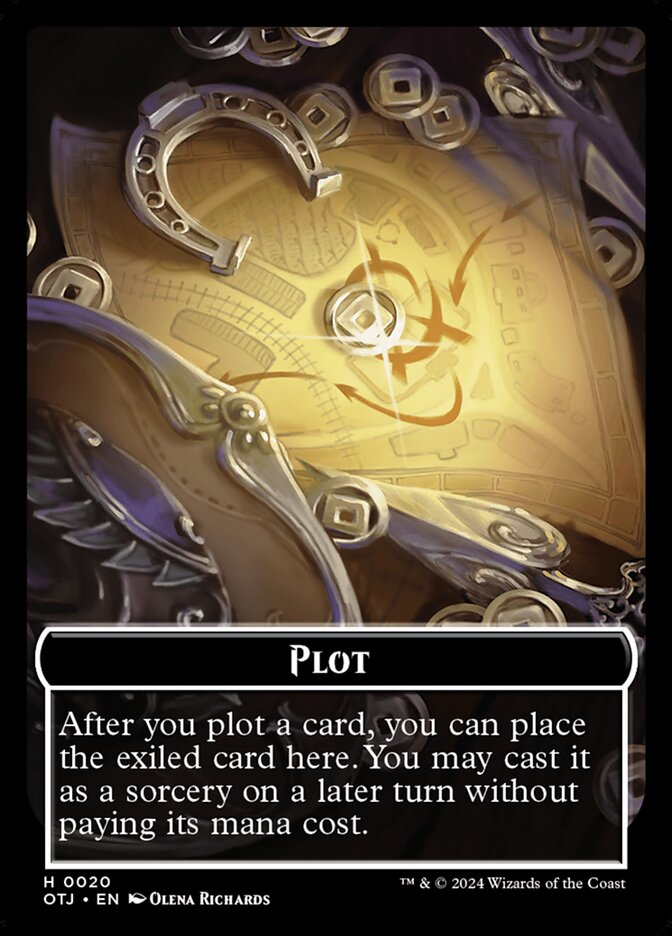
Plot is a special action that allows you to pay a cost and exile Unscrupulous Contractor from your hand during your main phase when the stack is empty. Once you plot it, your opponents cannot respond to the exile action. You can then cast it for free on any future turn as a sorcery. This is excellent for 'banking' the creature's effect for a turn where you have a better sacrifice target or more mana available for other spells.
Common Mistakes to Avoid
A common error is trying to cast the Contractor on the same turn it was plotted; the rules explicitly forbid casting a plotted card until a later turn. Additionally, remember that the sacrifice is optional. If the board is empty, the Contractor enters as a 3/2 creature but does nothing else. Lastly, since the card draw and life loss are tied to a reflexive trigger, players can respond with spells or abilities after the sacrifice has happened but before the cards are actually drawn.
When to Play It
This card shines when you have creatures with 'dies' triggers or tokens you no longer need. In aggressive matchups, you can even target your opponent to force them to lose their last 2 life, though targeting yourself is usually the standard play for card advantage. Use the Plot ability if you expect a board wipe or if you want to save your mana to hold up interaction during your opponent's turn.
Interaction examples
 Solemn Simulacrum
When Unscrupulous Contractor enters the battlefield, choose to sacrifice Solemn Simulacrum. This causes two things: first, the Contractor's reflexive trigger targets you to draw two cards and lose 2 life. Simultaneously, the Simulacrum's own ability triggers because it died, allowing you to draw a third card. In total, you net three cards from one sacrifice.
 Roaming Throne
With Roaming Throne on the battlefield naming 'Human' or 'Assassin', Unscrupulous Contractor's enters-the-battlefield ability triggers twice. Each instance allows you to sacrifice a creature. If you sacrifice a creature for the first trigger, the reflexive ability triggers (twice thanks to the Throne). This allows you to draw four cards and lose 4 life for one sacrifice, or even more if you have a second creature to sacrifice to the second main trigger.
 Plot
On turn three, you pay {2}{B} to exile Unscrupulous Contractor using its Plot ability. On turn four, you can cast it from exile without paying its mana cost. This allows you to use your turn four mana to play other spells while still getting the Contractor's body and its card-draw ability on the board.
Guide written with AI from the official text and rulings. Official English text prevails.
How it works : Unscrupulous Contractor
Original English text — Wizards of the Coast / Scryfall
- #1· Wizards of the Coast
You can’t cast a plotted card on the same turn it became plotted. On any future turn, you may cast that card from exile without paying its mana cost during your main phase while the stack is empty.
Card named in this ruling
- #2· Wizards of the Coast
You don’t choose a target for Unscrupulous Contractor’s ability at the time it triggers. Rather, a second “reflexive” ability triggers if you sacrifice a creature this way. You choose a target for that ability as it goes on the stack. Each player may respond to this triggered ability as normal. Notably, the triggered ability isn’t a crime, but the reflexive triggered ability potentially is.
No other card is named in this ruling.
- #3· Wizards of the Coast
Plot abilities are written “Plot [cost],” which means “Any time you have priority during your main phase while the stack is empty, you may pay [cost] and exile this card from your hand. It becomes plotted.”
Card named in this ruling
- #4· Wizards of the Coast
Exiling a card using its plot ability is a special action. Once you announce you’re taking that action, no other player can respond by trying to remove that card from your hand.
Card named in this ruling
- #5· Wizards of the Coast
If you’re casting a plotted card from exile without paying its mana cost, you can’t choose to cast it for any other alternative costs. You can, however, pay additional costs, such as kicker costs. If the plotted card has any mandatory additional costs, those must still be paid to cast the spell.
Card named in this ruling
- #6· Wizards of the Coast
If a plotted card has
 in its mana cost, you must choose 0 as the value of X when casting it without paying its mana cost.
Card named in this ruling
Related cards and tokens
Legal formats
Commentaires
- Sois le premier à commenter cette carte.
Read next
Meta decks with Unscrupulous Contractor
No archived Top 8 deck with this card yet.