

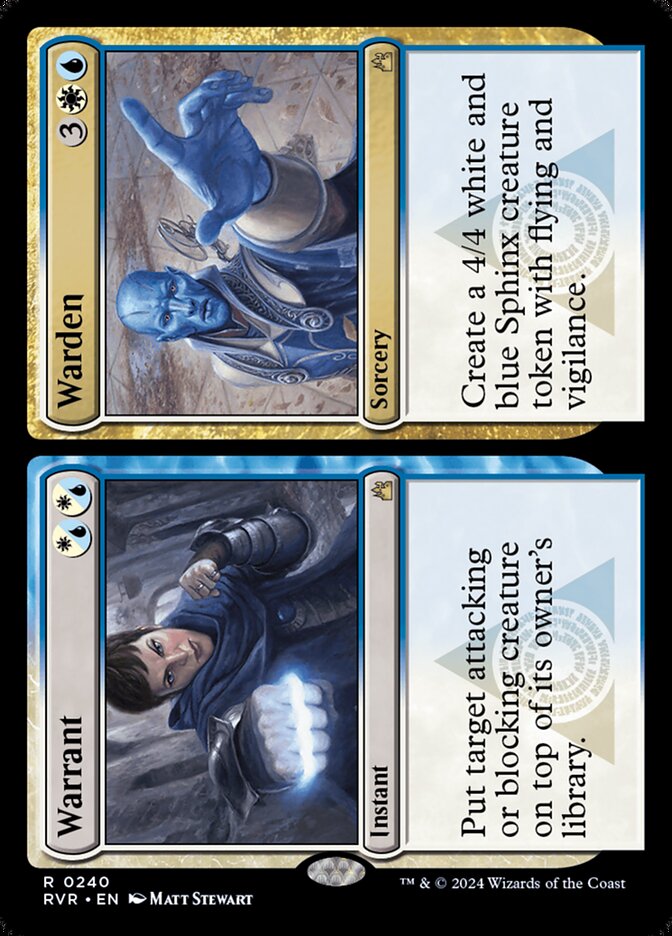
Warrant // Warden is one of those cards players keep asking about. Here is, in plain words, what its official text says, the rulings published by Wizards of the Coast, and the combos players actually run.
Official card text
Put target attacking or blocking creature on top of its owner's library. Create a 4/4 white and blue Sphinx creature token with flying and vigilance.
Complete guide
Warrant // Warden is a versatile split card that offers both defensive utility and a powerful proactive threat. Whether you need to remove an aggressive attacker or establish a dominant board presence with a mythical beast, this card provides the flexibility required for Azorius mages to control the flow of the game.
One Card, Two Options
As a split card, Warrant // Warden offers two distinct spells in one physical card. When you cast it, you choose which half you are using; the other half is ignored while the spell is on the stack. In zones like your library or graveyard, however, the card has the combined characteristics of both halves, meaning its mana value is 7 (2 plus 5).
Resolution Step-by-Step
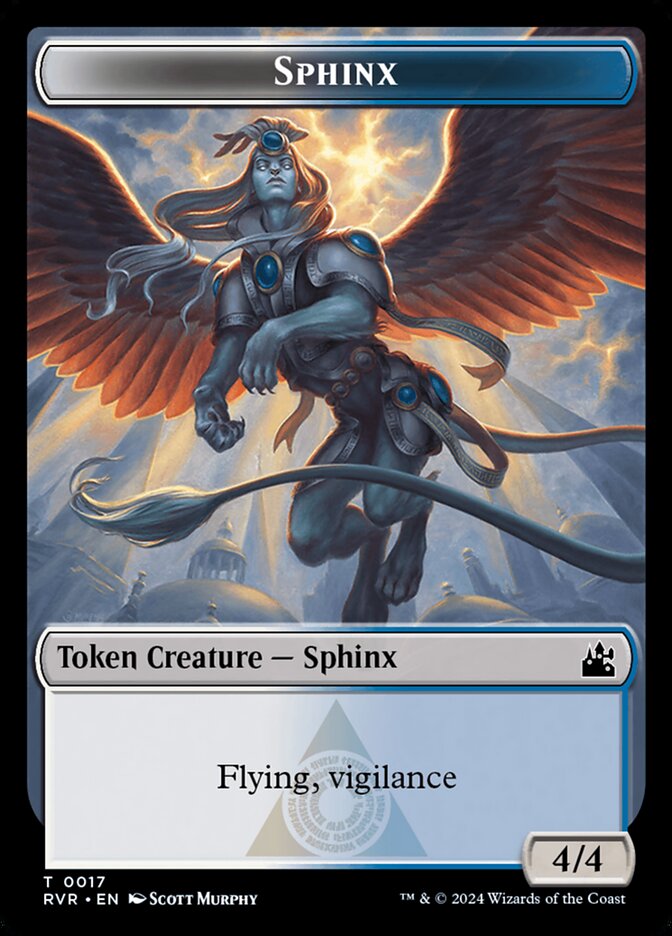
If you cast Warrant, you must target a creature that is currently attacking or blocking. Upon resolution, that creature is moved from the battlefield to the top of its owner's library, effectively negating their next draw. If you cast Warden, you simply create a 4/4 white and blue Sphinx token with flying and vigilance. Note that Warden is a sorcery and can only be cast during your main phase when the stack is empty.
Common Pitfalls
A common mistake is trying to cast Warrant on a creature that isn't in combat. You cannot use Warrant on a creature just because it is tapped; it must specifically be an 'attacking' or 'blocking' creature during the combat phase. Additionally, remember that if an effect asks you to name a card, you name one half (either Warrant or Warden), not the entire combined string.
When to Play It
Warrant is best used as a tempo play to remove a high-threat attacker and deny your opponent a fresh draw on their next turn. Warden should be cast when you have established control and need a reliable finisher that can both attack and stay back to block thanks to its vigilance keyword.
Interaction examples
 Sphinx
 Sublime Epiphany
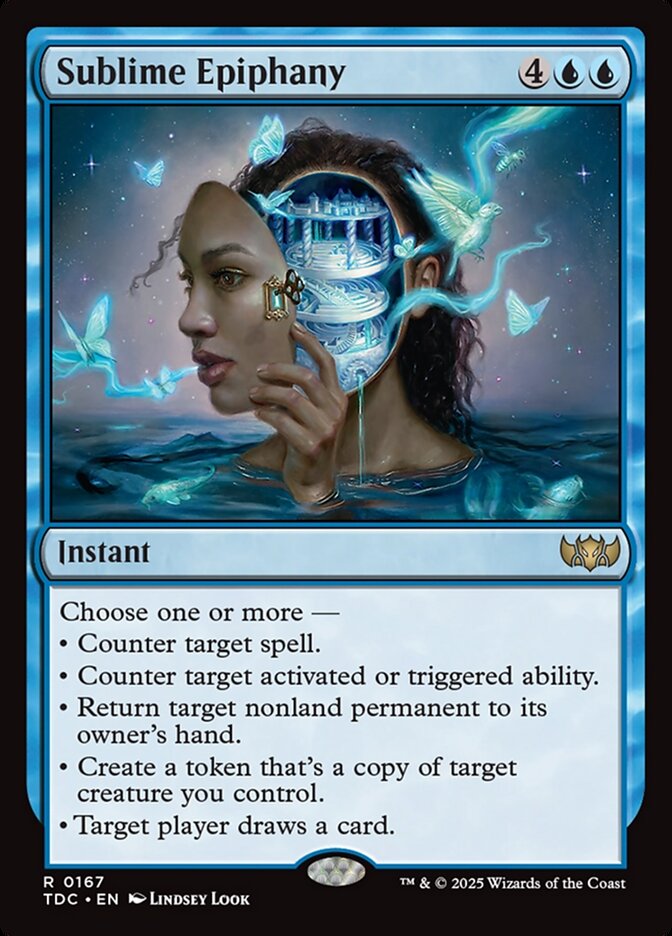
After you cast the Warden half to create a 4/4 Sphinx token, you can use Sublime Epiphany to choose the mode that creates a token copy of a creature you control. This allows you to double your aerial pressure by creating a second Sphinx while potentially countering a spell or drawing a card simultaneously.
 Dig Through Time
If Warrant // Warden is in your graveyard, it counts as a single card for the Delve cost of Dig Through Time. Even though it has two names and two types (Instant and Sorcery), it occupies only one slot in your graveyard, providing one mana worth of reduction when exiled.
Guide written with AI from the official text and rulings. Official English text prevails.
How it works : Warrant // Warden
Original English text — Wizards of the Coast / Scryfall
- #1· Wizards of the Coast
If you copy a spell that's half of a split card, the copy copies that same half. For example, if you copy Assault, the copy is also Assault, not Battery.
No other card is named in this ruling.
- #2· Wizards of the Coast
To cast a split card, choose one of its halves to cast. There's no way to cast both halves of this split card.
No other card is named in this ruling.
- #3· Wizards of the Coast
Split cards have two card faces on a single card. The characteristics of the half you didn't cast are ignored while the spell is on the stack.
No other card is named in this ruling.
- #4· Wizards of the Coast
Each split card is a single card. For example, if you discard a split card, you've discarded one card, not two. If an effect counts the number of sorcery cards in your graveyard, Assault // Battery counts once, not twice.
No other card is named in this ruling.
- #5· Wizards of the Coast
Each split card has two names. If an effect instructs you to choose a card name, you may choose one of those names, but not both.
No other card is named in this ruling.
- #6· Wizards of the Coast
A split card's characteristics are a combination of its two halves while it is not on the stack. For example, Assault // Battery has a mana value of 5 while it is in your library. If an effect allows you to search your library for a card with mana value 4 or less, you can't find Assault // Battery.
No other card is named in this ruling.
- #7· Wizards of the Coast
If an effect allows you to cast a spell with certain characteristics, consider only the characteristics of the half you're casting. For example, if an effect allows you to cast a sorcery spell with mana value 2 or less from among cards in your graveyard, you could cast Assault this way, but not Battery.
No other card is named in this ruling.
- #8· Wizards of the Coast
An "attacking creature" is one that has been declared as an attacker or put onto the battlefield attacking during this combat. Unless that creature leaves combat, it continues to be an attacking creature through the end of combat step, even if the player it was attacking has left the game or the planeswalker it was attacking has left combat. Similarly, a "blocking creature" is one that has been declared as a blocker or put onto the battlefield blocking during this combat.
No other card is named in this ruling.
Related cards and tokens
Legal formats
Commentaires
- Sois le premier à commenter cette carte.
Read next
Meta decks with Warrant // Warden
No archived Top 8 deck with this card yet.