

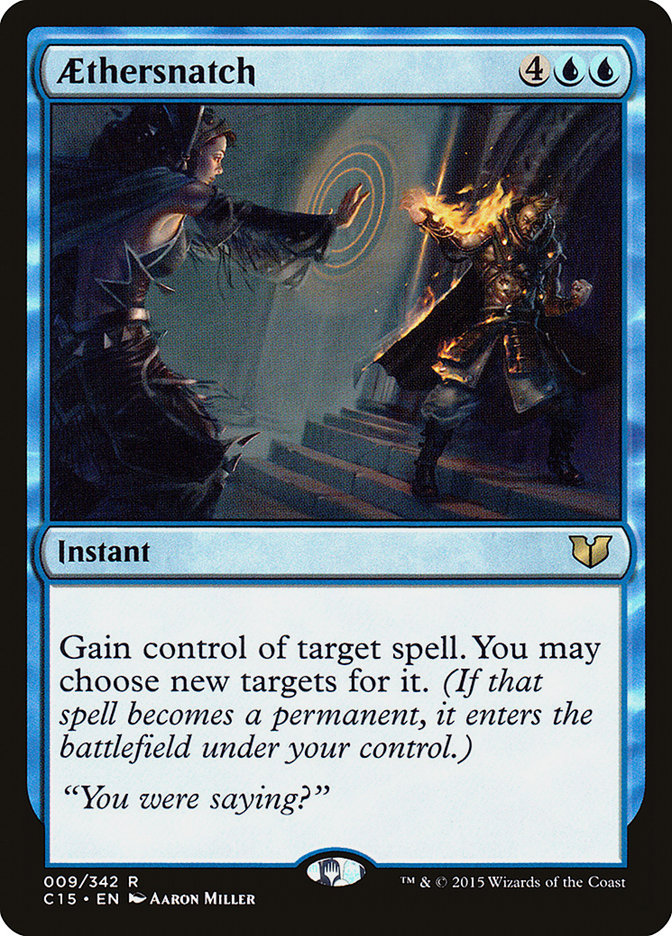
Aethersnatch is one of those cards players keep asking about. Here is, in plain words, what its official text says, the rulings published by Wizards of the Coast, and the combos players actually run.
Official card text
Gain control of target spell. You may choose new targets for it. (If that spell becomes a permanent, it enters under your control.)
Complete guide
Aethersnatch is a powerful blue instant that lets you turn an opponent's greatest threat into your own personal advantage. Unlike a simple counterspell, this card completely subverts the game by allowing you to hijack spells while they are still on the stack. Whether it is a game-ending creature or a devastating sorcery, Aethersnatch ensures you remain in command.
What It Does
Aethersnatch is a high-cost blue spell that targets any spell currently on the stack. When it resolves, you become the controller of that spell and gain the option to choose new targets for it. If the spell is a permanent—such as a creature, enchantment, or artifact—it will enter the battlefield under your control when it finishes resolving. If it is an instant or sorcery, you make all decisions for the spell as it resolves, but it will still be placed in its owner's graveyard once its effects are complete.
How It Resolves Step by Step
First, cast Aethersnatch targeting a spell your opponent has played. When Aethersnatch resolves, ownership of the spell on the stack shifts to you. You may then choose to change any of the targets defined by that spell. You must choose legal targets for the new controller (yourself). After Aethersnatch finishes resolving and leaves the stack, the hijacked spell remains on the stack under your control, waiting for its turn to resolve. If that spell is a commander, it still tracks commander damage normally, even though you are the one who brought it onto the field.
Common Mistakes
A common point of confusion involves the 'target opponent' clause. If an opponent casts a spell targeting you as their 'target opponent' and you take control of it with Aethersnatch, you are no longer a legal target because you cannot be your own opponent. In this case, you must change the target to a legal opponent. Additionally, remember that gaining control of a spell does not change the card's owner; if the spell is eventually countered or destroyed, it goes to its owner's graveyard, not yours.
When to Play It
Aethersnatch is best utilized against high-impact permanent spells or powerful card-draw effects. While it costs six mana, the swing in board state is often worth the investment. It is particularly effective in Commander games where you can steal an opponent's commander as it is cast, forcing them to let it enter under your control or risk losing it to the command zone later.
Interaction examples
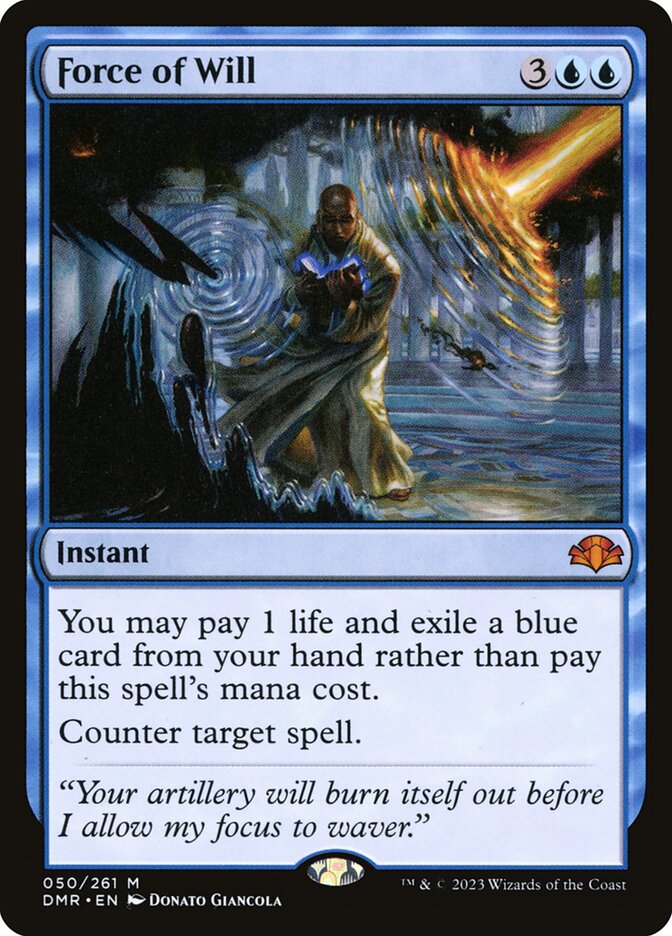 Force of Will
Suppose an opponent casts a powerful creature and you attempt to counter it. In response, they cast Force of Will to protect their creature by targeting your counterspell. You can cast Aethersnatch targeting their Force of Will. Once you gain control of Force of Will, you can change its target to itself (which is illegal) or, more effectively, change the target to the opponent's original creature spell, effectively using their own protection to stop their threat.
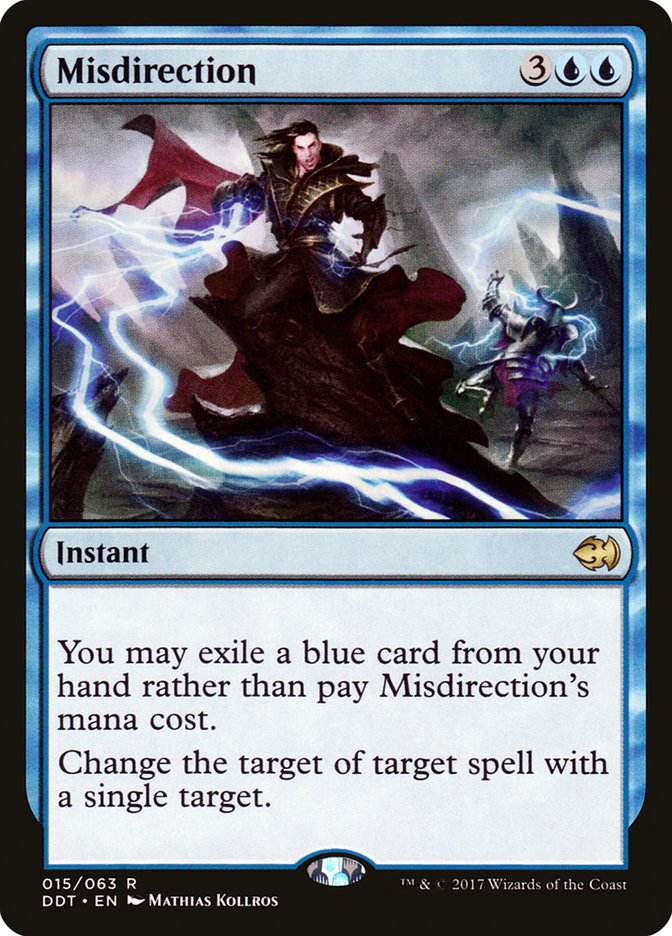 Misdirection
If an opponent casts Misdirection to change the target of one of your spells, you can respond with Aethersnatch. By taking control of Misdirection, you now choose where that Misdirection points. Since Misdirection targets a spell with a single target, you can redirect the Misdirection to target Aethersnatch itself (though Aethersnatch is already resolving) or simply leave the targets as you prefer to ensure your original spell hits the desired mark.
Guide written with AI from the official text and rulings. Official English text prevails.
How it works : Aethersnatch
Original English text — Wizards of the Coast / Scryfall
- #1· Wizards of the Coast
Aethersnatch can target any spell, even one without targets.
No other card is named in this ruling.
- #2· Wizards of the Coast
If you gain control of an instant or sorcery spell, it will be put into its owner’s graveyard as it resolves.
No other card is named in this ruling.
- #3· Wizards of the Coast
You may change any or none of the spell’s targets. If you change a target, you must choose a legal target for the spell. If you can’t, you must leave the target unchanged (even if the current target is illegal). Notably, if you were originally chosen as a “target opponent” for a spell you gain control with Aethersnatch, you are now an illegal target as you aren’t your own opponent.
No other card is named in this ruling.
- #4· Wizards of the Coast
Combat damage dealt by a commander is tracked without regard to who controlled the commander at the time it dealt damage. For example, say a commander deals 10 combat damage to a player, leaves the battlefield, is recast, and you gain control of it with Aethersnatch. If it deals another 11 combat damage to that same player, they will lose the game.
No other card is named in this ruling.
- #5· Wizards of the Coast
If you gain control of a commander spell, the commander’s owner chooses whether to put it in the command zone if it later leaves the battlefield.
No other card is named in this ruling.
Legal formats
Commentaires
- Sois le premier à commenter cette carte.
Read next
Meta decks with Aethersnatch
No archived Top 8 deck with this card yet.