

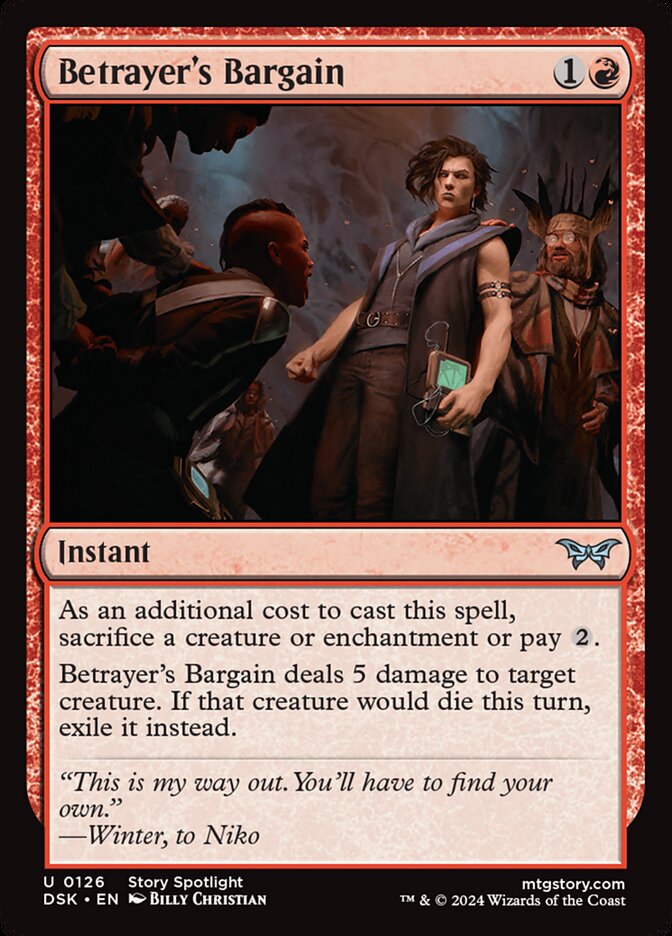
Betrayer's Bargain is one of those cards players keep asking about. Here is, in plain words, what its official text says, the rulings published by Wizards of the Coast, and the combos players actually run.
Official card text
As an additional cost to cast this spell, sacrifice a creature or enchantment or pay. Betrayer's Bargain deals 5 damage to target creature. If that creature would die this turn, exile it instead.
Complete guide
Betrayer's Bargain is a versatile red removal spell that ensures your opponent's threats stay gone for good. By allowing you to pay an extra mana cost or sacrifice a permanent, it provides a high-damage output with a built-in exile clause.
The Price of Betrayal
When you cast Betrayer's Bargain, you must choose how to pay for its additional cost. You can either sacrifice a creature you control, sacrifice an enchantment you control, or pay an extra {2}. If you cannot fulfill one of these three options, you cannot cast the spell. This cost is paid at the same time as the mana cost, meaning once the spell is cast, your opponent cannot respond to the sacrifice to stop the spell from being put on the stack.
Resolving the Damage
Upon resolution, the spell deals 5 damage to the targeted creature. Crucially, the spell creates a replacement effect that lasts for the entire turn. If the target would die at any point during the turn—whether from the 5 damage dealt by Betrayer's Bargain or from a subsequent effect—it is exiled instead of being put into its owner's graveyard.
Common Pitfalls
A common mistake is thinking the exile effect only applies if Betrayer's Bargain deals the lethal blow. According to official rulings, the replacement effect applies for the whole turn. Even if the creature survives the initial 5 damage but is destroyed later by another spell, it will still be exiled. Note that if the creature is returned to its owner's hand or shuffled into a library, the exile effect does not apply because the creature is not 'dying.'
Timing Your Bargain
As an instant, you can use this spell to disrupt combat or respond to an opponent's attempt to sacrifice their own creature for value. Because it exiles, it is particularly effective against creatures with 'dies' triggers or those that can be easily recurred from the graveyard.
Interaction examples
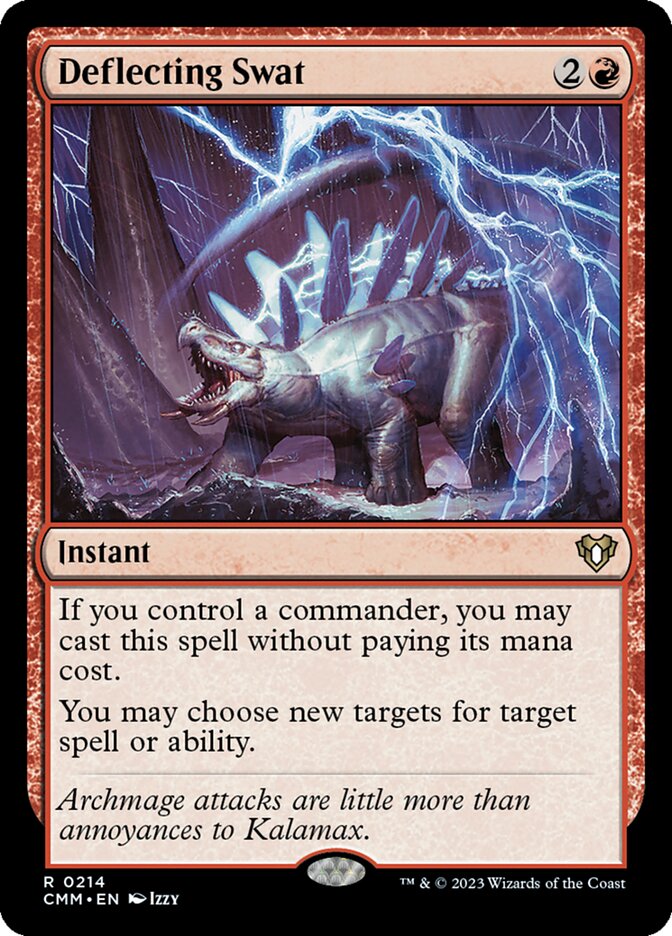 Deflecting Swat
If you target an opponent's creature with Betrayer's Bargain, they may cast Deflecting Swat to change the target to one of your creatures. If they do, your creature will take 5 damage and will be exiled if it dies at any point during that turn.
 Chaos Warp
You cast Betrayer's Bargain on a creature. In response, you or an opponent casts Chaos Warp on the same creature. Chaos Warp resolves first, shuffling the creature into its owner's library. Since the creature left the battlefield but did not 'die' (move to the graveyard), the exile clause of Betrayer's Bargain never has a chance to apply, and Betrayer's Bargain will fizzle as it no longer has a legal target.
In a solo scenario, you have a small 1/1 Goblin and want to kill an opponent's 5/5 creature. You cast Betrayer's Bargain, choosing to sacrifice the Goblin as the additional cost. The 5/5 creature takes 5 damage and is exiled, effectively trading your smallest unit for their largest threat while bypassing graveyard synergies.
Guide written with AI from the official text and rulings. Official English text prevails.
How it works : Betrayer's Bargain
Original English text — Wizards of the Coast / Scryfall
- #1· Wizards of the Coast
If Betrayer's Bargain resolves, its effect causes the creature to be exiled any time it would die that turn, not just if it would die as a result of damage dealt by Betrayer's Bargain.
No other card is named in this ruling.
Legal formats
Commentaires
- Sois le premier à commenter cette carte.
Read next
Meta decks with Betrayer's Bargain
No archived Top 8 deck with this card yet.