
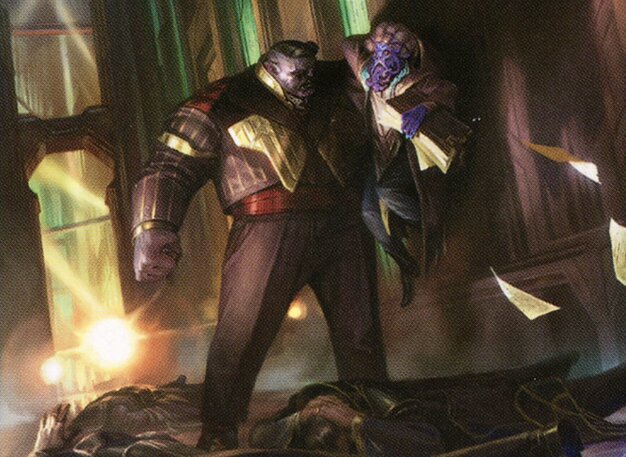
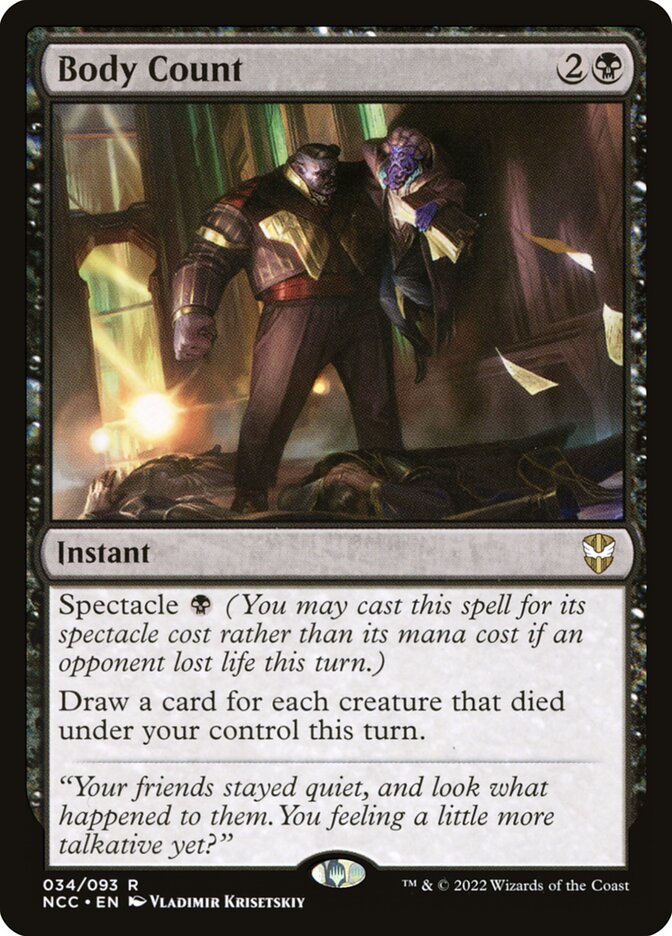
Body Count is one of those cards players keep asking about. Here is, in plain words, what its official text says, the rulings published by Wizards of the Coast, and the combos players actually run.
Official card text
Spectacle(You may cast this spell for its spectacle cost rather than its mana cost if an opponent lost life this turn.) Draw a card for each creature that died under your control this turn.
Complete guide
Body Count is a powerful card-draw engine that rewards you for being aggressive and managing your board state strategically. By utilizing the Spectacle mechanic, you can refill your hand for a single black mana after a bloody combat phase or a successful sacrifice setup. This instant-speed spell turns the demise of your own creatures into fresh resources for your next move.
Understanding Spectacle
Body Count features the Spectacle keyword, which allows you to pay an alternative cost of {B} if an opponent lost life during the current turn. This loss of life can come from combat damage, direct damage spells, or life-loss effects. Crucially, it does not matter if the opponent later gained life back; as long as their life total decreased at any point in the turn, Spectacle is active. While the cost changes, the spell's mana value remains 3, and the timing remains an instant.
Resolution Step-by-Step
When Body Count resolves, the game checks how many creatures died under your control since the turn began. First, ensure the spell was legally cast by paying either {2}{B} or the Spectacle cost. Upon resolution, count every creature that moved from the battlefield to your graveyard this turn, regardless of whether they were tokens or nontoken creatures. You then draw that many cards. If no creatures died under your control, you will draw zero cards, but the spell still technically resolves and goes to the graveyard.
Common Pitfalls
A frequent mistake is forgetting that 'died' specifically means moving from the battlefield to the graveyard. If your creatures are exiled instead of dying, Body Count will not count them. Additionally, players often confuse Spectacle with timing; even if an opponent loses life on their own turn, you can only cast Body Count at times you could normally cast an instant. Finally, remember that it only counts creatures that died under *your* control, not those belonging to your opponents.
When to Play Body Count
The ideal time to cast Body Count is during your post-combat main phase or at the end of an opponent's turn after a board wipe. Because it is an instant, you can respond to your own creatures' deaths or wait until the maximum number of creatures have perished to get the highest value. If you have ways to lose your own creatures for profit, Body Count serves as the perfect follow-up to replenish your hand.
Interaction examples
 Deadly Dispute
You cast Deadly Dispute, sacrificing a creature as an additional cost. After Deadly Dispute resolves and you draw two cards, you have met the condition of a creature dying under your control. If an opponent also lost life this turn, you can then cast Body Count for its Spectacle cost of {B} to draw an additional card for the creature you just sacrificed.
 Deadly Rollick
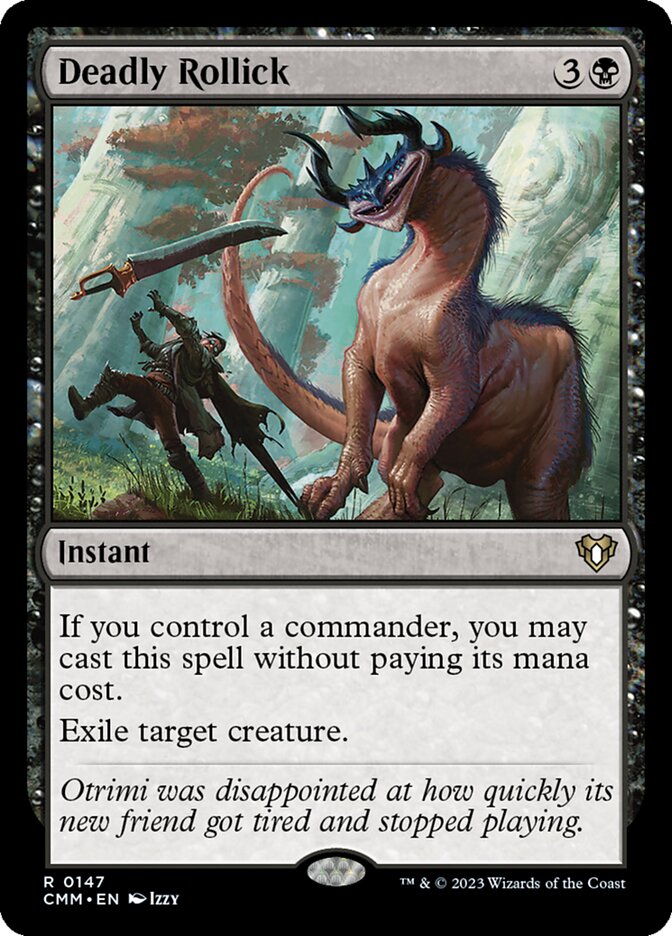
If an opponent casts Deadly Rollick to exile your creature, that creature does not 'die' because it never hits the graveyard. When you resolve Body Count later that turn, that exiled creature will not be included in the card-draw count. Body Count only sees creatures that transitioned from the battlefield to the graveyard.
Guide written with AI from the official text and rulings. Official English text prevails.
How it works : Body Count
Original English text — Wizards of the Coast / Scryfall
- #1· Wizards of the Coast
Damage dealt to a player causes that player to lose that much life.
No other card is named in this ruling.
- #2· Wizards of the Coast
Spectacle cares only that an opponent lost life during the turn, not that the opponent's life total is currently lower than it was. For example, if an opponent loses 1 life and then gains 2 life in the same turn, you can cast a spell for its spectacle cost that turn.
No other card is named in this ruling.
- #3· Wizards of the Coast
Spectacle doesn't change when you can cast the spell. For example, you can't cast a sorcery with spectacle during an opponent's turn unless another effect allows you to do so, even if that player has lost life this turn.
No other card is named in this ruling.
- #4· Wizards of the Coast
To determine the total cost of a spell, start with the mana cost or alternative cost you're paying (such as a spectacle cost), add any cost increases, then apply any cost reductions. The mana value of the spell remains unchanged, no matter what the total cost to cast it was.
No other card is named in this ruling.
- #5· Wizards of the Coast
A card's spectacle cost is the same no matter how much life your opponents lost or how many opponents lost life.
No other card is named in this ruling.
- #6· Wizards of the Coast
In a multiplayer game, if an opponent loses life and later that turn leaves the game, you can cast a spell for its spectacle cost. (If a player leaves the game during their turn, that turn continues without an active player.)
No other card is named in this ruling.
Legal formats
Commentaires
- Sois le premier à commenter cette carte.
Read next
Meta decks with Body Count
No archived Top 8 deck with this card yet.