


Chemister's Trick is one of those cards players keep asking about. Here is, in plain words, what its official text says, the rulings published by Wizards of the Coast, and the combos players actually run.
Official card text
Target creature you don't control gets -2/-0 until end of turn and attacks this turn if able. Overload(You may cast this spell for its overload cost. If you do, change "target" in its text to "each.")


Complete guide
Chemister's Trick is a versatile Izzet instant that disrupts your opponent's combat plans by weakening their forces and forcing them into unfavorable attacks. Whether you are targeting a single threat or the entire board, this spell creates chaotic openings for your next turn. It's a perfect tool for controlling the flow of the battlefield while keeping your life total safe.
What the Trick Does
This spell applies two distinct effects to creatures you don't control: a power reduction of -2/-0 and a mandatory attack requirement. If you cast it for its normal cost of {U}{R}, you choose one target creature. However, by paying the Overload cost of {3}{U}{R}, you replace the word 'target' with 'each', affecting every creature your opponents control without needing to target them individually.
Resolving the Forced Attack
When Chemister's Trick resolves, affected creatures must attack during their controller's next declare attackers step if they are legally able to do so. This means they must be untapped and either have Haste or have been controlled by the player since the start of the turn. If there is a cost to attack (like Propaganda), the owner isn't forced to pay it, and the creature won't have to attack. Crucially, the controller still chooses who or what the creature attacks.
Common Mistakes with Overload
A common mistake is thinking Overload targets. It does not! If you pay the Overload cost, the spell ignores Keyword abilities like Hexproof or Protection from Blue/Red because no targeting occurs. Another important note is that Overload only affects creatures currently on the battlefield as the spell resolves; any creatures played later in the turn by your opponent will not be affected by the power reduction or the force-attack mandate.
When to Play It
The best time to cast this is during your own turn or the opponent's pre-combat main phase. Since the effect lasts 'until end of turn', casting it during your opponent's combat phase after they've already declared attackers is less effective, as the force-attack requirement will have passed. Use it to force small utility creatures into combat where they will die to your blockers.
Interaction examples
You pay {3}{U}{R} to Overload Chemister's Trick during your opponent's first main phase. All of their creatures get -2/-0. When they move to combat, every creature they control that is able to attack must do so. Because their power is reduced, you can safely block and destroy their utility creatures with your own blockers without losing your creatures.
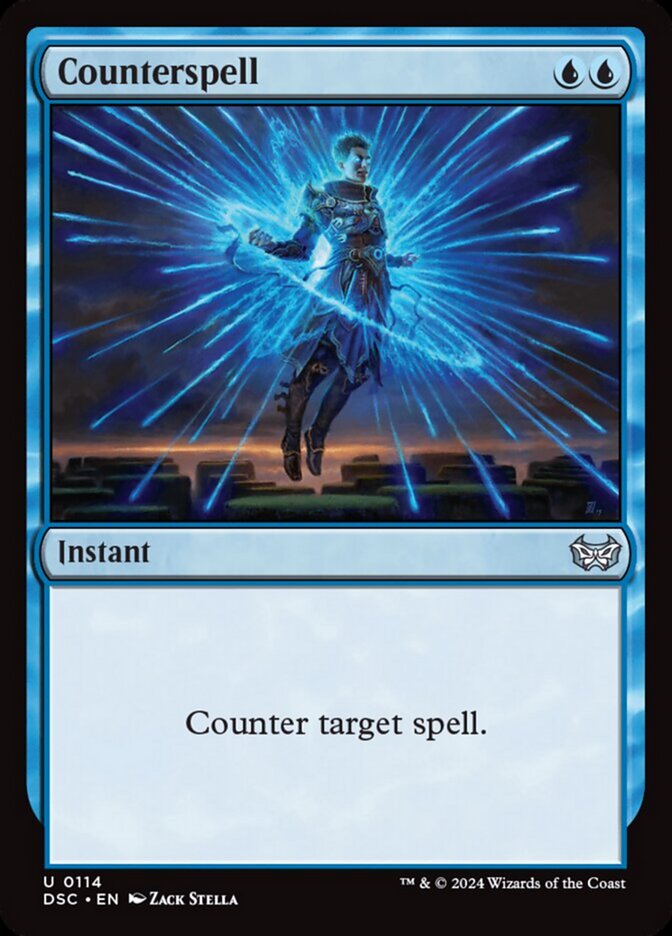 Counterspell
If you cast Chemister's Trick with Overload, it is still a single spell on the stack. An opponent can cast Counterspell targeting Chemister's Trick. If the counter resolves, the entire Overloaded effect is removed from the stack, and none of the opponent's creatures will be affected by the power reduction or the forced attack.
 Chaos Warp
Suppose your opponent has a massive creature. You cast Chemister's Trick to force it to attack. In response, your opponent casts Chaos Warp on their own creature. If the creature is shuffled away and a new creature is put onto the battlefield from the top of the library, that New creature was not on the battlefield when the Trick resolved. Therefore, the new creature does not have -2/-0 and is not forced to attack.
Guide written with AI from the official text and rulings. Official English text prevails.
How it works : Chemister's Trick
Original English text — Wizards of the Coast / Scryfall
- #1· Wizards of the Coast
If you don't pay the overload cost of a spell with overload, that spell will have a single target. If you pay the overload cost, the spell won't have any targets.
No other card is named in this ruling.
- #2· Wizards of the Coast
Because a spell with overload doesn't target when its overload cost is paid, it may affect permanents with hexproof or with protection from the appropriate color.
No other card is named in this ruling.
- #3· Wizards of the Coast
To determine the total cost of a spell, start with the mana cost or alternative cost you're paying (such as an overload cost), add any cost increases, then apply any cost reductions. The mana value of the spell remains unchanged, no matter what the total cost to cast it was.
No other card is named in this ruling.
- #4· Wizards of the Coast
If you are instructed to cast a spell with overload "without paying its mana cost," you can't choose to pay its overload cost instead.
No other card is named in this ruling.
- #5· Wizards of the Coast
The controller of a creature that attacks if able still chooses which player or planeswalker it attacks.
No other card is named in this ruling.
- #6· Wizards of the Coast
If, during a player's declare attacker's step, a creature is tapped, is affected by a spell or ability that says it can't attack, or hasn't been under that player's control continuously since the turn began (and doesn't have haste), then it doesn't attack. If there's a cost associated with having a creature attack, the player isn't forced to pay that cost, so it doesn't have to attack in that case either.
No other card is named in this ruling.
- #7· Wizards of the Coast
If you cast Chemister's Trick with overload, only creatures you don't control that are on the battlefield when Chemister's Trick resolves are affected. Creatures that come under another player's control later in the turn are not.
No other card is named in this ruling.
Legal formats
Commentaires
- Sois le premier à commenter cette carte.
Read next
Meta decks with Chemister's Trick
No archived Top 8 deck with this card yet.