

Galvanic Iteration is one of those cards players keep asking about. Here is, in plain words, what its official text says, the rulings published by Wizards of the Coast, and the combos players actually run.
Official card text
When you next cast an instant or sorcery spell this turn, copy that spell. You may choose new targets for the copy. Flashback(You may cast this card from your graveyard for its flashback cost. Then exile it.)
Complete guide
Galvanic Iteration is a powerful tool for blue and red mages looking to double their impact on the battlefield. By setting up a delayed triggered ability, this instant ensures that your next big play resonates twice as loud. Whether you cast it from your hand or utilize its flashback cost from the graveyard, it is a versatile piece for any spell-slinging strategy.
What It Does
Galvanic Iteration creates a delayed triggered ability that waits for you to cast your next instant or sorcery spell during the same turn. When you do, that spell is copied automatically. Because the copy is created directly on the stack, it is not considered 'cast,' so it won't trigger abilities that look for players casting spells. However, the copy inherits all choices made for the original, including the value of X and any chosen modes.
How It Resolves Step by Step
First, you cast Galvanic Iteration and it resolves, creating a silent 'timer' on the game state. Second, you cast your next instant or sorcery spell. As soon as you finish casting that spell, Galvanic Iteration's triggered ability goes on the stack on top of it. Third, you choose new targets for the copy if you wish. The copy resolves first, followed by the original spell. If you used Flashback, the physical Galvanic Iteration card is exiled instead of going to the graveyard.
Common Mistakes
A frequent error is assuming you can change the modes of a copied spell; if you copy a modal spell, the copy must use the same modes selected for the original. Players also often forget that the copy resolves before the original spell. Lastly, remember that casting a second Galvanic Iteration will trigger the first one, meaning your next spell after that will be copied twice!
When to Play It
Timing is everything. You should play Galvanic Iteration during your own turn when you have enough mana to follow it up with a high-impact spell. Since it is an instant, you can also use it on an opponent's turn to double a defensive spell or a removal piece. If it’s in your graveyard, don't forget the Flashback—it's a great way to get value even when your hand is empty.
Interaction examples
 Chaos Warp
You cast Galvanic Iteration and let it resolve. Then, you cast Chaos Warp targeting an opponent's creature. Galvanic Iteration triggers and creates a copy of Chaos Warp. You choose a new target for the copy, perhaps another creature. The copy resolves first, shuffling that creature away, and then the original Chaos Warp resolves, shuffling the first target. Two permanents are gone for the price of one original spell!
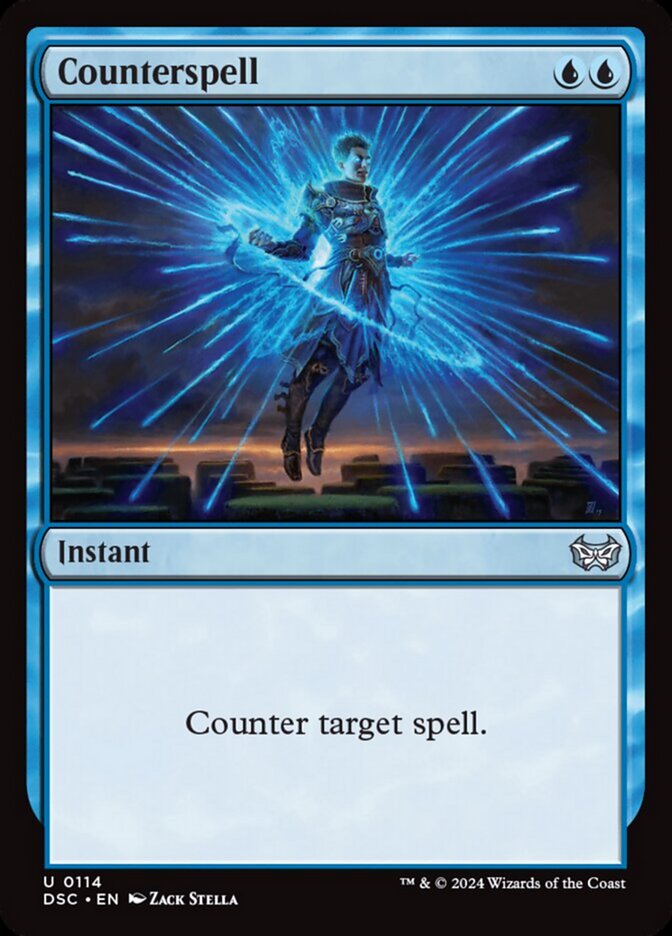 Counterspell
If an opponent casts two dangerous spells, you can cast Galvanic Iteration followed by Counterspell. When you cast Counterspell targeting the first threat, the Iteration creates a copy. You can then change the target of that copy to the second threat on the stack. Both threats will be countered as the copy and the original Counterspell resolve sequentially.
Guide written with AI from the official text and rulings. Official English text prevails.
How it works : Galvanic Iteration
Original English text — Wizards of the Coast / Scryfall
- #1· Wizards of the Coast
If a card with flashback is put into your graveyard during your turn, you can cast it if it's legal to do so before any other player can take any actions.
No other card is named in this ruling.
- #2· Wizards of the Coast
"Flashback [cost]" means "You may cast this card from your graveyard if the resulting spell is an instant or sorcery spell by paying [cost] rather than paying its mana cost" and "If the flashback cost was paid, exile this card instead of putting it anywhere else any time it would leave the stack."
No other card is named in this ruling.
- #3· Wizards of the Coast
A spell cast using flashback will always be exiled afterward, whether it resolves, is countered, or leaves the stack in some other way.
No other card is named in this ruling.
- #4· Wizards of the Coast
You can cast a spell using flashback even if it was somehow put into your graveyard without having been cast.
No other card is named in this ruling.
- #5· Wizards of the Coast
You must still follow any timing restrictions and permissions, including those based on the card's type. For instance, you can cast a sorcery using flashback only when you could normally cast a sorcery.
No other card is named in this ruling.
- #6· Wizards of the Coast
To determine the total cost of a spell, start with the mana cost or alternative cost (such as a flashback cost) you're paying, add any cost increases, then apply any cost reductions. The mana value of the spell is determined only by its mana cost, no matter what the total cost to cast the spell was.
No other card is named in this ruling.
- #7· Wizards of the Coast
If the spell that's copied is modal (that is, it says "Choose one —" or the like), the copy will have the same mode or modes. You can't choose different ones.
No other card is named in this ruling.
- #8· Wizards of the Coast
The copy that Galvanic Iteration's ability creates is created on the stack, so it's not "cast." Abilities that trigger when a player casts a spell won't trigger.
No other card is named in this ruling.
- #9· Wizards of the Coast
Galvanic Iteration's ability will copy any instant or sorcery spell, not just one with targets.
No other card is named in this ruling.
- #10· Wizards of the Coast
If you resolve one Galvanic Iteration after another (or cast the same one with flashback), the second Galvanic Iteration will be copied. That copy and spell each resolve, creating two delayed triggered abilities. The next spell you cast after that will be copied twice. If that spell is also a Galvanic Iteration, the following spell will be copied three times, and so on.
No other card is named in this ruling.
- #11· Wizards of the Coast
If the spell that's copied has an X whose value was determined as it was cast, the copy has the same value of X.
No other card is named in this ruling.
- #12· Wizards of the Coast
You can't choose to pay any additional costs for the copy. However, effects based on any additional costs that were paid for the original spell are copied as though those same costs were paid for the copy too.
No other card is named in this ruling.
- #13· Wizards of the Coast
A copy is created even if the spell that caused Galvanic Iteration's ability to trigger has been countered by the time that ability resolves. The copy resolves before the original spell.
No other card is named in this ruling.
- #14· Wizards of the Coast
The copy will have the same targets as the spell it's copying unless you choose new ones. You may change any number of the targets, including all of them or none of them. The new targets must be legal.
No other card is named in this ruling.
Popular combos
Real combos played by the community, sorted by popularity.


Errant, Street Artist + Reality Spasm + Galvanic Iteration
- 1Cast Galvanic Iteration by paying
 , copying the next instant or sorcery spell you cast.
- 2Cast Reality Spasm by paying at least
 , targeting at least three permanents and choosing the untap mode.
- 3Galvanic Iteration triggers, copying Reality Spasm, targeting at least three permanents.
- 4Holding priority, activate at least two mana-producing permanents you control by tapping them, adding at least
 .
- 5Activate Errant by paying and tapping it, copying the Reality Spasm copy, targeting Errant and at least two mana-producing permanents you control.
- 6Resolve the copy of Reality Spasm from step 3, untapping Errant and at least two mana-producing permanents you control.
- 7Repeat from step 4.
Legal formats
Commentaires
- Sois le premier à commenter cette carte.
Read next
Meta decks with Galvanic Iteration
No archived Top 8 deck with this card yet.