
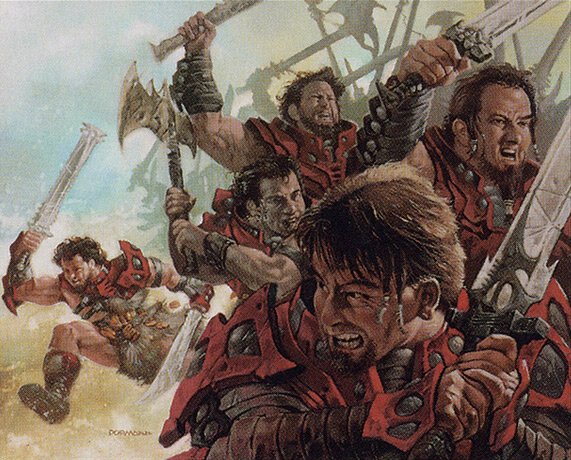
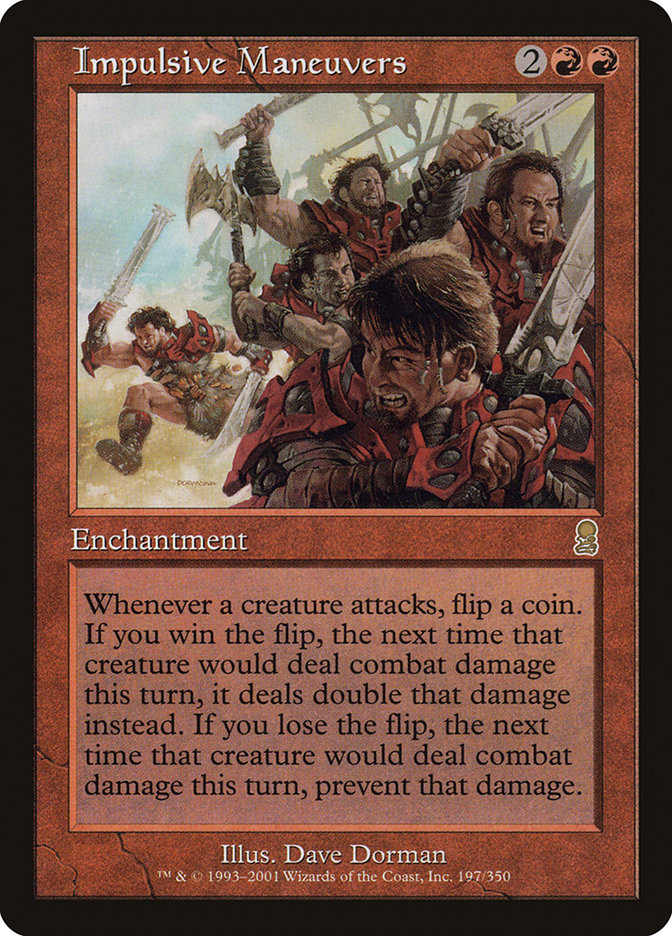
Impulsive Maneuvers is one of those cards players keep asking about. Here is, in plain words, what its official text says, the rulings published by Wizards of the Coast, and the combos players actually run.
Official card text
Whenever a creature attacks, flip a coin. If you win the flip, the next time that creature would deal combat damage this turn, it deals double that damage instead. If you lose the flip, the next time that creature would deal combat damage this turn, prevent that damage.
Complete guide
Impulsive Maneuvers is a chaotic Red enchantment that turns every combat phase into a high-stakes gamble. By forcing a coin flip for every single attacker, it can either amplify your damage to lethal levels or leave your creatures swinging at nothing but air. This card is perfect for players who enjoy the unpredictability of the dice and the thrill of chance.
What It Does
Impulsive Maneuvers creates a triggered ability that fires off whenever any creature is declared as an attacker. This applies to both your creatures and your opponents' creatures. For each individual attacker, a coin is flipped to determine its fate: a win doubles its next combat damage, while a loss prevents it entirely. Note that these effects only apply to the next time that specific creature would deal combat damage during the current turn.
How It Resolves
When the Declare Attackers step begins, the active player chooses which creatures are attacking. Impulsive Maneuvers then puts a separate trigger on the stack for each creature. You resolve these one by one, flipping a coin for each. The result creates a replacement effect that waits for the combat damage step. If you win the flip, a 'double damage' effect is applied; if you lose, a 'prevent damage' effect is applied. These effects expire once the damage is dealt (or prevented) or the turn ends.
Common Mistakes
A common misconception is that you flip one coin for the entire group of attackers. Per official rulings, you must flip a coin for each creature individually. Additionally, remember that this card affects all creatures, not just yours. If an opponent attacks you, you will be flipping coins for their creatures as well, which might accidentally double the damage coming your way!
When to Play It
This card shines in decks that can mitigate the risk of losing flips or maximize the reward of winning them. It is particularly effective in aggressive decks that attack with many creatures, statistically ensuring that at least some will get through for double damage. It also pairs well with cards that grant extra combat phases, giving you more opportunities to flip and deal damage.
Interaction examples
 Shared Animosity
If you attack with three Goblins while Shared Animosity and Impulsive Maneuvers are on the battlefield, both cards trigger. Shared Animosity gives each Goblin +2/+0. Then, you flip a coin for each Goblin. If you win a flip for one Goblin that is now a 3/1, it will deal 6 combat damage instead of 3. If you lose the flip, it deals 0.
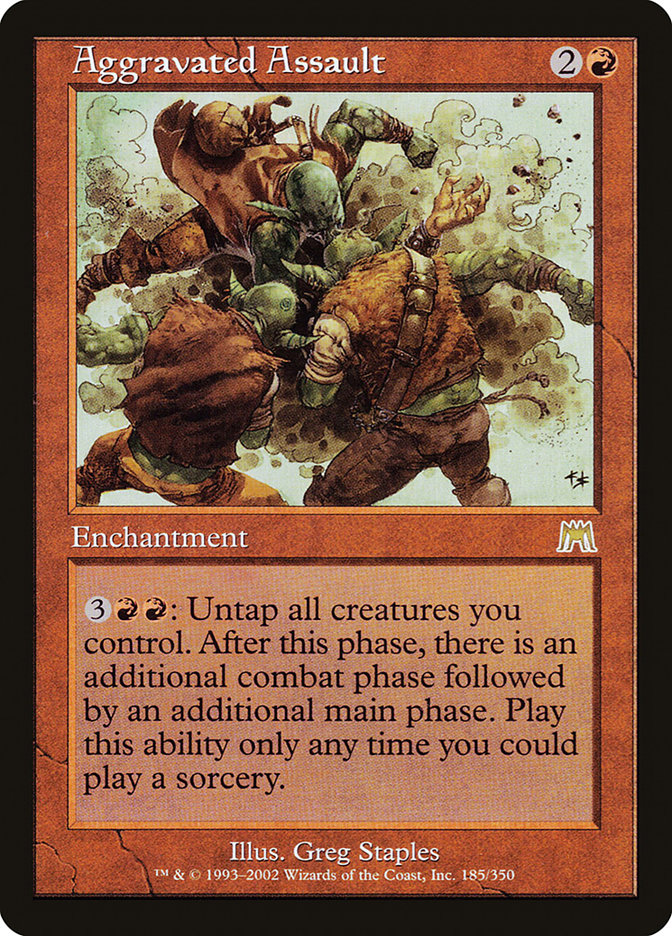 Aggravated Assault
After a combat phase where Impulsive Maneuvers resolved, you can activate Aggravated Assault to get an additional combat phase. When you attack again in the second phase, Impulsive Maneuvers triggers again for each creature. Since the first 'next time' damage replacement effect was already used up in the first combat, you get a fresh set of coin flips for the new damage step.
Guide written with AI from the official text and rulings. Official English text prevails.
How it works : Impulsive Maneuvers
Original English text — Wizards of the Coast / Scryfall
- #1· Wizards of the Coast
You flip a coin for each creature that attacks, not once per attack.
No other card is named in this ruling.
Legal formats
Commentaires
- Sois le premier à commenter cette carte.
Read next
Meta decks with Impulsive Maneuvers
No archived Top 8 deck with this card yet.