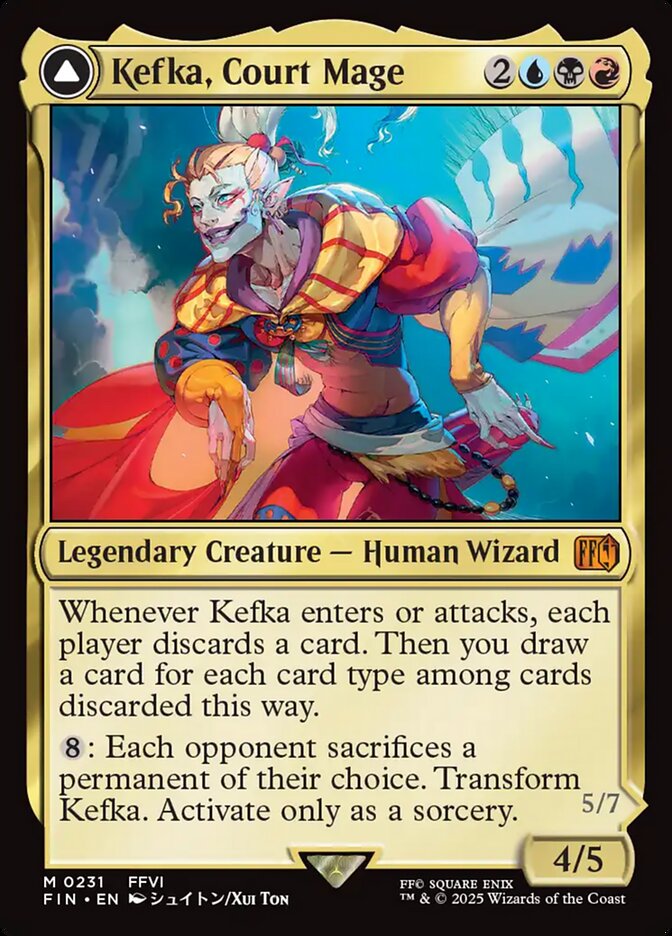
Kefka, Court Mage // Kefka, Ruler of Ruin is one of those cards players keep asking about. Here is, in plain words, what its official text says, the rulings published by Wizards of the Coast, and the combos players actually run.
Official card text
Whenever Kefka enters or attacks, each player discards a card. Then you draw a card for each card type among cards discarded this way.: Each opponent sacrifices a permanent of their choice. Transform Kefka. Activate only as a sorcery. Flying Whenever an opponent loses life during your turn, you draw that many cards.
Complete guide
Step into the chaotic court of Kefka, Court Mage, a versatile legend that thrives on shared suffering and card advantage. This double-faced threat cycles through your opponents' resources before transforming into the devastating Kefka, Ruler of Ruin, who rewards every point of damage with fresh cards.
Chaos in the Court
While on his front face, Kefka, Court Mage triggers whenever he enters the battlefield or attacks. Each player must discard a card simultaneously. Once the dust settles, you count the number of unique card types among the discarded cards—such as Artifact, Creature, or Land—and draw that many cards. This ensures that even if you discard a card you needed, you are likely to refill your hand with several new options.
The Path to Ruin
Transforming Kefka is a monumental task that requires eight mana and can only be done during your main phase when the stack is empty. When the ability resolves, each opponent chooses one of their permanents to sacrifice. Unlike targeting, this ability forces the opponent to make the choice, bypassing protection like Hexproof. Once those permanents are gone, Kefka transforms into his Avatar form, gaining Flying and a powerful draw engine based on life loss.
Card Types and Supertypes
When calculating how many cards to draw from the discard trigger, remember that only official card types count: Artifact, Battle, Creature, Enchantment, Instant, Kindred, Land, Planeswalker, and Sorcery. Supertypes like 'Legendary' or 'Basic' do not count toward your draw total. If your opponent discards a Legendary Creature and you discard a Basic Land, you have discarded two types (Creature and Land) and will draw two cards.
Winning with the Ruler
Kefka, Ruler of Ruin turns any instance of opponent life loss during your turn into card draw. This includes combat damage, direct damage spells, or life loss from abilities. Because the ability checks 'that many cards,' a single attack that deals 5 damage will draw you 5 cards immediately, making it nearly impossible for your opponents to keep up with your resources.
Interaction examples
 Solemn Simulacrum
If you play Kefka, Court Mage and choose to discard Solemn Simulacrum while an opponent discards a Basic Land, you will draw two cards. This is because Solemn Simulacrum counts as both an Artifact and a Creature, providing two card types from a single discard, while the Land provides the third potential type.
 Roaming Throne
With Roaming Throne on the battlefield naming 'Human' or 'Wizard,' Kefka, Court Mage's entry ability triggers twice. Each player discards a card for the first trigger, you draw cards based on the types, and then everyone repeats the process for the second trigger. This is an excellent way to empty your opponents' hands while drawing a massive amount of cards yourself.
Guide written with AI from the official text and rulings. Official English text prevails.
How it works : Kefka, Court Mage // Kefka, Ruler of Ruin
Original English text — Wizards of the Coast / Scryfall
- #1· Wizards of the Coast
The card types in Magic include artifact, battle, creature, enchantment, instant, kindred, land, planeswalker, and sorcery. Legendary, basic, and snow are supertypes, not card types; Hero and Saga are subtypes, not card types.
No other card is named in this ruling.
- #2· Wizards of the Coast
The mana value of a nonmodal double-faced card is the mana value of its front face, no matter which face is up.
No other card is named in this ruling.
- #3· Wizards of the Coast
The back face of a nonmodal double-faced card usually has a color indicator that defines its color.
No other card is named in this ruling.
- #4· Wizards of the Coast
In the Commander variant, a double-faced card's color identity is determined by the mana costs and mana symbols in the rules text of both faces combined. If either face has a color indicator or basic land type, those are also considered. For example, Cecil, Dark Knight's color identity is black and white, since its front face is black and its back face has a white color indicator.
No other card is named in this ruling.
- #5· Wizards of the Coast
Each nonmodal double-faced card in this release is cast face up. In every zone other than the battlefield, consider only the characteristics of its front face. If it is on the battlefield, consider only the characteristics of the face that's up; the other face's characteristics are ignored.
No other card is named in this ruling.
- #6· Wizards of the Coast
If you are instructed to put a card that isn't a double-faced card onto the battlefield transformed, it will not enter at all. In that case, it stays in the zone it was previously in. For example, if a single-faced card is a copy of Crystal Fragments, it will be exiled during the resolution of its second ability and remain in exile.
No other card is named in this ruling.
- #7· Wizards of the Coast
Each face of a nonmodal double-faced card has its own set of characteristics: name, types, subtypes, abilities, and so on. While a nonmodal double-faced permanent is on the battlefield, consider only the characteristics of the face that's currently up. The other set of characteristics is ignored.
No other card is named in this ruling.
- #8· Wizards of the Coast
While resolving Kefka, Court Mage's last ability, the next opponent in turn order chooses a permanent they control, then each other opponent in turn order does the same. Then each of the chosen permanents are sacrificed simultaneously.
No other card is named in this ruling.
- #9· Wizards of the Coast
A nonmodal double-faced card enters with its front face up by default, unless a spell or ability instructs you to put it onto the battlefield transformed or allows you to cast it transformed, in which case it enters with its back face up.
No other card is named in this ruling.
- #10· Wizards of the Coast
A token that is created as a copy of a double-faced permanent or a double-faced card in another zone is a double-faced token. It will have both the front face and back face of whatever object it's copying. If it's copying a double-faced permanent whose back face is up, the token will enter with its back face up. It can transform if instructed to do so.
No other card is named in this ruling.
Popular combos
Real combos played by the community, sorted by popularity.
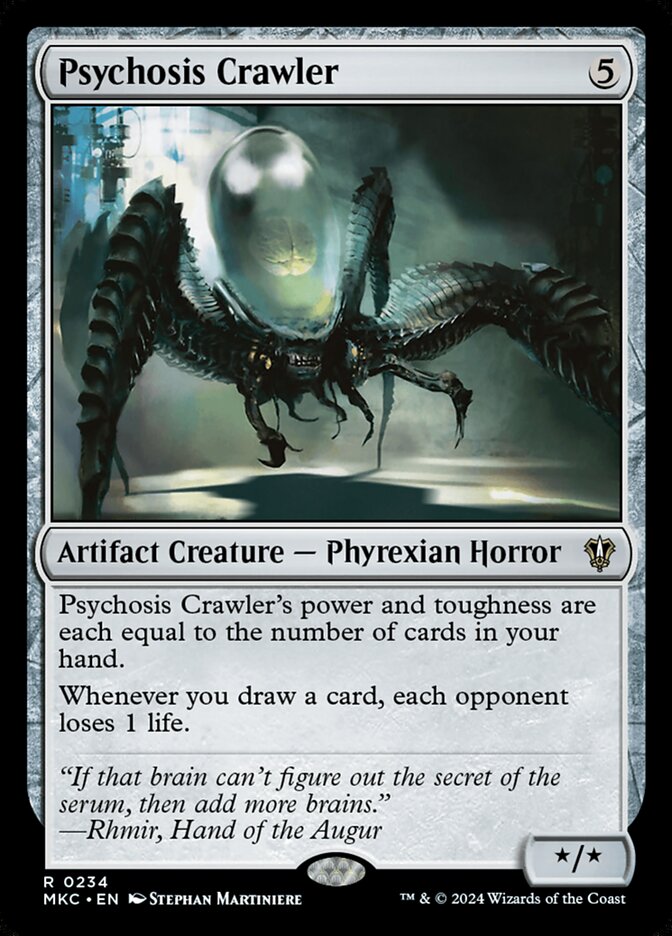
Kefka, Court Mage // Kefka, Ruler of Ruin + Psychosis Crawler
- 1Draw a card.
- 2Psychosis Crawler triggers, causing each opponent to lose 1 life.
- 3Kefka triggers, causing you to draw a card.
- 4Repeat from step 2.
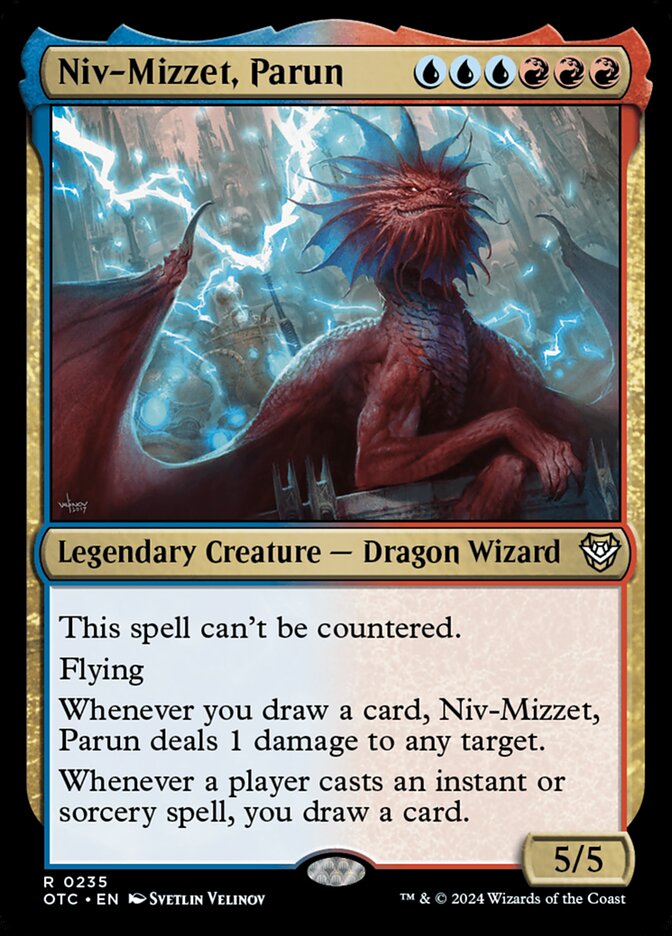
Niv-Mizzet, Parun + Kefka, Court Mage // Kefka, Ruler of Ruin
- 1Draw a card.
- 2Niv-Mizzet triggers, dealing 1 damage to an opponent.
- 3Kefka triggers, causing you to draw a card.
- 4Repeat from step 2.
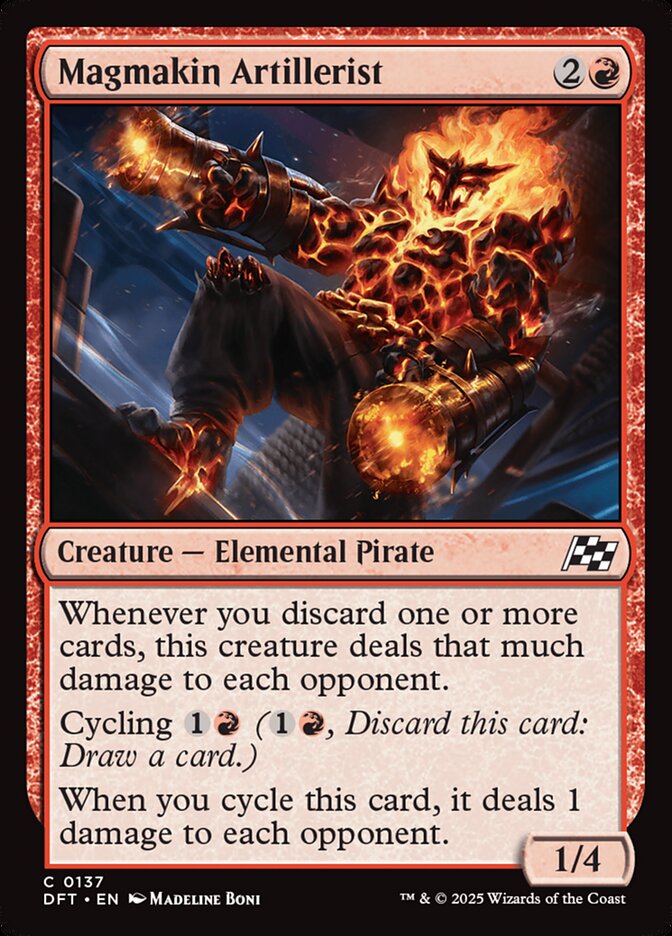
Magmakin Artillerist + Kefka, Court Mage // Kefka, Ruler of Ruin
- 1Proceed to your cleanup step, causing you to discard down to your maximum hand size.
- 2Magmakin Artillerist triggers for each card discarded this way.
- 3Resolve the first Magmakin Artillerist trigger, dealing damage to each opponent.
- 4Kefka triggers, causing you to draw a card for each opponent that lost life.
- 5Repeat from step 3 as needed for all remaining Magmakin Artillerist triggers.
- 6Once all players have passed priority and the stack is empty, you will still be in your cleanup step, and will discard down to your maximum hand size.
- 7Repeat from step 2.
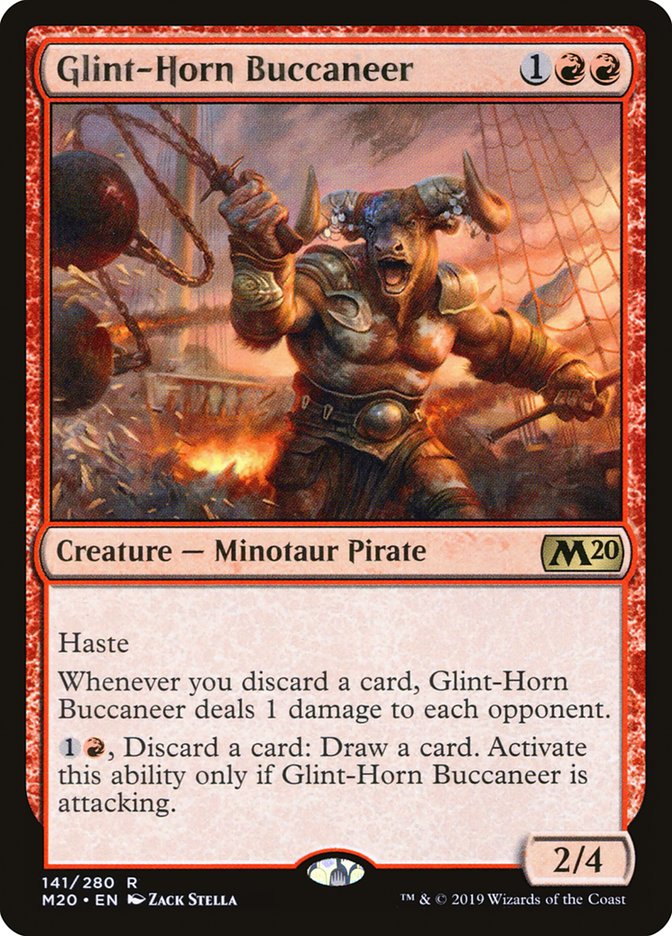
Kefka, Court Mage // Kefka, Ruler of Ruin + Glint-Horn Buccaneer
- 1Proceed to your cleanup step, causing you to discard down to your maximum hand size.
- 2Glint-Horn Buccaneer triggers for each card discarded this way.
- 3Resolve the first Glint-Horn Buccaneer trigger, dealing 1 damage to each opponent.
- 4Kefka triggers, causing you to draw a card for each opponent that lost life.
- 5Repeat from step 3 as needed for all remaining Glint-Horn Buccaneer triggers.
- 6Once all players have passed priority and the stack is empty, you will still be in your cleanup step, and will discard down to your maximum hand size.
- 7Repeat from step 2.
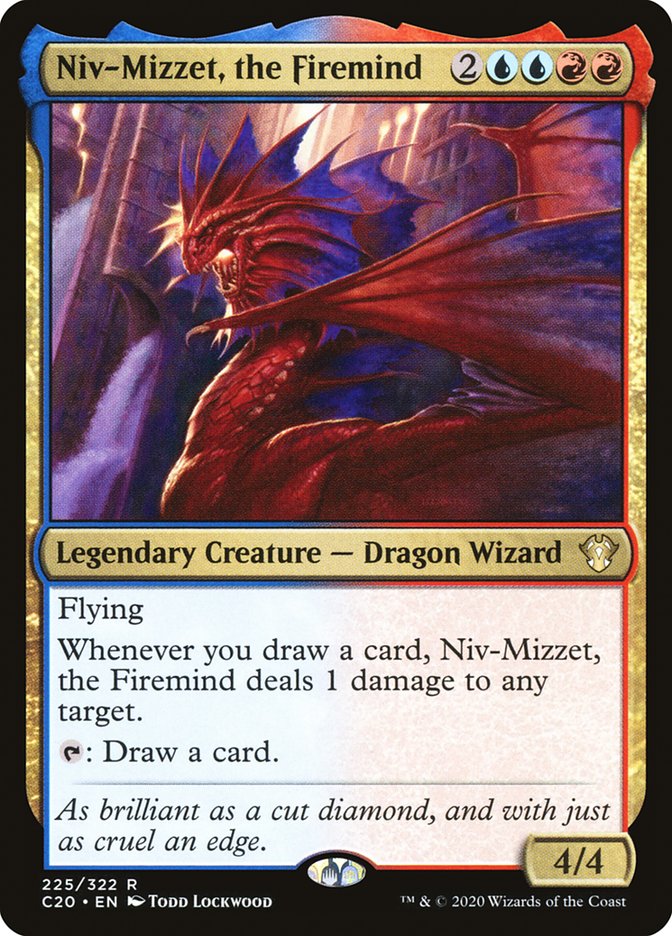
Niv-Mizzet, the Firemind + Kefka, Court Mage // Kefka, Ruler of Ruin
- 1Draw a card.
- 2Niv-Mizzet triggers, dealing 1 damage to an opponent.
- 3Kefka triggers, causing you to draw a card.
- 4Repeat from step 2.
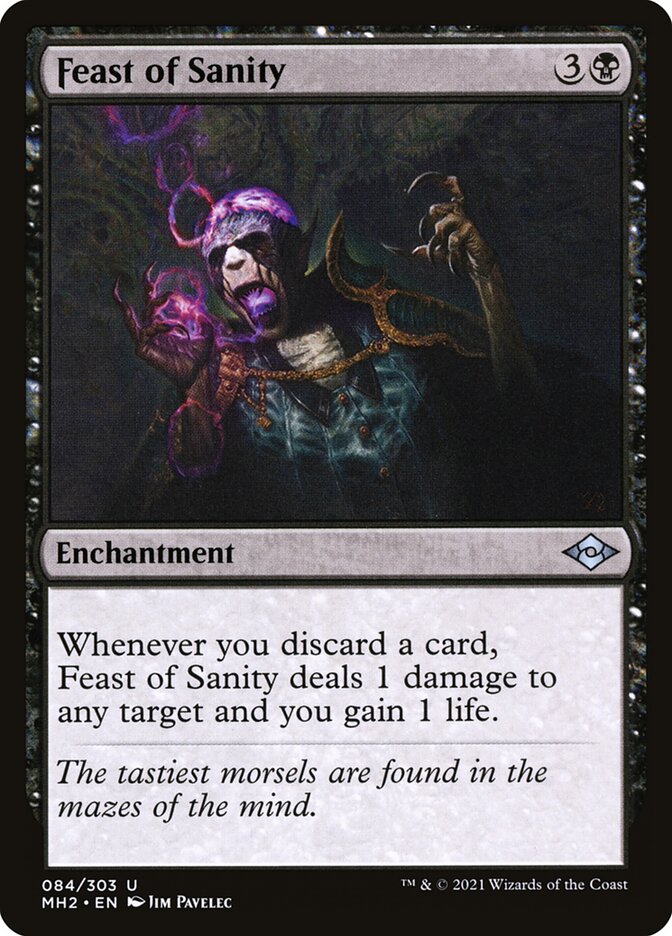
Kefka, Court Mage // Kefka, Ruler of Ruin + Feast of Sanity
- 1Proceed to your cleanup step, causing you to discard down to your maximum hand size.
- 2Feast of Sanity triggers for each card discarded this way.
- 3Resolve the first Feast of Sanity trigger, dealing 1 damage to an opponent and causing you to gain 1 life.
- 4Kefka triggers, causing you to draw a card.
- 5Repeat from step 3 as needed for all remaining Feast of Sanity triggers.
- 6Once all players have passed priority and the stack is empty, you will still be in your cleanup step, and will discard down to your maximum hand size.
- 7Repeat from step 2.
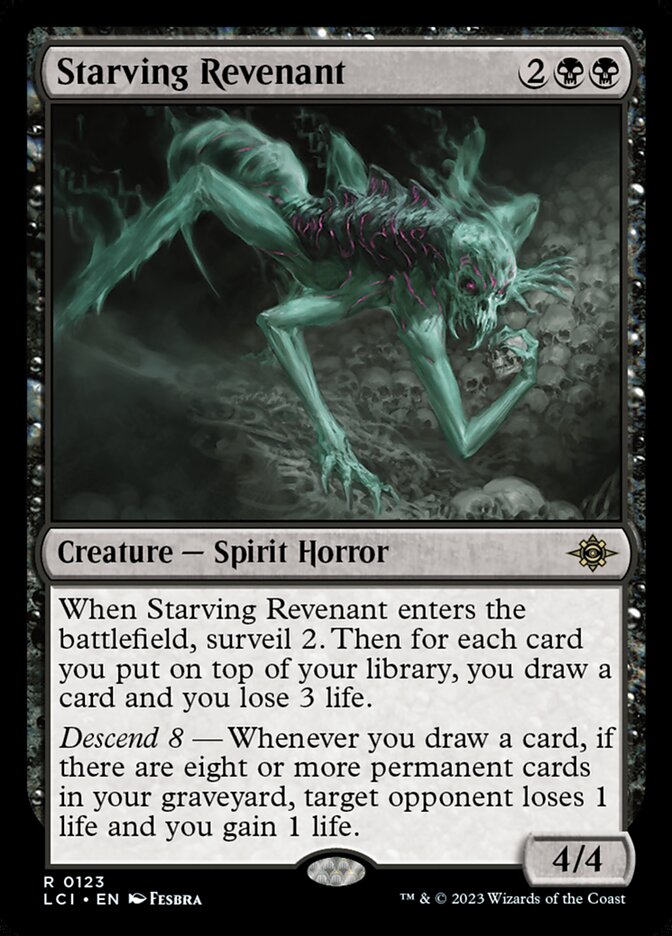
Kefka, Court Mage // Kefka, Ruler of Ruin + Starving Revenant
- 1Draw a card.
- 2Starving Revenant triggers, causing you to gain 1 life and an opponent to lose 1 life.
- 3Kefka triggers, causing you to draw a card.
- 4Repeat from step 2.
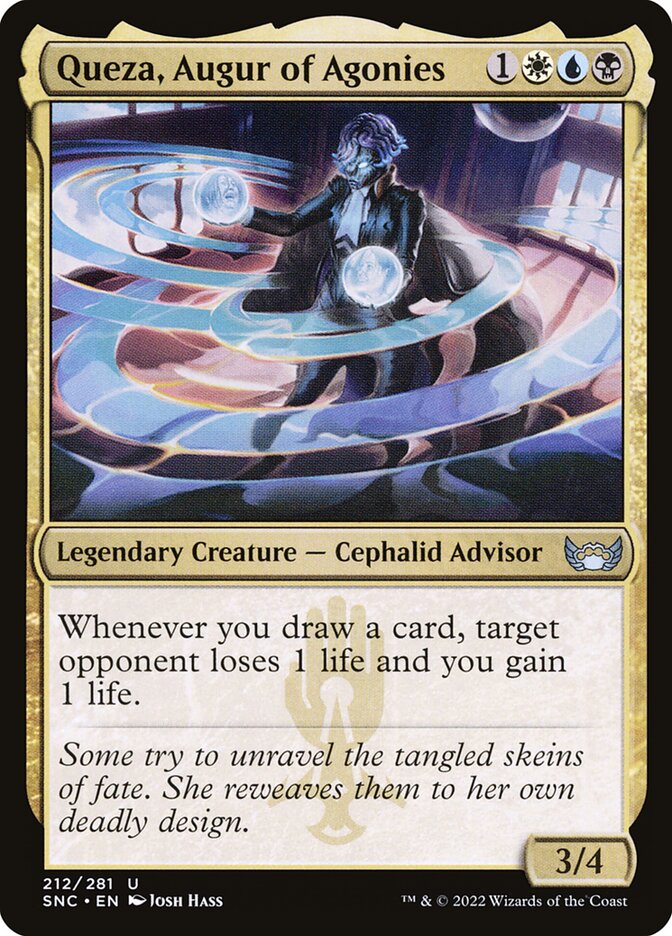
Kefka, Court Mage // Kefka, Ruler of Ruin + Queza, Augur of Agonies
- 1Draw a card.
- 2Queza triggers, causing you to gain 1 life and an opponent to lose 1 life.
- 3Kefka triggers, causing you to draw a card.
- 4Repeat from step 2.
Legal formats
Commentaires
- Sois le premier à commenter cette carte.
Read next
Meta decks with Kefka, Court Mage // Kefka, Ruler of Ruin