

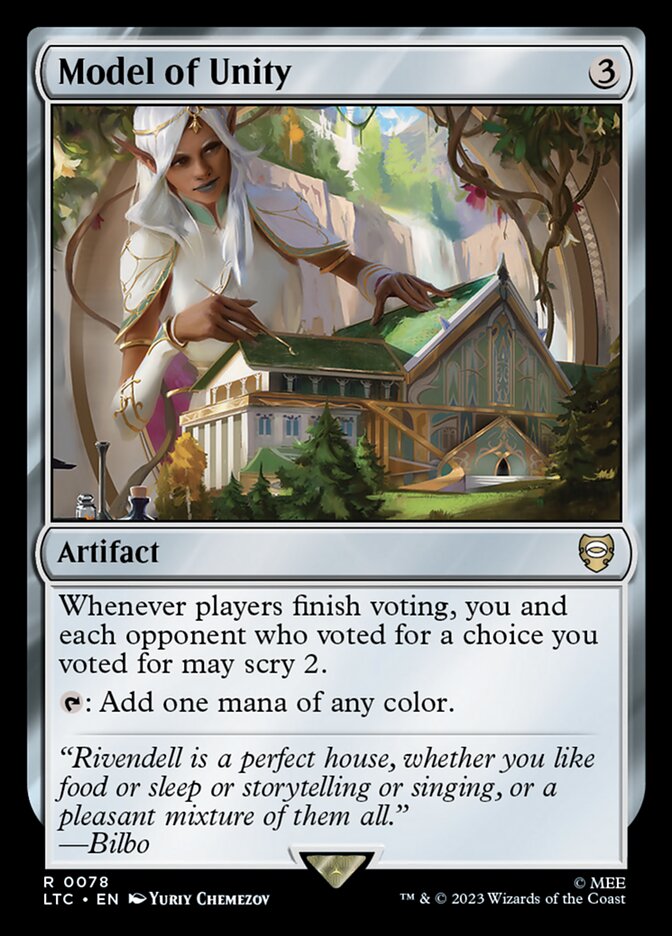
Model of Unity is one of those cards players keep asking about. Here is, in plain words, what its official text says, the rulings published by Wizards of the Coast, and the combos players actually run.
Official card text
Whenever players finish voting, you and each opponent who voted for a choice you voted for may scry 2.: Add one mana of any color.
Complete guide
Model of Unity is a versatile artifact that rewards diplomatic play and shared interests at the table. Not only does it provide flexible mana fixing, but it also offers significant card selection whenever you find common ground during a vote. This card is a staple for players who enjoy politics-heavy formats like Commander.
What It Does
Model of Unity serves two primary roles. First, it acts as a mana rock, tapping for one mana of any color to help you cast your spells. Second, it features a triggered ability that triggers whenever a 'voting' process concludes. If you and any of your opponents voted for the same outcome, both you and those specific opponents get to scry 2.
How It Resolves Step by Step
When a spell or ability that requires voting resolves, all players cast their votes in turn order. Once the final vote is cast and the result is determined, Model of Unity's ability triggers. First, the game identifies which opponents chose the same option as you. Then, you and those specific opponents scry 2. In terms of timing, all eligible players look at their cards simultaneously, but the decisions of where to put those cards (top or bottom) happen in turn order starting with the active player.
Common Mistakes
A common error is thinking everyone scries if a vote happens. Only the controller of Model of Unity and the opponents who matched their vote receive the bonus. If you vote for 'Time' and your opponents all vote for 'Money,' only you will scry 2. Additionally, remember that this is a triggered ability that goes on the stack after the voting spell has finished its own resolution effects.
When to Play It
Model of Unity shines in decks that include several 'Council's Dilemma' or 'Will of the Council' cards. It is an excellent tool for incentivizing other players to follow your lead, effectively bribing them with a free scry 2 if they agree with your choice.
Interaction examples
 Arcane Signet
If you have both Model of Unity and Arcane Signet on the battlefield, you have access to two mana of any color (provided the color is in your commander's identity for the Signet). You can tap Model of Unity to pay for generic costs or specific color requirements just like a traditional mana rock.
 Swiftfoot Boots
If Model of Unity were to become a creature through another effect, you could use its mana ability to pay for the equip cost of Swiftfoot Boots. However, as an artifact, you can simply use the mana generated by Model of Unity to play the Boots or equip them to a creature already under your control.
In a game where you cast a spell that requires a vote, such as a Council's Dilemma card, you cast your vote first. If an opponent sees you have Model of Unity and wants to scry 2, they may choose to vote the same way you did. Once the voting is finished, the Model triggers, allowing both of you to look at the top two cards of your libraries and put them back in any order.
Guide written with AI from the official text and rulings. Official English text prevails.
How it works : Model of Unity
Original English text — Wizards of the Coast / Scryfall
- #1· Wizards of the Coast
If multiple players are instructed to scry at once, those players each look at the top cards of their library at the same time, then they choose in turn order whether to put those cards on the top or bottom of their library and in what order.
No other card is named in this ruling.
Legal formats
Commentaires
- Sois le premier à commenter cette carte.
Read next
Meta decks with Model of Unity
No archived Top 8 deck with this card yet.