

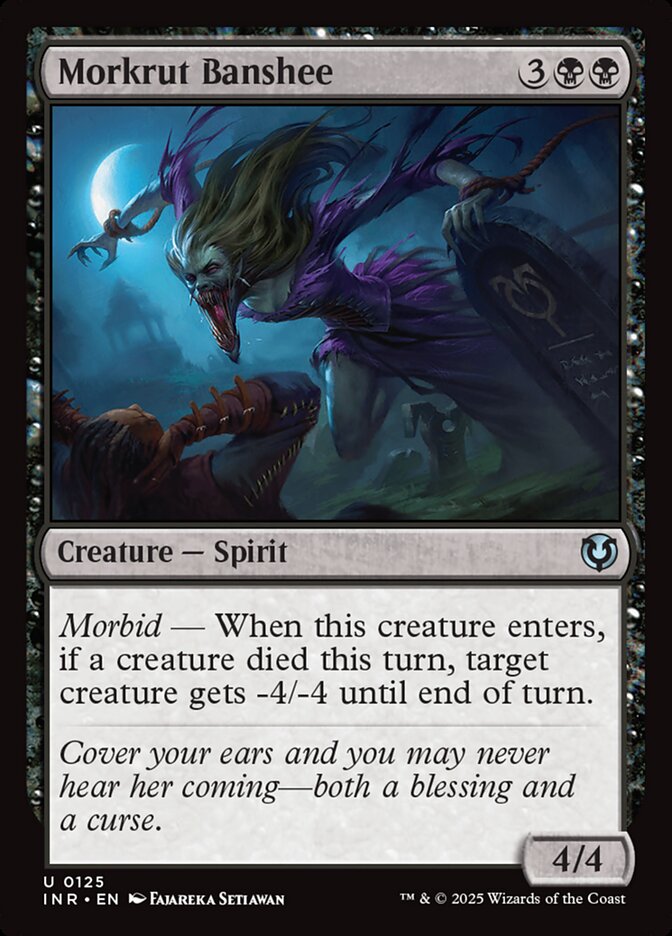
Morkrut Banshee is one of those cards players keep asking about. Here is, in plain words, what its official text says, the rulings published by Wizards of the Coast, and the combos players actually run.
Official card text
Morbid — When this creature enters, if a creature died this turn, target creature gets -4/-4 until end of turn.
Complete guide
Morkrut Banshee is a haunting Spirit that thrives on the demise of others, punishing your opponents for every loss on the battlefield. By leveraging its Morbid ability, you can turn a simple combat trade into a powerful removal spell. Understanding the timing of this trigger is essential to ensuring your Banshee reaches its full potential.
Harnessing the Morbid Trigger
Morkrut Banshee features the Morbid keyword, which checks if at least one creature has died earlier in the turn. A creature is considered to have died if it moved from the battlefield to the graveyard for any reason, including combat damage, sacrifice, or destruction. When Morkrut Banshee enters, the game looks back at the turn history; if the condition is met, the ability goes on the stack and requires a target.
Step-by-Step Resolution
First, the Morkrut Banshee spell must resolve and the creature enters the battlefield. Immediately upon entry, the game checks the 'intervening if' clause: has a creature died this turn? If the answer is no, the ability never triggers. If the answer is yes, you put the ability on the stack and choose a target creature. Once the ability resolves, that target gets -4/-4 until the end of the current turn.
Common Mistakes and Targeting
A frequent error is playing the Banshee on an empty board after a board wipe, forgetting that the ability is mandatory. If Morkrut Banshee is the only creature on the battlefield when its Morbid ability triggers, you must target the Banshee itself, likely resulting in its own death. Additionally, note that the Morbid ability only triggers once upon entry, regardless of how many creatures died previously that turn.
Strategic Timing
To maximize value, play Morkrut Banshee during your second main phase after combat has occurred. This ensures the Morbid condition is active if any creatures were destroyed during the attack. Alternatively, use sacrifice outlets to trigger Morbid at will before casting the Banshee to pick off high-toughness threats.
Interaction examples
 Solemn Simulacrum
If you sacrifice Solemn Simulacrum to an effect, its death satisfies the Morbid condition. When you subsequently cast Morkrut Banshee, its ability triggers, allowing you to give an opponent's creature -4/-4 while you also draw a card from the Simulacrum's death trigger.
 Roaming Throne
With Roaming Throne on the battlefield naming 'Spirit', Morkrut Banshee enters the battlefield. If a creature has died this turn, Roaming Throne causes the Morbid ability to trigger an additional time. You may then choose two different targets (or the same target twice) to receive -4/-4, potentially removing a creature with up to 8 toughness.
Guide written with AI from the official text and rulings. Official English text prevails.
How it works : Morkrut Banshee
Original English text — Wizards of the Coast / Scryfall
- #1· Wizards of the Coast
Morkrut Banshee's morbid ability triggers only once, not once for each creature that has died this turn. If no creatures have died by the time it enters the battlefield, its ability won't trigger at all.
No other card is named in this ruling.
- #2· Wizards of the Coast
If there are no other creatures on the battlefield when the morbid ability triggers, the ability must target Morkrut Banshee itself.
No other card is named in this ruling.
Legal formats
Commentaires
- Sois le premier à commenter cette carte.
Read next
Meta decks with Morkrut Banshee
No archived Top 8 deck with this card yet.