

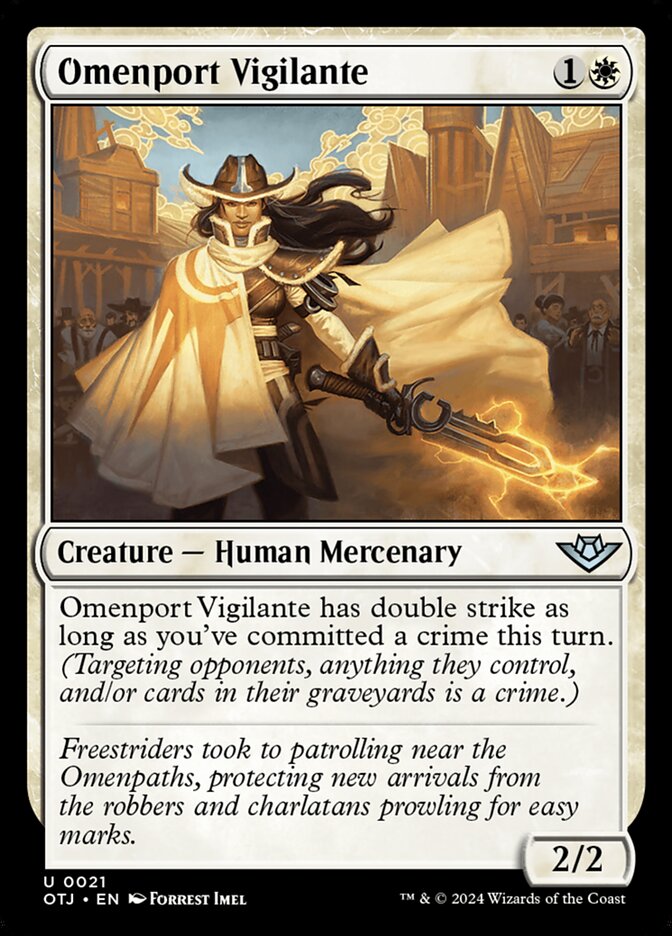
Omenport Vigilante is one of those cards players keep asking about. Here is, in plain words, what its official text says, the rulings published by Wizards of the Coast, and the combos players actually run.
Official card text
This creature has double strike as long as you've committed a crime this turn. (Targeting opponents, anything they control, and/or cards in their graveyards is a crime.)
Complete guide
Omenport Vigilante is an aggressive Human Mercenary that rewards you for being proactive and disruptive. By simply targeting your opponents or their assets, you transform this two-drop into a high-damage threat. Understanding the timing of 'crimes' is essential to unlocking its full potential on the battlefield.
What It Does
Omenport Vigilante has a static ability that grants it double strike as long as you have committed a crime during the current turn. In Magic, a crime is defined as casting a spell, activating an ability, or putting a triggered ability on the stack that targets an opponent, a permanent or spell they control, or a card in their graveyard. Once you commit a crime, the Vigilante gains double strike for the remainder of that turn, regardless of whether the targeting spell or ability actually resolves.
How It Resolves Step by Step
First, you choose a spell or ability that targets an opponent or their things. As soon as you finish casting that spell or activating that ability, the game recognizes a crime has been committed. The static ability of Omenport Vigilante immediately checks this condition; it does not use the stack. If you commit a crime before the combat damage step, the Vigilante will have double strike when damage is dealt. Note that even if your spell is countered or its target becomes illegal later, the crime was still committed the moment the spell was put on the stack.
Common Mistakes
A common misconception is that targeting multiple things at once counts as multiple crimes; however, one spell or ability equals exactly one crime, no matter how many targets it has. Additionally, changing targets with another effect does not count as a new crime; only the initial act of targeting matters. You also cannot commit a crime with a spell that does not target, such as a board wipe that says 'destroy all creatures' without using the word 'target'.
When to Play It
Omenport Vigilante is best played in aggressive decks that utilize cheap interaction. To maximize its double strike, you should look to commit your crimes during your pre-combat main phase or during the declare attackers step. This ensures the Vigilante is powered up before it deals combat damage. It is an excellent early-game creature that scales well if you have a consistent way to target your opponent's board.
Interaction examples
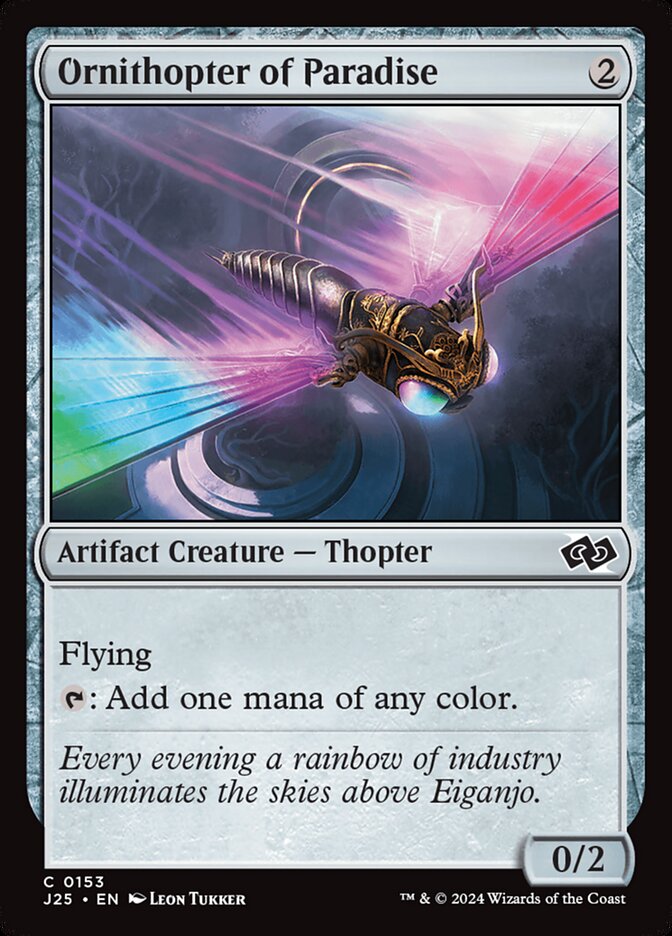 Ornithopter of Paradise
If you control Omenport Vigilante and your opponent controls Ornithopter of Paradise, you might cast a spell like 'Lay Down Arms' targeting the Thopter. The moment you cast that spell, you have committed a crime. Omenport Vigilante immediately gains double strike, allowing it to deal twice its power in damage during the combat phase.
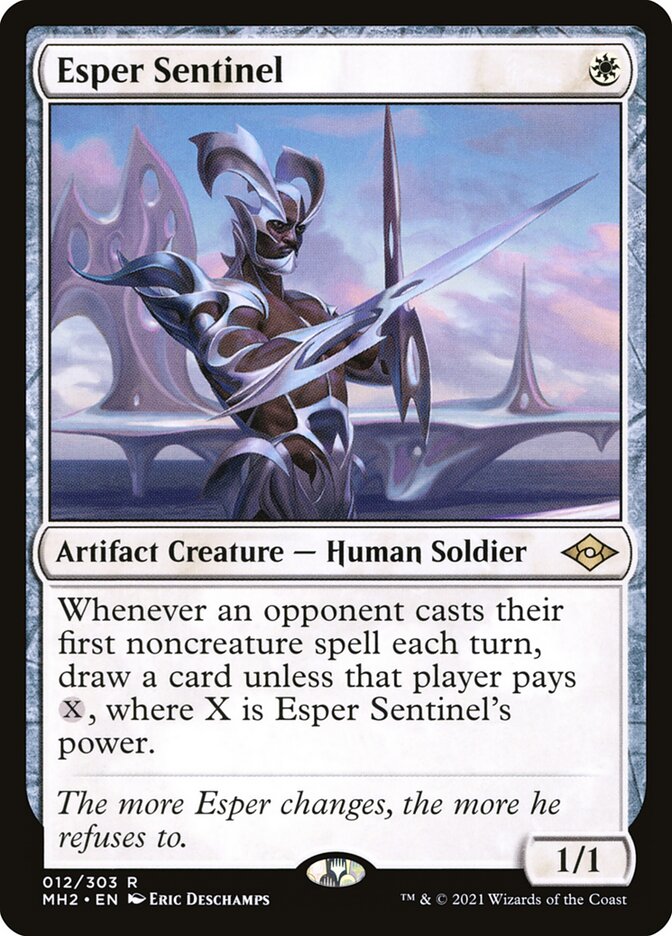 Esper Sentinel
If your opponent controls Esper Sentinel and you target it with an ability during your turn, Omenport Vigilante will gain double strike. However, if you commit a crime on your opponent's turn, the double strike will only last until that turn ends. Since the Vigilante likely won't be attacking on your opponent's turn, the double strike benefit is primarily useful during your own turn to facilitate high-damage attacks.
Guide written with AI from the official text and rulings. Official English text prevails.
How it works : Omenport Vigilante
Original English text — Wizards of the Coast / Scryfall
- #1· Wizards of the Coast
A player commits a crime as they cast a spell, activate an ability, or put a triggered ability on the stack that targets at least one opponent, at least one permanent, spell, or ability an opponent controls, and/or at least one card in an opponent’s graveyard.
No other card is named in this ruling.
- #2· Wizards of the Coast
The spell or ability that constituted a crime doesn’t have to have resolved yet or at all. As soon as you’re finished casting the spell, activating the ability, or putting the triggered ability on the stack, you’ve committed a crime.
No other card is named in this ruling.
- #3· Wizards of the Coast
For example, an ability that triggers when you cast a spell that targets an opponent will trigger at the same time as an ability that triggers whenever you commit a crime. Those abilities can be put on the stack in either order (if you control them both), and they’ll both resolve before the spell that caused them to trigger.
No other card is named in this ruling.
- #4· Wizards of the Coast
A player can commit only one crime per spell or ability they control. Targeting multiple opponents, permanents, spells, abilities, and/or cards with the same spell or ability doesn’t constitute committing multiple crimes.
No other card is named in this ruling.
- #5· Wizards of the Coast
Changing the target or targets of a spell or ability won’t affect whether or not the controller of that spell or ability has committed a crime. Only the initial targets chosen for that spell or ability are used to determine whether or not its controller committed a crime.
No other card is named in this ruling.
Legal formats
Commentaires
- Sois le premier à commenter cette carte.
Read next
Meta decks with Omenport Vigilante
No archived Top 8 deck with this card yet.