


Rings a Bell is one of those cards players keep asking about. Here is, in plain words, what its official text says, the rulings published by Wizards of the Coast, and the combos players actually run.
Official card text
As this enchantment enters, choose a word with four or more letters. After you say the chosen word for the first time each turn, an opponent may ring or imitate a bell within five seconds. When no opponent does, draw a card.
Complete guide
Rings a Bell is a quirky enchantment from the Un-sets that turns your vocabulary into a tactical resource. It challenges your opponents to stay alert and ready to make some noise whenever you speak a specific word during the game. If they fail to react quickly enough to your chosen word, you get rewarded with extra card draw.
Choosing Your Word
As Rings a Bell enters the battlefield, you must choose a word consisting of four or more letters. According to official rulings, this word should be in a language common to all players to ensure fairness. Once the choice is made, it cannot be changed while this instance of the enchantment remains on the battlefield, so choose a word you are likely to say naturally during play.
The Ringing Window
The ability triggers the first time you say the chosen word each turn. After you speak it, a five-second window opens. During this time, any opponent has the opportunity to either ring a physical bell or imitate the sound of one. If the five seconds pass and no opponent has successfully rung or imitated a bell, the 'When no opponent does' condition is met, and you draw a card.
Common Mistakes
Players often forget that this only triggers once per turn; saying the word a second time will not provide another chance to draw. Additionally, opponents must be careful to react within exactly five seconds. While a physical bell is not required—imitation is perfectly legal—official rulings note that bringing a real bell for style points is highly encouraged if you suspect your opponent is running this card.
When to Play It
Rings a Bell is most effective when you can integrate the chosen word into normal game actions or table talk. It forces opponents to divide their attention between the board state and your speech, potentially leading to missed triggers if they become too focused on complex combat math or their own strategy.
Interaction examples
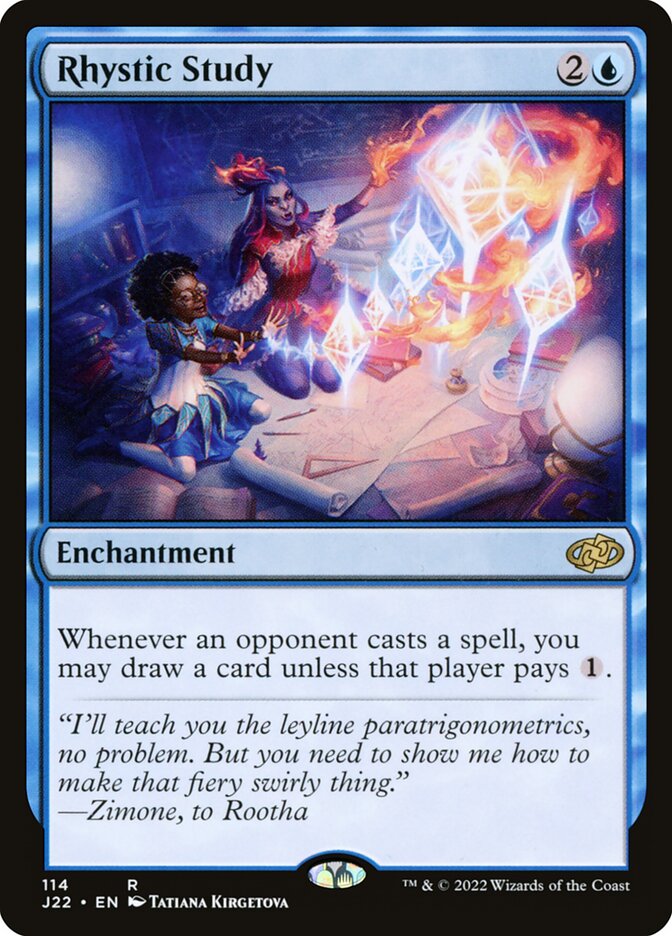 Rhystic Study
If you choose the word 'Study' for Rings a Bell, you create a verbal trap. When an opponent casts a spell, Rhystic Study triggers. As you ask, 'Did you pay for the Study?', you have said your chosen word. If the opponent is focused on the mana tax and fails to ring a bell within five seconds, you draw a card from Rings a Bell in addition to the potential card from Rhystic Study.
 Propaganda
With Rings a Bell choosing the word 'Attack', you can trigger the ability during the combat phase. As your opponent considers their move, you might ask, 'Are you going to attack?'. Under the protection of Propaganda, they are already distracted by calculating mana costs; if they fail to imitate a bell sound within five seconds of your question, you draw a card.
Guide written with AI from the official text and rulings. Official English text prevails.
How it works : Rings a Bell
Original English text — Wizards of the Coast / Scryfall
- #1· Wizards of the Coast
The word should be in a language common to all players in the game.
No other card is named in this ruling.
- #2· Wizards of the Coast
The word can include repeated letters.
No other card is named in this ruling.
- #3· Wizards of the Coast
While imitating a bell is sufficient if you’re the opponent, having a real bell with you in case your opponent has Rings a Bell in their deck will net you huge style points.
No other card is named in this ruling.
Commentaires
- Sois le premier à commenter cette carte.
Read next
Meta decks with Rings a Bell
No archived Top 8 deck with this card yet.