

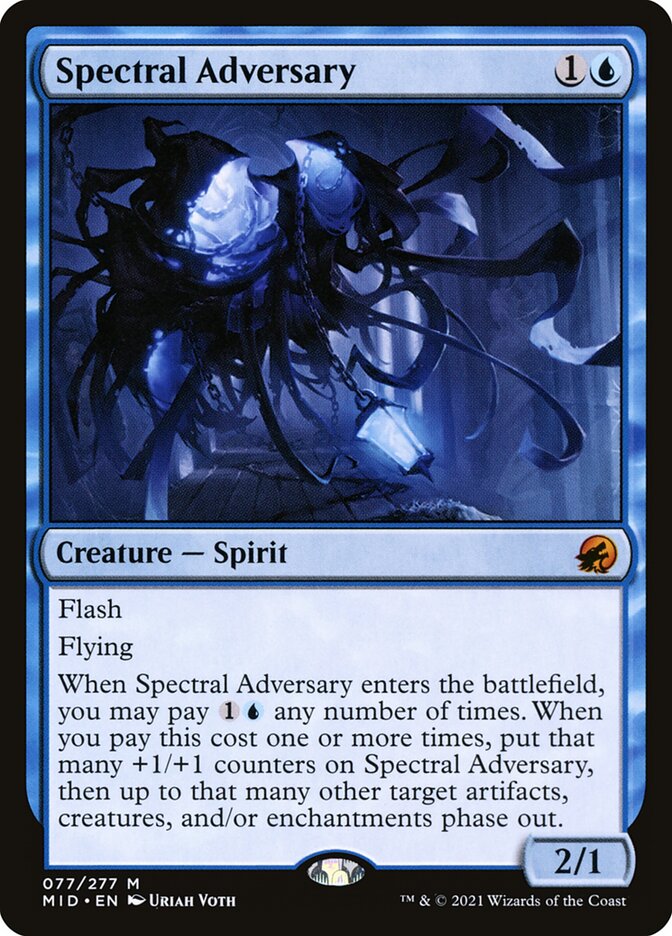
Spectral Adversary is one of those cards players keep asking about. Here is, in plain words, what its official text says, the rulings published by Wizards of the Coast, and the combos players actually run.
Official card text
Flash Flying When this creature enters, you may payany number of times. When you pay this cost one or more times, put that many +1/+1 counters on this creature, then up to that many other target artifacts, creatures, and/or enchantments phase out.
Complete guide
Spectral Adversary is a versatile blue Spirit that offers both a sudden aerial threat and a powerful way to manipulate the board state. With Flash and the ability to phase out permanents, it acts as both a tactical shield for your assets and a disruptive tool against your opponents.
What it Does
Spectral Adversary is a 2/1 flyer that allows you to invest extra mana when it enters the battlefield. By paying an optional cost of {1}{U} multiple times, you scale its power with +1/+1 counters and temporarily remove other permanents from the game using the Phasing mechanic. Phased-out permanents are treated as though they do not exist until their controller's next untap step.
How it Resolves Step by Step
First, Spectral Adversary enters the battlefield and its triggered ability goes on the stack. When this resolves, you choose how many times to pay {1}{U}. If you pay at least once, a second 'reflexive' trigger goes on the stack, and you choose your targets at this time. Only after this second trigger resolves does the Adversary receive counters and the targets phase out. This gives players a window to respond after they know how much mana you spent but before the targets are gone.
Common Mistakes
A frequent error is assuming that phasing out a creature triggers 'leaves the battlefield' abilities—it does not. The permanent and everything attached to it (like Equipment) simply 'stop existing' and return exactly as they were during the next untap step. Additionally, remember that you cannot target Spectral Adversary itself with its own ability, as the text specifies 'other' target permanents.
When to Play it
Use Spectral Adversary during your opponent's combat phase to phase out their largest attackers, or cast it in response to a board wipe to save your most valuable creatures. Because it has Flash, it is an excellent mana sink at the end of an opponent's turn, allowing you to build a massive flyer while clearing blockers for your upcoming turn.
Interaction examples
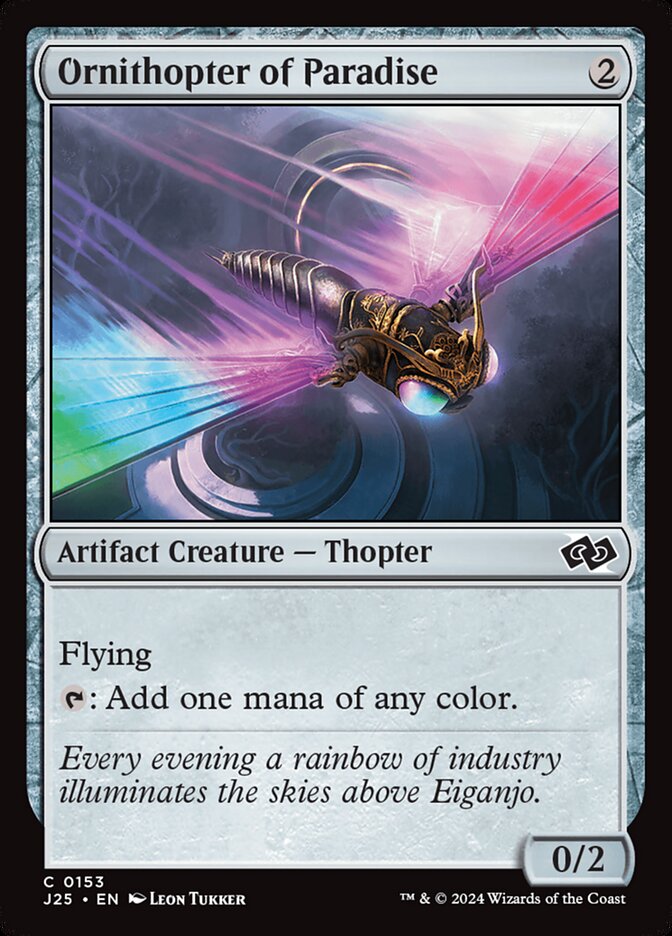 Ornithopter of Paradise
If an opponent casts a spell to destroy your Ornithopter of Paradise, you can flash in Spectral Adversary and pay {1}{U} once. You target your Ornithopter, causing it to phase out. The opponent's spell will lose its target and fail to resolve, and your Ornithopter will safely return to the battlefield at the start of your next turn.
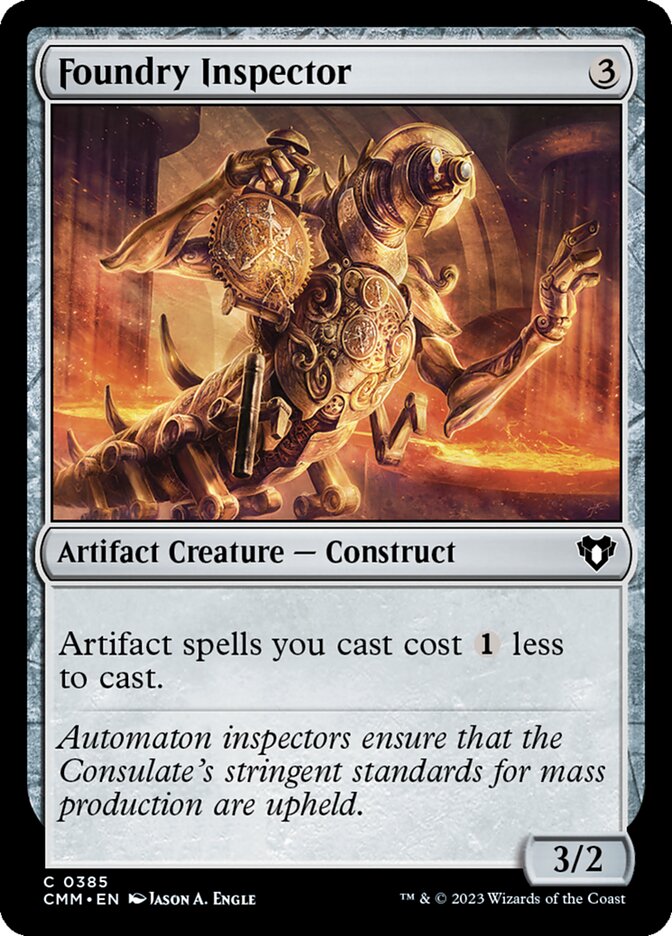 Foundry Inspector
With six mana available, you can cast Spectral Adversary and pay the optional cost twice ({2}{U}{U}). You can choose to phase out both your Foundry Inspector and an opponent's creature. Spectral Adversary will enter as a 4/3 flyer, effectively removing a blocker and protecting your Inspector from harm simultaneously.
Guide written with AI from the official text and rulings. Official English text prevails.
How it works : Spectral Adversary
Original English text — Wizards of the Coast / Scryfall
- #1· Wizards of the Coast
After you pay the
 cost one or more times, a second ability triggers and you choose the targets for it. Players may respond to the new ability at that point. As that ability resolves, Spectral Adversary gets its +1/+1 counters and the target permanents phase out.
No other card is named in this ruling.
- #2· Wizards of the Coast
If an opponent gains control of one of your permanents, that permanent phases out, and the duration of the control-change effect expires before it phases back in, that permanent phases in under your control as that opponent's next untap step begins. If they leave the game before their next untap step, it phases in as the next untap step begins after their turn would have begun.
No other card is named in this ruling.
- #3· Wizards of the Coast
Phasing out doesn't cause any "leaves the battlefield" abilities to trigger. Similarly, phasing in won't cause any "enters the battlefield" abilities to trigger.
No other card is named in this ruling.
- #4· Wizards of the Coast
Choices made for permanents as they entered the battlefield are remembered when they phase in.
No other card is named in this ruling.
- #5· Wizards of the Coast
Permanents phase back in during their controller's untap step, immediately before that player untaps their permanents. Creatures that phase in this way are able to attack and pay a cost of
 during that turn. If a permanent had counters on it when it phased out, it will have those counters when it phases back in.
No other card is named in this ruling.
- #6· Wizards of the Coast
Permanents that are phased out are treated as though they don't exist. They can't be the target of spells or abilities, their static abilities have no effect on the game, their triggered abilities can't trigger, they can't attack or block, and so on.
No other card is named in this ruling.
- #7· Wizards of the Coast
As a permanent phases out, Auras and Equipment attached to it also phase out at the same time. Those Auras and Equipment will phase in at the same time that permanent does, and they'll phase in still attached to that permanent.
No other card is named in this ruling.
- #8· Wizards of the Coast
An attacking or blocking creature that phases out is removed from combat.
No other card is named in this ruling.
- #9· Wizards of the Coast
Any continuous effects with a "for as long as" duration ignore phased-out objects. If ignoring those objects causes the effect's conditions to no longer be met, the duration will expire. For example, phasing out Mind Flayer will cause the duration of its continuous effect ("for as long as you control Mind Flayer") to expire.
No other card is named in this ruling.
Legal formats
Commentaires
- Sois le premier à commenter cette carte.
Read next
Meta decks with Spectral Adversary
No archived Top 8 deck with this card yet.