

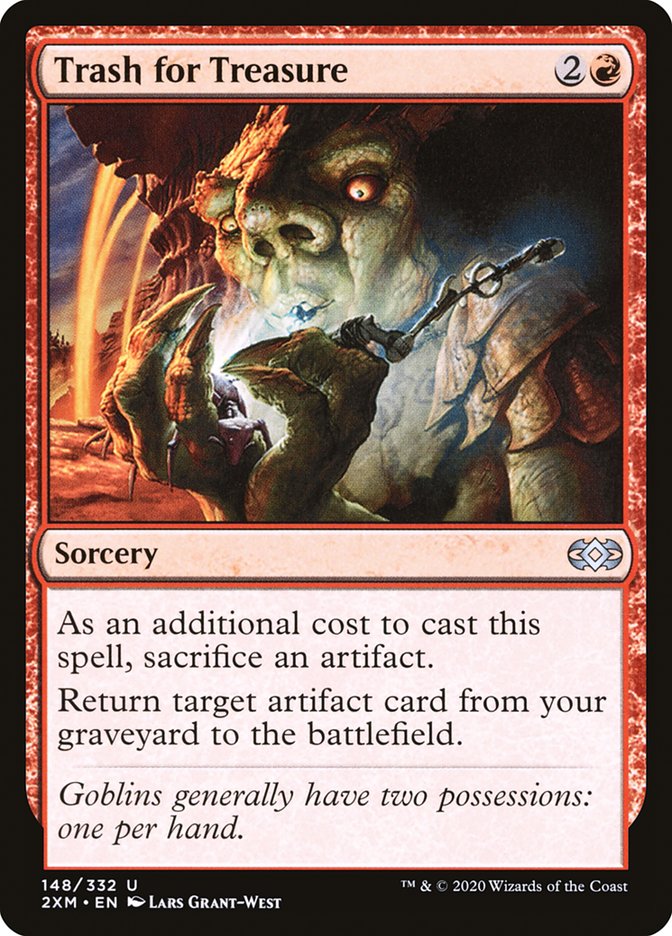
Trash for Treasure is one of those cards players keep asking about. Here is, in plain words, what its official text says, the rulings published by Wizards of the Coast, and the combos players actually run.
Official card text
As an additional cost to cast this spell, sacrifice an artifact. Return target artifact card from your graveyard to the battlefield.
Complete guide
Trash for Treasure is a powerful red sorcery that allows you to turn a small bauble into a massive mechanical threat from your graveyard. By trading one artifact on your battlefield for another in your discard pile, you can bypass high mana costs and gain a significant advantage early in the game. Understanding the timing of its costs and targets is key to mastering this artifact-centric strategy.
What it Does
Trash for Treasure allows you to exchange an artifact you currently control for any artifact card resting in your graveyard. It costs two generic and one red mana, but it also carries a mandatory additional cost: you must sacrifice an artifact. This sacrifice occurs as you cast the spell, meaning the artifact is gone before the spell even begins to resolve.
Step-by-Step Resolution
First, you announce you are casting Trash for Treasure and choose a target artifact card already in your graveyard. Next, you determine the total cost, which includes paying mana and sacrificing an artifact you control. Once the costs are paid, the spell is officially cast and put onto the stack. When the spell resolves, you simply move the targeted artifact card from your graveyard directly onto the battlefield under your control.
Common Mistakes
A frequent point of confusion involves the timing of the sacrifice. You cannot target the same artifact you are sacrificing for the spell's cost because the target must be chosen before the sacrifice happens. Additionally, you cannot sacrifice the same artifact to generate mana (such as with a Krark-Clan Ironworks) and also use it to satisfy the additional cost of Trash for Treasure; one sacrifice can only pay for one cost.
When to Play it
This spell is best utilized in decks that can fill the graveyard quickly with high-impact artifacts. Since it is a sorcery, you should use it during your main phase after you have successfully discarded a powerful machine. It is a fantastic way to recover from artifact destruction or to 'cheat' a game-winning permanent into play much earlier than its mana cost would normally allow.
Interaction examples
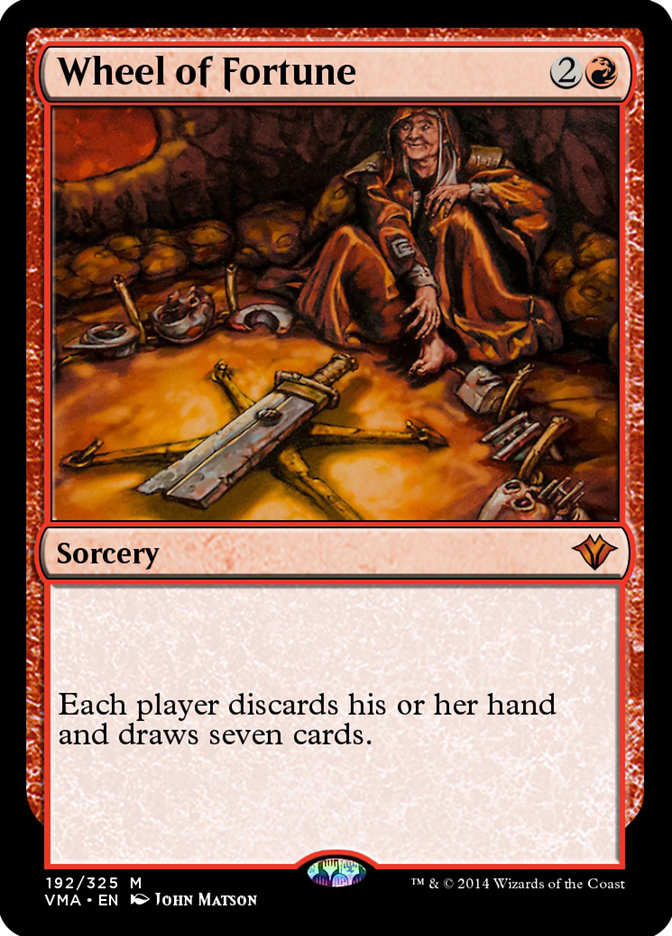 Wheel of Fortune
You cast Wheel of Fortune, discarding a hand that includes a high-cost artifact. Later that turn, you cast Trash for Treasure, sacrificing a small Treasure token as the additional cost. You then target the high-cost artifact you discarded with Wheel of Fortune, bringing it directly to the battlefield for just three mana.
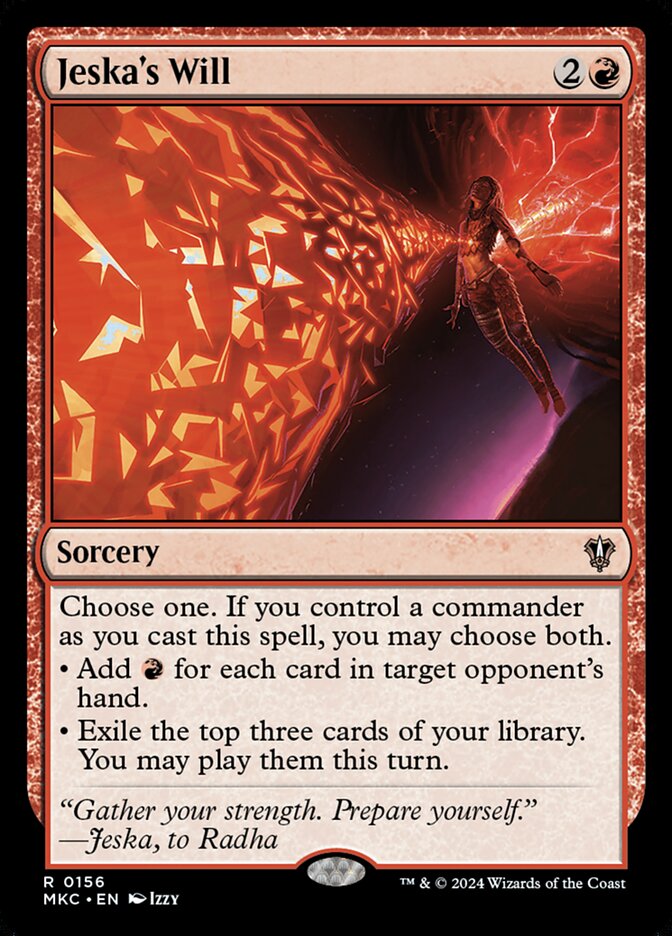 Jeska's Will
If you need mana to cast Trash for Treasure, you can cast Jeska's Will first to generate red mana based on an opponent's hand size. With the mana pool filled, you can then cast Trash for Treasure, sacrificing a redundant artifact on your board to return a more valuable one from your graveyard that you might have milled or lost in a previous turn.
Guide written with AI from the official text and rulings. Official English text prevails.
How it works : Trash for Treasure
Original English text — Wizards of the Coast / Scryfall
- #1· Wizards of the Coast
Trash for Treasure can't target the artifact that you sacrifice to pay its additional cost.
No other card is named in this ruling.
- #2· Wizards of the Coast
The artifact that you sacrifice is sacrificed after determining the total cost to cast Trash for Treasure. Its abilities may affect that cost.
No other card is named in this ruling.
- #3· Wizards of the Coast
You can't sacrifice an artifact to generate mana to pay towards Trash for Treasure's cost and also to pay its additional cost.
No other card is named in this ruling.
Legal formats
Commentaires
- Sois le premier à commenter cette carte.
