


Waterbender Ascension is one of those cards players keep asking about. Here is, in plain words, what its official text says, the rulings published by Wizards of the Coast, and the combos players actually run.
Official card text
Whenever a creature you control deals combat damage to a player, put a quest counter on this enchantment. Then if it has four or more quest counters on it, draw a card. Waterbend: Target creature can't be blocked this turn. (While paying a waterbend cost, you can tap your artifacts and creatures to help. Each one pays for
.)
Complete guide
Waterbender Ascension is a versatile blue enchantment that rewards aggressive strategies while providing a powerful utility to bypass blockers. By accumulating quest counters through combat damage, you can generate card advantage and use your board presence to fuel your creatures' evasiveness.
Questing for Cards
The first ability of Waterbender Ascension is a triggered ability that goes on the stack whenever a creature you control deals combat damage to a player. Once the ability resolves, you place a quest counter on the enchantment. Immediately after placing the counter, the game checks if there are four or more quest counters on it; if so, you draw a card.
Harnessing the Waterbend Ability
Waterbend is a static ability that functions while you are paying for the activated ability. It allows you to tap any untapped creature or artifact you control to pay for {1} of the {4} mana cost. This is not a mana ability; it is an alternative way to pay for generic mana during the activation process. You can tap a creature even if it has 'summoning sickness,' as the waterbend cost does not use the tap symbol.
Strategic Tapping Rulings
When activating the ability, you determine the total cost first. Even if an external effect increases or decreases the cost of the ability, you can only tap artifacts or creatures to pay for the generic mana specifically included in the {4} waterbend cost. Note that you cannot use the same permanent to both produce mana from its own ability and tap it for waterbend.
When to Deploy
Play Waterbender Ascension early in games where you have small, evasive creatures to start building quest counters. Late in the game, the waterbend ability becomes a mana sink that allows you to tap your utility artifacts or defensive creatures to ensure your largest threat connects with the opponent's life total.
Interaction examples
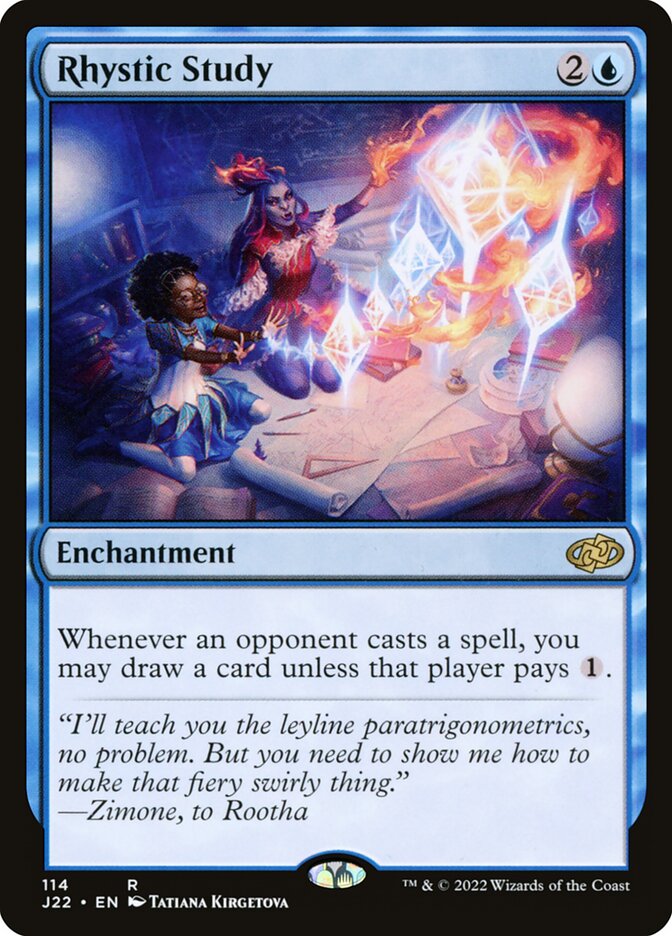 Rhystic Study
If an opponent has Rhystic Study on the battlefield and you activate Waterbender Ascension's ability, you may tap up to four artifacts or creatures to pay the {4} waterbend cost. However, the {1} tax from Rhystic Study is a separate triggered ability that occurs after you cast a spell or activate an ability. You cannot tap a creature for waterbend to pay for the Rhystic Study tax, as that tax is not part of the waterbend cost itself.
 Mystic Remora
Similar to other tax effects, if you cast a noncreature spell while an opponent has Mystic Remora, you must pay {4} to prevent them from drawing. Even if you have Waterbender Ascension on the field, its waterbend ability only applies to its own specific {4} activation cost. You cannot tap your creatures to pay for the Mystic Remora tax on your other spells.
Guide written with AI from the official text and rulings. Official English text prevails.
How it works : Waterbender Ascension
Original English text — Wizards of the Coast / Scryfall
- #1· Wizards of the Coast
You can tap any untapped creature or artifact you control to pay a waterbend cost, even one you haven't controlled continuously since the beginning of your most recent turn.
No other card is named in this ruling.
- #2· Wizards of the Coast
If an artifact or creature you control has a mana ability with
 in the cost, activating that ability while casting a spell or activating an ability with waterbend will result in the artifact or creature being tapped before you pay the spell's costs. You won't be able to tap it again for waterbend. Similarly, if you sacrifice an artifact or creature to activate a mana ability to pay a cost with waterbend, that artifact or creature won't be on the battlefield when you pay the spell's costs, so you won't be able to tap it for waterbend.
No other card is named in this ruling.
- #3· Wizards of the Coast
"Waterbend [cost]" means "Pay [cost]. For each generic mana in that cost, you may tap an untapped artifact or creature you control rather than pay that mana."
No other card is named in this ruling.
- #4· Wizards of the Coast
If a waterbend cost is part of the total cost to cast a spell or activate an ability, you may tap an untapped artifact or creature you control rather than pay one generic mana in that total cost any number of times up to a maximum of the amount of generic mana in the waterbend component of that total cost.
No other card is named in this ruling.
- #5· Wizards of the Coast
Even if the cost of the spell or ability that waterbend is part of increases or decreases, you still may only tap artifacts or creatures to pay for costs up to the amount of the generic mana in the waterbend cost.
No other card is named in this ruling.
Legal formats
Commentaires
- Sois le premier à commenter cette carte.
Read next
Meta decks with Waterbender Ascension
No archived Top 8 deck with this card yet.