


Call for Unity is one of those cards players keep asking about. Here is, in plain words, what its official text says, the rulings published by Wizards of the Coast, and the combos players actually run.
Official card text
Revolt — At the beginning of your end step, if a permanent left the battlefield under your control this turn, put a unity counter on this enchantment. Creatures you control get +1/+1 for each unity counter on this enchantment.
Complete guide
Call for Unity is a powerful enchantment that rewards you for being proactive or having your board state disrupted. By leveraging the Revolt mechanic, it transforms your fallen permanents into long-term strength for your entire army. As the unity counters grow, even the smallest creatures become massive threats on the battlefield.
What Call for Unity Does
Call for Unity is a global anthem effect that grows stronger over time. It relies on the Revolt mechanic, which checks if a permanent you controlled left the battlefield during the current turn. This could mean a creature died in combat, a land was sacrificed, or even a token vanished. As long as that condition is met by your end step, the enchantment gains a unity counter, providing a permanent +1/+1 buff to all your creatures for each counter it holds.
Step-by-Step Resolution
The process begins at the start of your end step. The game checks if a permanent you controlled left the battlefield at any point earlier in that turn. If this condition is not met, the Revolt ability does not trigger at all. If it was met, the ability goes on the stack. When the ability resolves, you place one unity counter on Call for Unity. Immediately after the counter is placed, the continuous effect updates, and all creatures you control receive the increased power and toughness bonus.
Common Pitfalls to Avoid
A common mistake is thinking multiple permanents leaving the battlefield will result in multiple counters; the ability only triggers once per end step regardless of how many things left. Also, remember that Revolt is an 'intervening if' clause. This means the condition must already be true when the end step begins; you cannot move to your end step and then sacrifice a permanent in response to the trigger, because the trigger would never have fired in the first place. Finally, note that while tokens count as permanents leaving the battlefield, energy counters do not.
When to Play It
Call for Unity is best suited for decks that naturally cycle through permanents, such as those using Treasure tokens, fetch lands, or sacrifice outlets. It is a 'snowball' card, meaning it is most effective when played early or in a stalled board state where you can reliably trigger Revolt every turn to eventually outclass your opponent's creatures in size.
Interaction examples
 Smothering Tithe
If an opponent draws a card and chooses not to pay for Smothering Tithe, you create a Treasure token. During your main phase, you can sacrifice that Treasure for mana. Because the Treasure was a permanent you controlled that left the battlefield, Call for Unity will trigger during your end step and receive a unity counter.
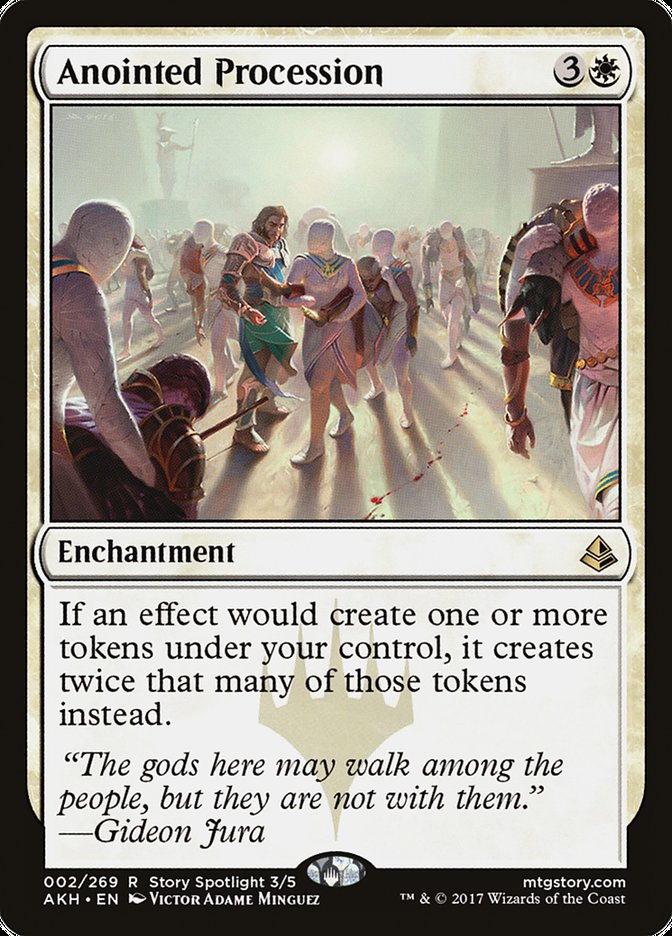 Anointed Procession
If you have Anointed Procession on the field and an effect creates a creature token, you get two instead. If one of those tokens is destroyed or sacrificed, the Revolt condition for Call for Unity is met. This combination helps you both trigger the enchantment more easily and provides more bodies to benefit from the +1/+1 bonuses.
Even without other synergy cards, Call for Unity functions on its own. For example, if your creature is blocked and dies during combat on your turn, the Revolt condition is satisfied. At the beginning of your end step, Call for Unity detects that the creature left the battlefield and adds a unity counter to itself.
Guide written with AI from the official text and rulings. Official English text prevails.
How it works : Call for Unity
Original English text — Wizards of the Coast / Scryfall
- #1· Wizards of the Coast
Revolt abilities check only whether a permanent you controlled left the battlefield this turn or not. They don't apply multiple times if more than one permanent you controlled left the battlefield. They don't check whether the permanent that left the battlefield is still in the zone it moved to.
No other card is named in this ruling.
- #2· Wizards of the Coast
Revolt abilities don't care why the permanent left the battlefield, who caused it to move, or where it moved to. They're equally satisfied by an artifact you sacrificed to pay a cost, a creature you controlled that was destroyed by Murder, or an enchantment you returned to your hand with Leave in the Dust.
No other card is named in this ruling.
- #3· Wizards of the Coast
Tokens that leave the battlefield will satisfy a revolt ability.
No other card is named in this ruling.
- #4· Wizards of the Coast
Energy counters aren't permanents. Paying
 won't satisfy a revolt ability.
No other card is named in this ruling.
- #5· Wizards of the Coast
All cards in the Aether Revolt set with triggered revolt abilities use an intervening "if" clause. A permanent you controlled must have left the battlefield earlier in the turn in order for these abilities to trigger; otherwise they do nothing. In other words, there's no way to have the ability trigger if no permanent you controlled has left the battlefield that turn, even if you intend to have one do so in response to the triggered ability.
No other card is named in this ruling.
Legal formats
Commentaires
- Sois le premier à commenter cette carte.
Read next
Meta decks with Call for Unity
No archived Top 8 deck with this card yet.