


Nuclear Fallout is one of those cards players keep asking about. Here is, in plain words, what its official text says, the rulings published by Wizards of the Coast, and the combos players actually run.
Official card text
Each creature gets twice -X/-X until end of turn. Each player gets X rad counters.
Complete guide
Nuclear Fallout is a devastating black sorcery that serves as both a board wipe and a way to introduce the lingering threat of radiation to every player. By scaling with the amount of mana you invest, it can clear the toughest creatures while ensuring the game state changes permanently with rad counters. This card is perfect for control decks that want to punish creature-heavy strategies while setting up graveyard synergies.
Doubling the Destruction
The most important part of Nuclear Fallout is the math: each creature gets -X/-X twice, effectively giving them -2X/-2X. This means if you spend five mana (X=3), every creature on the board gets -6/-6 until the end of the turn. Unlike damage, this reduction in toughness can destroy creatures with Indestructible, making it a reliable way to clean the battlefield.
Understanding Rad Counters
After the creatures are weakened, every player receives X rad counters. These counters do not disappear at the end of the turn; they stay on players until a specific game effect removes them. At the start of each player's precombat main phase, if they have rad counters, they must mill that many cards. For every nonland card moved to the graveyard this way, that player loses 1 life and removes one rad counter. If you mill lands, the rad counters stay, potentially causing more milling on future turns.
Timing and Strategy
Because Nuclear Fallout is a sorcery, you will typically use it during your own main phase to react to an opponent's board state. The mill effect from rad counters is excellent for filling your own graveyard if you have ways to interact with it, but be careful—the life loss can add up quickly if you mill multiple nonland cards in a single turn.
Interaction examples
 Nuclear Fallout
You cast Nuclear Fallout where X is 2. You pay a total of four mana (2BB). Every creature on the battlefield gets -4/-4 until end of turn. Then, you and your opponents each receive 2 rad counters. On your next precombat main phase, you will mill 2 cards. If you mill one land and one creature, you lose 1 life and one rad counter remains.
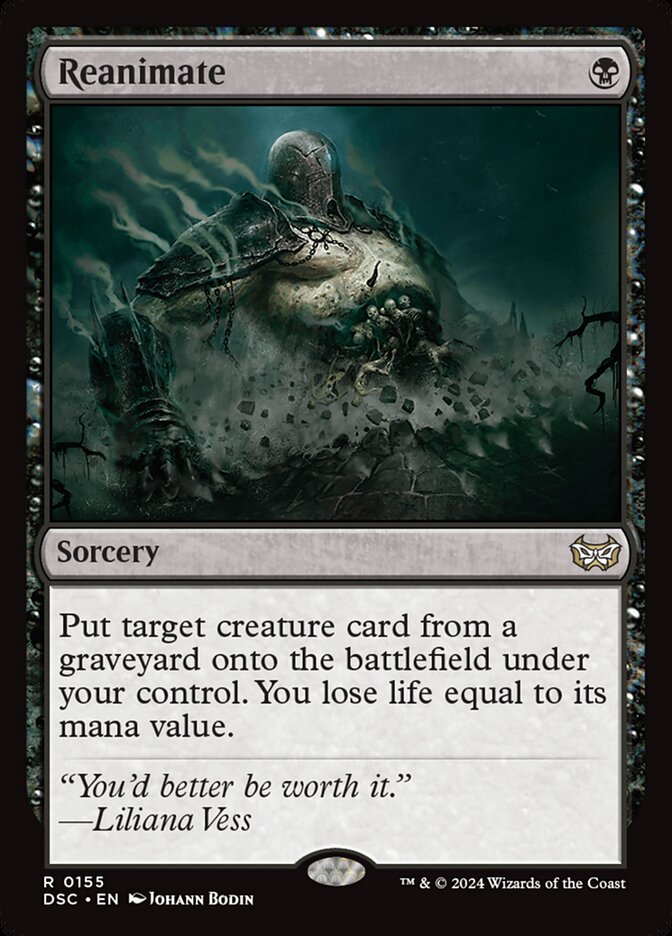 Reanimate
You cast Nuclear Fallout with X=5, giving all creatures -10/-10 and giving yourself 5 rad counters. During your next precombat main phase, you mill 5 cards. You mill a powerful creature among them and lose 1 life. Because that creature is now in the graveyard, you can follow up by casting Reanimate to bring that creature directly onto the battlefield under your control.
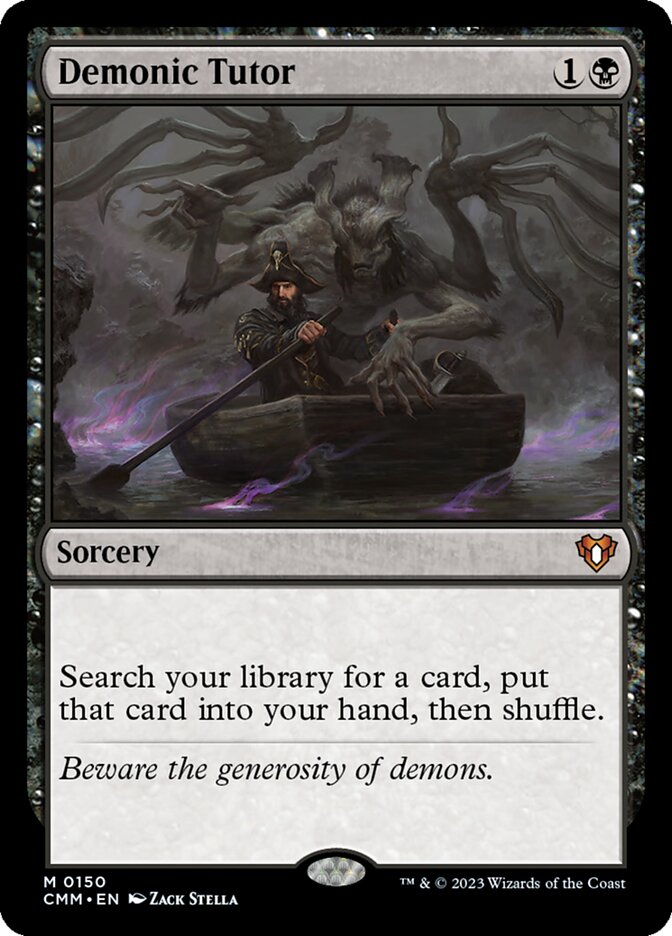 Demonic Tutor
If your opponent has a creature with 6 toughness that you must destroy, you can use Demonic Tutor to find Nuclear Fallout. To ensure the creature dies, you must cast Nuclear Fallout with X=3. This gives the creature -6/-6, reducing its toughness to 0 and sending it to the graveyard, while also applying 3 rad counters to all players.
Guide written with AI from the official text and rulings. Official English text prevails.
How it works : Nuclear Fallout
Original English text — Wizards of the Coast / Scryfall
- #1· Wizards of the Coast
Rad counters are a kind of counter that a player may have. They’re not associated with any specific permanents.
No other card is named in this ruling.
- #2· Wizards of the Coast
Keep track of how many rad counters each player has. Potential ways to track this include writing them down on paper or using dice, but any method that is clear and mutually agreeable is fine.
No other card is named in this ruling.
- #3· Wizards of the Coast
Rad counters don’t go away as steps, phases, or turns end. They only go away when an effect instructs a player to remove rad counters from themselves.
No other card is named in this ruling.
- #4· Wizards of the Coast
There is an inherent triggered ability associated with having rad counters. This triggered ability has no source and is controlled by the active player. The full text of this ability is “At the beginning of the precombat main phase of a player with rad counters, that player mills cards equal to the number of rad counters they have. For each nonland card milled this way, that player loses 1 life and removes one rad counter from themselves.”
No other card is named in this ruling.
- #5· Wizards of the Coast
In a game using the shared team turns option, such as an Archenemy or Two-Headed Giant game, the inherent triggered ability associated with rad counters triggers once for each player on the active team that has rad counters. Each instance of that ability is controlled by one of those players.
No other card is named in this ruling.
- #6· Wizards of the Coast
Any effects (such as proliferate) that interact with counters a player gets, has, or loses can interact with rad counters.
No other card is named in this ruling.
- #7· Wizards of the Coast
The cards are milled all at once, which means abilities that trigger “whenever one or more nonland cards are milled” will trigger exactly once as long as at least one nonland card was milled.
No other card is named in this ruling.
- #8· Wizards of the Coast
If a player has fewer cards remaining in their library than the number of rad counters they have when the triggered ability resolves, they’ll mill as many cards as they can.
No other card is named in this ruling.
Related cards and tokens
Legal formats
Commentaires
- Sois le premier à commenter cette carte.
Read next
Meta decks with Nuclear Fallout
No archived Top 8 deck with this card yet.