

Path to Redemption is one of those cards players keep asking about. Here is, in plain words, what its official text says, the rulings published by Wizards of the Coast, and the combos players actually run.
Official card text
Enchant creature Enchanted creature can't attack or block., Sacrifice this Aura: Exile enchanted creature. Create a 1/1 white Ally creature token. Activate only during your turn.
Complete guide
Path to Redemption is a versatile white Aura that offers both immediate control and a long-term tactical exit for dangerous threats. It serves as a classic pacifism effect that can later be traded for a clean exile and a new companion. By understanding its timing and activation requirements, you can effectively manage the battlefield throughout the game.
Lockdown and Removal
Path to Redemption functions in two distinct phases. Initially, it acts as a static enchantment that prevents the enchanted creature from participating in combat. It cannot be declared as an attacker or a blocker, effectively neutralizing it as a physical threat. However, unlike standard pacifism effects, Path to Redemption features an activated ability that allows you to permanently remove the creature from the game in exchange for a 1/1 white Ally creature token.
Step-by-Step Resolution
First, you cast the Aura and attach it to a creature. As long as it remains on the battlefield, the creature's combat abilities are restricted. To activate the second ability, you must pay five mana and sacrifice the Aura during your turn. Upon resolution, the enchanted creature is exiled. Finally, you create a 1/1 white Ally creature token. Note that if the creature leaves the battlefield before this ability resolves, the ability will fail to exile it, but you will still have sacrificed the Aura.
Timing and Restrictions
A common mistake is trying to activate the exile ability on an opponent's turn to stop a sudden play. The card explicitly states 'Activate only during your turn,' meaning you cannot use the exile function to respond to an opponent's combat phase or end-step actions. Additionally, because the creature is exiled rather than destroyed, it bypasses 'indestructible' and 'regeneration' effects.
When to Redeem
You should use the initial enchantment to stall high-power threats early in the game. Save the sacrifice ability for when you have excess mana or when you specifically need a creature trigger, such as an Ally entering the battlefield. It is also an excellent way to permanently deal with creatures that have powerful 'death triggers,' as exiling them prevents those abilities from firing.
Interaction examples
You cast Path to Redemption on an opponent's large creature. Even though the creature is still on the board, it cannot attack you or block your incoming creatures. It remains in this state until the Aura is removed or sacrificed.
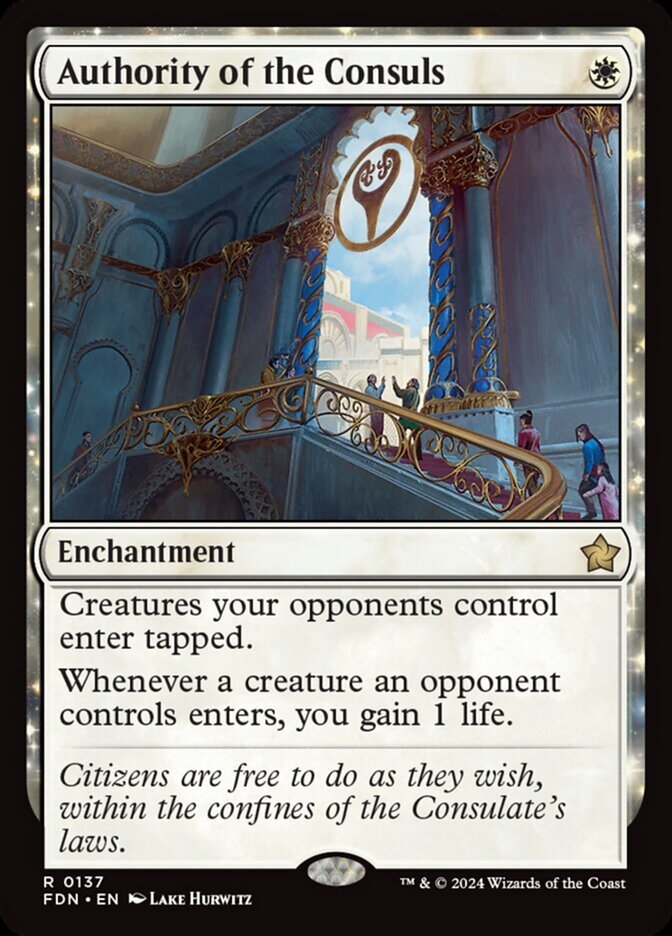 Authority of the Consuls
If you have Authority of the Consuls on the battlefield and you activate Path to Redemption's ability during your turn, you will exile the threat and create a 1/1 Ally. Because Authority of the Consuls affects creatures your opponents control, your new token enters the battlefield normally, but if an opponent were to gain control of the token-making ability, their token would enter tapped.
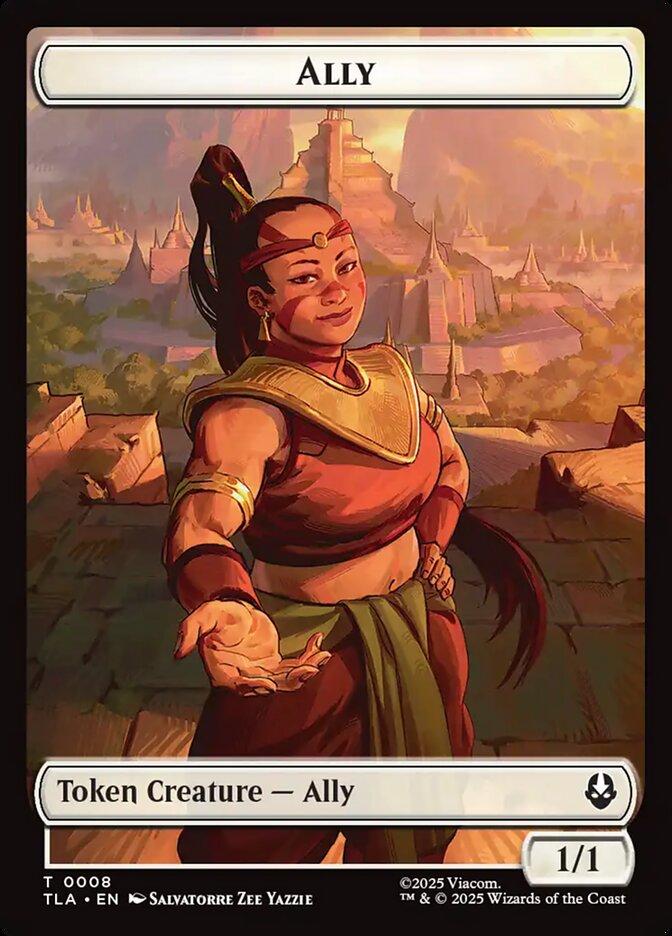 Ally
During your main phase, you pay five mana and sacrifice Path to Redemption. The enchanted creature is exiled forever. You then place a 1/1 white Ally token onto the battlefield. This allows you to remove a blocker and gain an attacker in a single sequence.
Guide written with AI from the official text and rulings. Official English text prevails.
How it works : Path to Redemption
Original English text — Wizards of the Coast / Scryfall
No additional ruling has been published for this card.
Related cards and tokens
Legal formats
Commentaires
- Sois le premier à commenter cette carte.
Read next

Meta decks with Path to Redemption
No archived Top 8 deck with this card yet.