
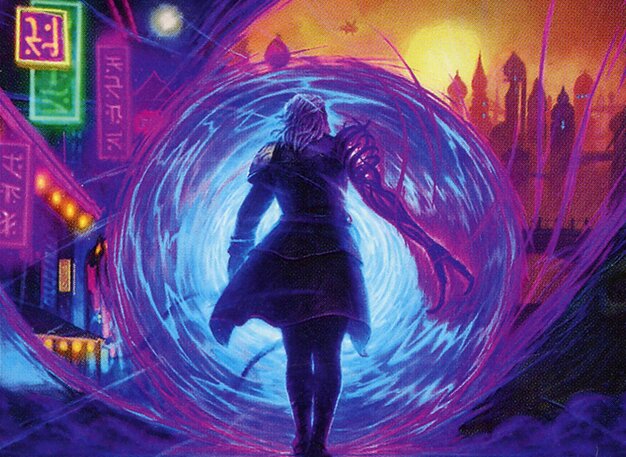
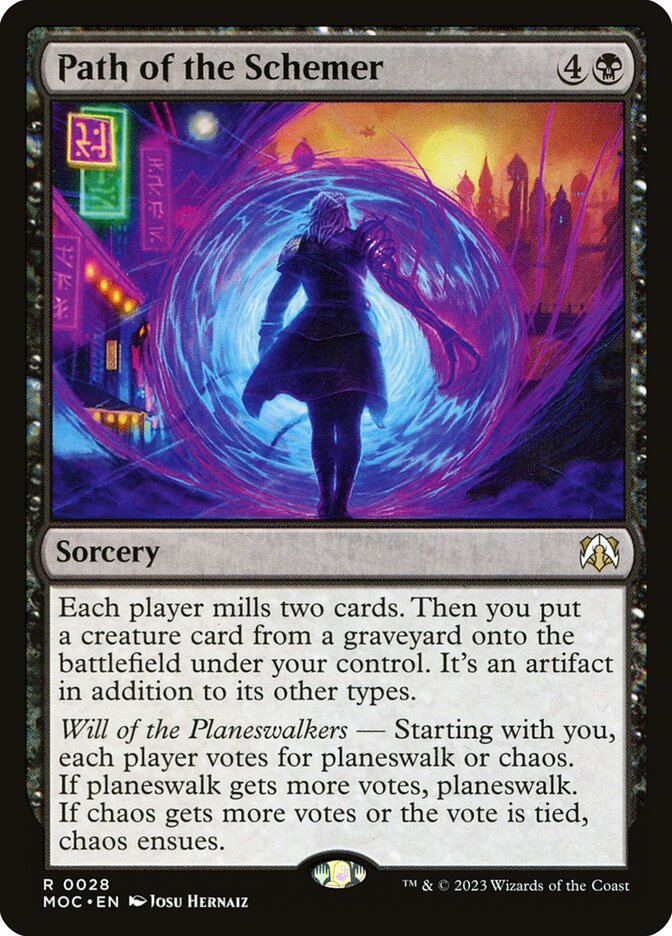
Path of the Schemer is one of those cards players keep asking about. Here is, in plain words, what its official text says, the rulings published by Wizards of the Coast, and the combos players actually run.
Official card text
Each player mills two cards. Then you put a creature card from a graveyard onto the battlefield under your control. It's an artifact in addition to its other types. Will of the Planeswalkers — Starting with you, each player votes for planeswalk or chaos. If planeswalk gets more votes, planeswalk. If chaos gets more votes or the vote is tied, chaos ensues.
Complete guide
Path of the Schemer is a versatile black sorcery that combines graveyard recursion with the unpredictable nature of Planechase. It allows you to select the best threat from any graveyard while potentially shifting the tides of the Multiverse through a group vote.
Reanimation and Transformation
When Path of the Schemer resolves, every player mills two cards first. After the milling is complete, you choose any creature card currently in a graveyard to return to the battlefield under your control. Note that this creature becomes an artifact in addition to its other types, which may make it vulnerable to artifact destruction or provide synergies with artifact-based abilities.
Will of the Planeswalkers
After the creature enters the battlefield, the 'Will of the Planeswalkers' ability triggers a vote starting with you. Players choose between 'planeswalk' or 'chaos'. If 'planeswalk' wins, you move to the next plane in the planar deck. If 'chaos' wins or if the vote results in a tie, the chaos ability of the current plane is triggered immediately.
Timing and Targets
Crucially, Path of the Schemer does not target a creature card in the graveyard while it is on the stack. You make the choice of which creature to return only during the resolution of the spell. This means opponents cannot easily exile a specific card in response once they know what you intend to pick, provided that card was already in the graveyard or just milled.
Interaction examples
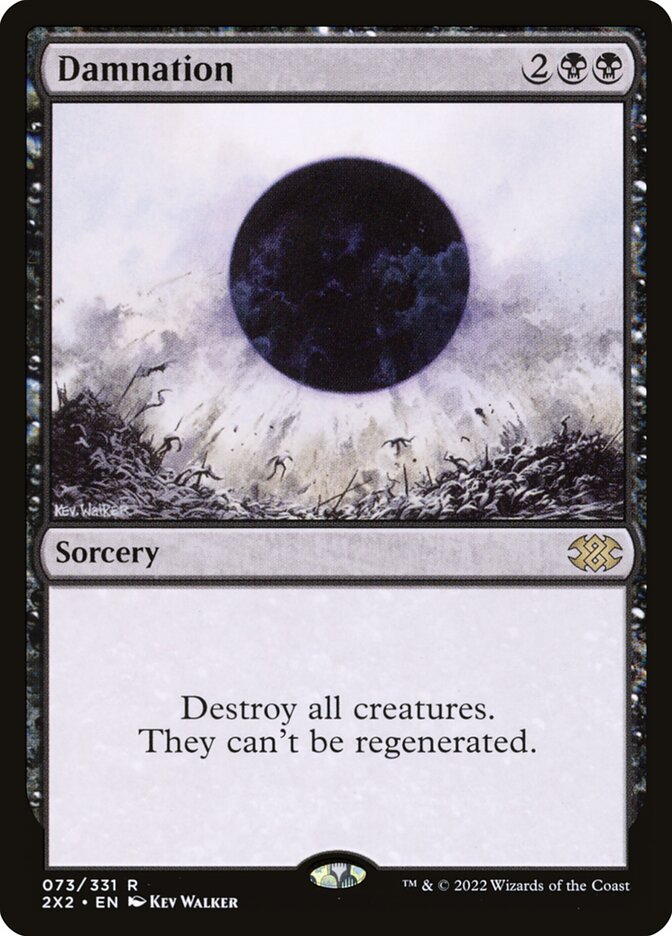 Damnation
If an opponent casts Damnation to destroy all creatures, you can follow up on your turn with Path of the Schemer. Since Damnation populated the graveyards, you have a wide selection of powerful creatures to choose from. Even if the graveyards were empty before your turn, the initial mill effect of Path of the Schemer ensures there are at least a few options available to reanimate.
 Living Death
Suppose an opponent casts Living Death, which clears the board and swaps graveyards with the battlefield. If you cast Path of the Schemer afterward, you can pick the best creature that was just sacrificed and sent to the graveyard by Living Death. Because your chosen creature also becomes an artifact, it will remain on the battlefield even if a later effect specifically targets non-artifact creatures.
Guide written with AI from the official text and rulings. Official English text prevails.
How it works : Path of the Schemer
Original English text — Wizards of the Coast / Scryfall
- #1· Wizards of the Coast
The creature card you put onto the battlefield may be one that was just milled, or it may be one that was already in a graveyard.
No other card is named in this ruling.
Legal formats
Commentaires
- Sois le premier à commenter cette carte.
Read next
Meta decks with Path of the Schemer
No archived Top 8 deck with this card yet.