
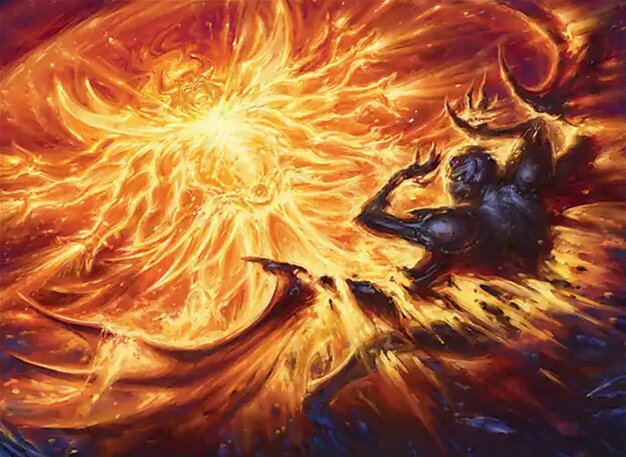

Self-Destruct is one of those cards players keep asking about. Here is, in plain words, what its official text says, the rulings published by Wizards of the Coast, and the combos players actually run.
Official card text
Target creature you control deals X damage to any other target and X damage to itself, where X is its power.
Complete guide
Self-Destruct is a high-risk, high-reward instant that turns your own creatures into volatile projectiles. By forcing a creature you control to lash out at another target, you can take down threats, though it usually results in the loss of your own fighter. Understanding the timing of its power check is key to mastering this explosive red spell.
Explosive Resolution
When Self-Destruct resolves, it checks the power of the target creature you control. This value, represented as X, is determined only at the moment of resolution. The creature then simultaneously deals X damage to any other target (a creature, player, or planeswalker) and X damage to itself. Because the damage is dealt by the creature and not the spell, abilities like lifelink or deathtouch will apply to the damage dealt.
Targeting and Legality
Self-Destruct requires two targets: a creature you control and any other legal target. If the second target becomes illegal before the spell resolves (for example, if it gains hexproof), your creature will still deal damage to itself. however, if the creature you control leaves the battlefield or becomes an illegal target before resolution, no damage is dealt at all because the source of the damage is no longer there to perform the action.
Strategic Timing
Since X is calculated on resolution, you can respond to Self-Destruct with combat tricks to increase your creature's power, thereby increasing the damage dealt to the second target. Conversely, if an opponent reduces your creature's power in response, the damage dealt will be lower. Always ensure your creature has enough toughness to survive if you intend for it to stay on the board, though usually the damage equals its power, leading to a trade.
Interaction examples
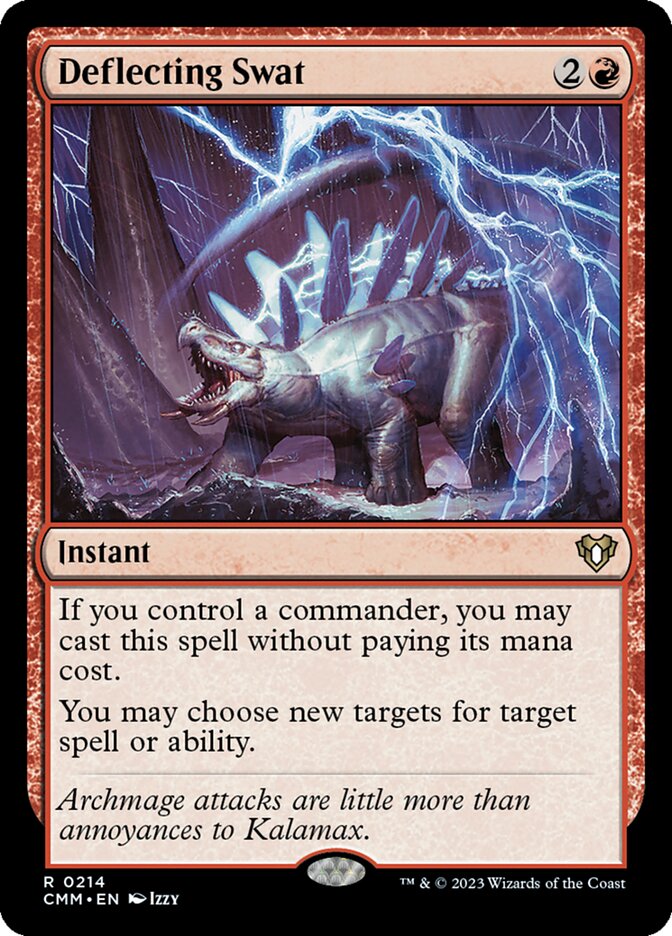 Deflecting Swat
If you cast Self-Destruct targeting your 5/5 creature and an opponent, your opponent can cast Deflecting Swat to change the 'any other target' to one of your own planeswalkers. They cannot, however, change the 'target creature you control' to one of their own creatures unless they also take control of the spell, because the spell's restriction still requires that specific target to be a creature you control.
 Chaos Warp
Suppose you target your creature with Self-Destruct. In response, an opponent casts Chaos Warp on that same creature. When Self-Destruct attempts to resolve, it checks its targets. Since the creature you controlled is now shuffled into your library, it is an illegal target. The spell fails to resolve, and no damage is dealt to the second target.
Guide written with AI from the official text and rulings. Official English text prevails.
How it works : Self-Destruct
Original English text — Wizards of the Coast / Scryfall
- #1· Wizards of the Coast
The value of X is calculated only once, as Self-Destruct resolves.
No other card is named in this ruling.
- #2· Wizards of the Coast
If the target creature you control is an illegal target as Self-Destruct tries to resolve, the creature you control won't deal damage. If the creature you control is a legal target but the other target isn't, your creature will still deal damage to itself.
No other card is named in this ruling.
Legal formats
Commentaires
- Sois le premier à commenter cette carte.
Read next
Meta decks with Self-Destruct
No archived Top 8 deck with this card yet.