

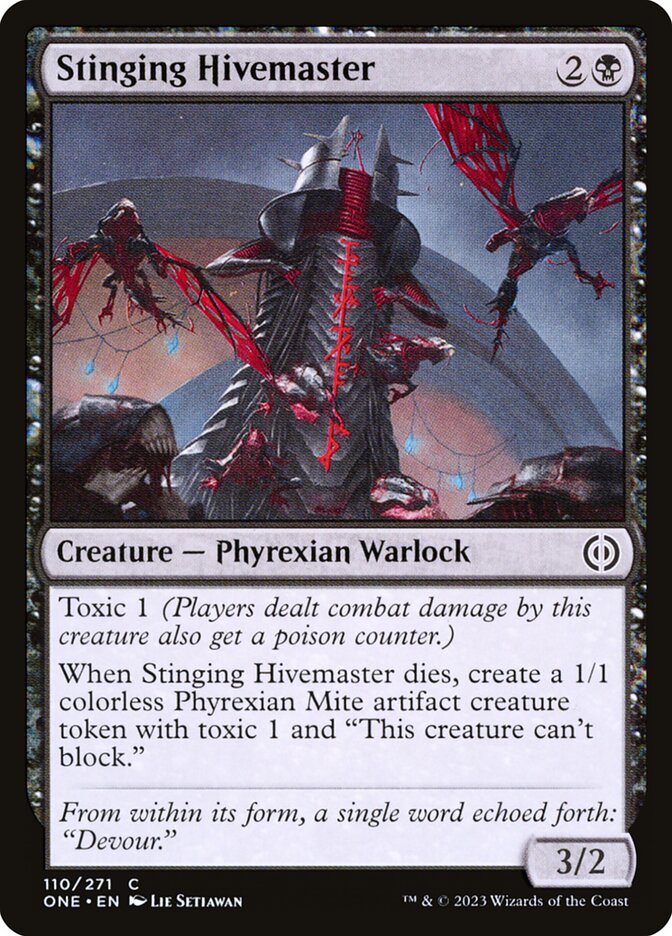
Stinging Hivemaster is one of those cards players keep asking about. Here is, in plain words, what its official text says, the rulings published by Wizards of the Coast, and the combos players actually run.
Official card text
Toxic 1 (Players dealt combat damage by this creature also get a poison counter.) When this creature dies, create a 1/1 colorless Phyrexian Mite artifact creature token with toxic 1 and "This token can't block."
Complete guide
Stinging Hivemaster is a resilient threat from the Phyrexian ranks that ensures your influence persists even after it leaves the battlefield. As a Phyrexian Warlock with Toxic, it puts immediate pressure on your opponent's health and poison count, while its death trigger creates even more specialized tokens.
Toxic Pressure and Persistence
Stinging Hivemaster features the Toxic 1 keyword, meaning any combat damage it deals to a player results in that player receiving a poison counter in addition to the loss of life. Unlike older mechanics like Infect, Toxic does not change how damage is dealt to creatures; it only adds a poison counter when a player is the recipient of the damage. Furthermore, when Stinging Hivemaster dies, it leaves behind a Phyrexian Mite token, ensuring that your board presence and toxic threat remain even after a successful block or removal spell.
Step-by-Step Resolution
When Stinging Hivemaster deals combat damage to a player, the poison counter is applied as a result of that damage; this is not a triggered ability and does not use the stack. If Stinging Hivemaster is destroyed or dies in combat, its triggered ability goes on the stack. Once that ability resolves, you create a 1/1 Phyrexian Mite artifact creature token. Note that this token also possesses Toxic 1 but comes with the restriction that it cannot block, making it a purely offensive tool.
Common Mistakes
A frequent misconception is that increasing the damage dealt by Stinging Hivemaster increases the poison counters. This is incorrect; Toxic 1 always provides exactly one poison counter regardless of whether the creature deals 2 damage or 20 damage. Additionally, players often forget that the Phyrexian Mite token is an artifact creature. This means it is susceptible to artifact removal, though it also benefits from any synergies you have with artifacts or Phyrexian creature types.
When to Play It
Stinging Hivemaster is most effective in aggressive decks focusing on the 'Corrupted' mechanic or those looking to win quickly through poison. Since it generates a token upon death, it is a safe inclusion against decks heavy on board wipes or single-target removal. It is best deployed early when the opponent has fewer blockers, allowing you to sneak in those vital early poison counters.
Interaction examples
 Roaming Throne
If you have Roaming Throne on the battlefield with 'Phyrexian' chosen as the creature type, Stinging Hivemaster's death ability will trigger an additional time. When the Hivemaster dies, you will create two Phyrexian Mite tokens instead of one.
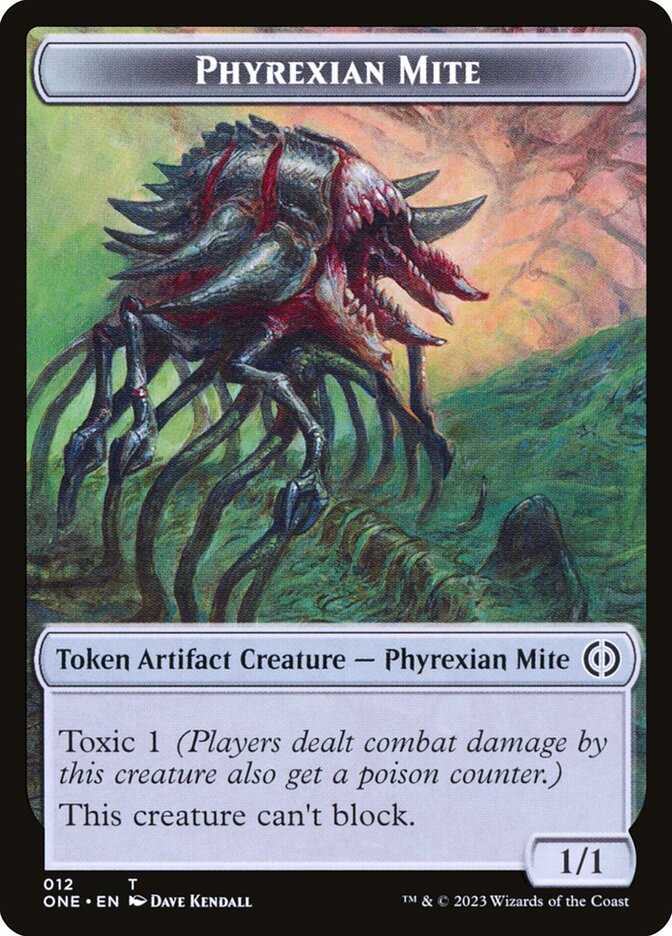 Phyrexian Mite
After Stinging Hivemaster dies, you put a Phyrexian Mite token onto the battlefield. If this token later deals combat damage to your opponent, they will lose 1 life and receive a Poison Counter. Remember that even if the opponent attacks you back, this token cannot be declared as a blocker.
 Solemn Simulacrum
If Stinging Hivemaster attacks and is blocked by Solemn Simulacrum, both creatures will deal damage to each other. Because Toxic only functions when damage is dealt to a player, no poison counters are involved here. Both creatures die; the Hivemaster's owner gets a Phyrexian Mite, and the Simulacrum's owner draws a card.
Guide written with AI from the official text and rulings. Official English text prevails.
How it works : Stinging Hivemaster
Original English text — Wizards of the Coast / Scryfall
- #1· Wizards of the Coast
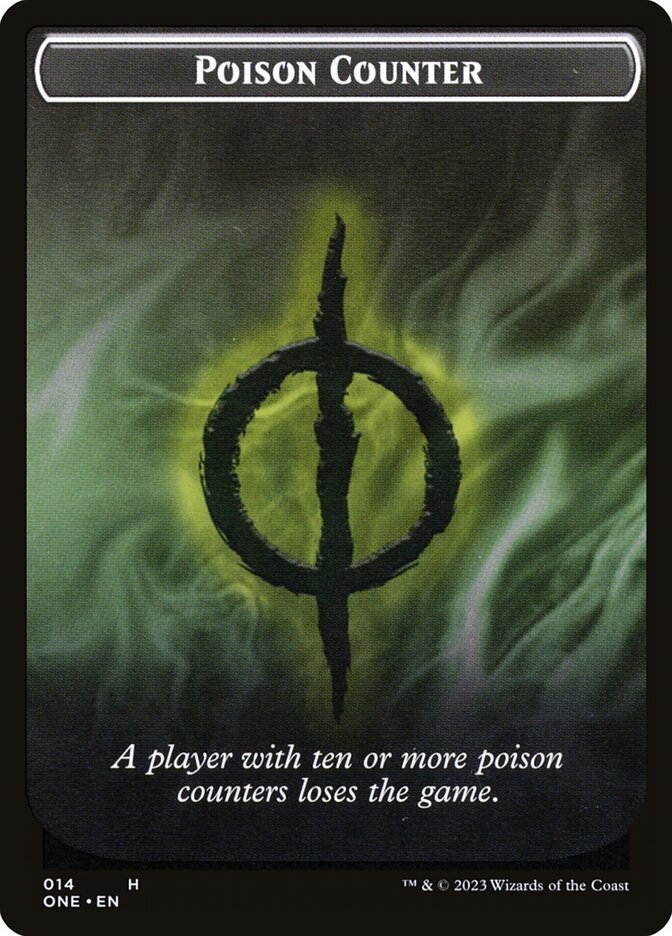
A player with ten or more poison counters loses the game. This is a state-based action and doesn't use the stack. In other words, it happens immediately and players can't respond to it, just like a player losing the game due to having 0 or less life.
Card named in this ruling
- #2· Wizards of the Coast
Toxic doesn't change the amount of combat damage a creature deals. For example, if a 2/2 creature with toxic 1 deals combat damage to a player, that creature will deal 2 damage. The results of that damage are the player loses 2 life and gets a poison counter.
Card named in this ruling
- #3· Wizards of the Coast
Any other effects of that damage, such as life gain from lifelink, still apply.
No other card is named in this ruling.
- #4· Wizards of the Coast
If a creature with toxic deals combat damage to a creature or planeswalker, or if it deals noncombat damage, toxic has no effect and no player gets poison counters.
Card named in this ruling
- #5· Wizards of the Coast
Damage dealt by a creature with toxic grants the same number of counters regardless of how much damage is dealt. Notably, if a replacement effect modifies the damage in some way (such as that of Gratuitous Violence), the number of counters given remains unchanged.
No other card is named in this ruling.
- #6· Wizards of the Coast
Conversely, replacement effects that apply to the number of counters put on a player can modify the counters placed this way. For example, Vorinclex, Monstrous Raider's last two abilities can apply to counters placed this way.
No other card is named in this ruling.
- #7· Wizards of the Coast
Multiple instances of toxic are cumulative. For example, if a creature has toxic 2 and gains toxic 1 due to another effect, combat damage that creature deals to a player will cause that player to get 3 poison counters.
Card named in this ruling
Related cards and tokens
Legal formats
Commentaires
- Sois le premier à commenter cette carte.
Read next
Meta decks with Stinging Hivemaster
No archived Top 8 deck with this card yet.