


Unified Will is one of those cards players keep asking about. Here is, in plain words, what its official text says, the rulings published by Wizards of the Coast, and the combos players actually run.
Official card text
Counter target spell if you control more creatures than that spell's controller.
Complete guide
Unified Will is a powerful blue counterspell that rewards players for maintaining a strong board presence. It offers a cost-effective way to shut down your opponent's spells, provided your army is larger than theirs. This card is a staple for creature-heavy tempo decks looking to protect their lead.
What It Does
Unified Will is a conditional counterspell that costs one blue and one generic mana. Unlike a generic counter, it requires a specific board state to function: you must control more creatures than the controller of the spell you are targeting. If you satisfy this condition, the spell is countered and moved to its owner's graveyard.
How It Resolves Step by Step
When you cast Unified Will, you choose a target spell. However, the game does not check the creature count immediately upon casting. Instead, the check happens exactly as Unified Will begins to resolve. First, the game counts how many creatures you control. Second, it counts how many creatures the spell's controller controls. Finally, if your count is strictly higher, the target spell is countered; otherwise, Unified Will does nothing and is put into your graveyard.
Common Mistakes
The most common error is miscalculating the creature count at the time of resolution. If an opponent responds to Unified Will by casting an instant that destroys one of your creatures or creates tokens for themselves, the creature count might change. If the count becomes equal or your opponent ends up with more, Unified Will will fail to counter the spell. Remember, 'more than' means a strictly higher number, not equal to.
When to Play It
Unified Will is best utilized in aggressive or 'goes-wide' strategies. It is particularly effective against control or combo decks that rely on non-creature spells and typically maintain a low creature count. Since it only costs two mana, it allows you to develop your board and still hold up protection for your key threats.
Interaction examples
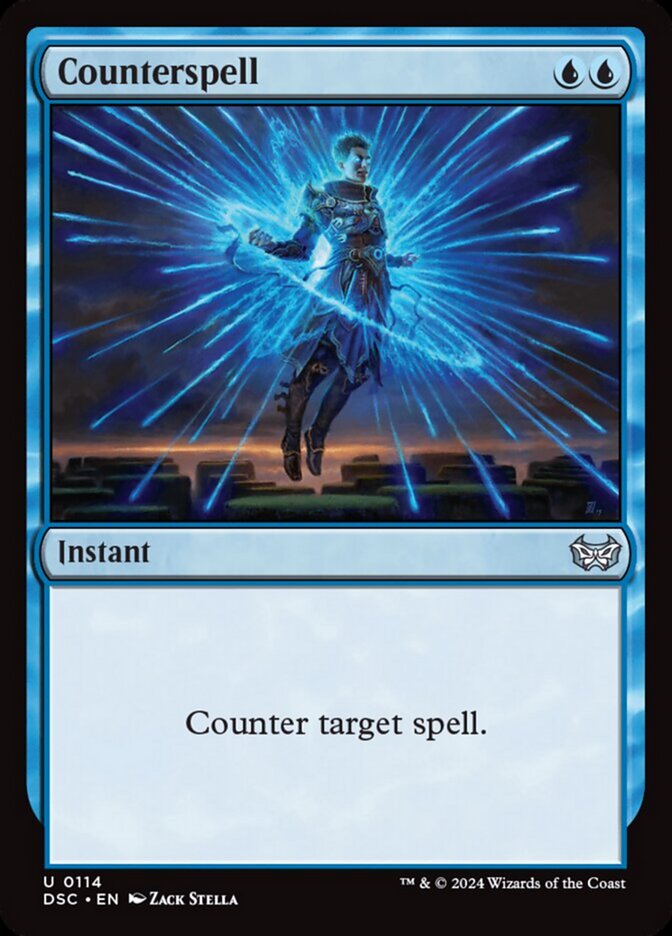 Counterspell
You control three Soldier tokens and your opponent controls one creature. Your opponent casts a spell. While Counterspell would always work for two blue mana, Unified Will works for one blue and one generic because your creature count (3) is higher than theirs (1). As Unified Will resolves, it checks the count, confirms your lead, and counters the spell.
 An Offer You Can't Refuse
Suppose you control two creatures and your opponent controls one. They cast a powerful artifact. You cast Unified Will. In response, they cast a spell that creates two creature tokens. Those tokens resolve first. Now, when Unified Will tries to resolve, you have 2 creatures and they have 3. Unlike An Offer You Can't Refuse, which targets based on spell type, Unified Will checks the board state, finds you no longer have more creatures, and fails to counter the artifact.
Guide written with AI from the official text and rulings. Official English text prevails.
How it works : Unified Will
Original English text — Wizards of the Coast / Scryfall
- #1· Wizards of the Coast
Whether you control more creatures than the targeted spell’s controller is checked only as Unified Will resolves. If that player controls more creatures than you at this time, or you each control the same amount, Unified Will simply doesn’t do anything.
No other card is named in this ruling.
Legal formats
Commentaires
- Sois le premier à commenter cette carte.
Read next
Meta decks with Unified Will
No archived Top 8 deck with this card yet.