


Virtus's Maneuver is one of those cards players keep asking about. Here is, in plain words, what its official text says, the rulings published by Wizards of the Coast, and the combos players actually run.
Official card text
For each player, choose friend or foe. Each friend returns a creature card from their graveyard to their hand. Each foe sacrifices a creature of their choice.
Complete guide
Virtus's Maneuver is a versatile black sorcery that forces your opponents into tough choices while recurring resources for your allies. Whether you are playing a political game of Commander or a standard duel, this 'friend or foe' mechanic allows you to dictate the flow of the graveyard and the battlefield simultaneously.
Making the Choice
As Virtus's Maneuver resolves, you must designate every player in the game—including yourself—as either a 'friend' or a 'foe.' You have total control over these labels; you can even choose to label yourself a 'foe' if it serves your strategy. These designations only last for the duration of the spell's resolution and do not create permanent alliances or change the official team status of any player.
Step-by-Step Resolution
The spell resolves in a specific order: first, friends act, then foes act. Starting with the next friend in turn order, each friend chooses a creature card in their graveyard. Once all choices are made, they all return those cards to their hands at once. Next, each foe chooses a creature they control, following the same turn-order sequence, and then all chosen creatures are sacrificed simultaneously. No player can cast spells or activate abilities between the friends returning cards and the foes sacrificing creatures.
Timing and Triggers
Because the friend actions happen before foe actions, it is possible for a friend returning a card to trigger an ability on a foe's permanent. However, these triggered abilities are not put onto the stack until the entire spell has finished resolving. You can name a player a foe even if they have no creatures to sacrifice, or a friend even if their graveyard is empty; the spell will simply do as much as it can.
When to Cast It
Virtus's Maneuver is best utilized when you need to bypass 'Hexproof' or 'Indestructible,' as the 'foe' chooses which creature they sacrifice, and sacrifice does not target. It is also an excellent tool for political leverage in multiplayer formats, allowing you to return a key utility creature to a temporary ally's hand in exchange for their cooperation later.
Interaction examples
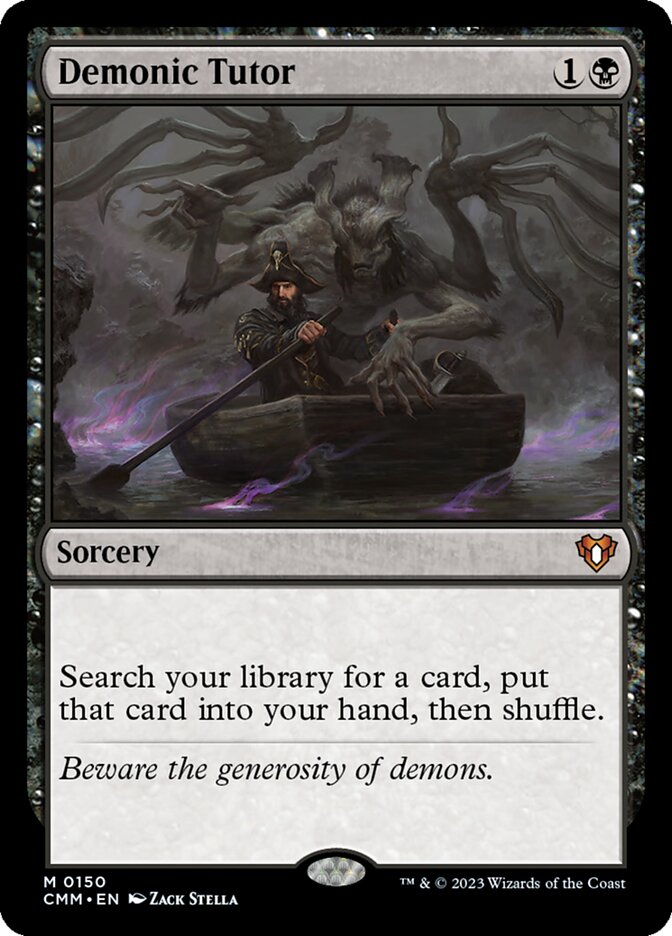 Demonic Tutor
You cast Demonic Tutor to find Virtus's Maneuver when you need a specific answer. When you later cast Virtus's Maneuver, you name yourself a friend to return the creature you just used to block, and name your opponent a foe. Even if they have a creature with Ward or Hexproof, they must choose one creature they control and sacrifice it.
 Toxic Deluge
If your opponent has a massive army, you might first cast Toxic Deluge to clear out the small tokens. After the board is thinned, you cast Virtus's Maneuver. Since the opponent only has their strongest, high-toughness creature left, naming them a 'foe' forces them to sacrifice that remaining threat while you return a creature from your graveyard to your hand.
Guide written with AI from the official text and rulings. Official English text prevails.
How it works : Virtus's Maneuver
Original English text — Wizards of the Coast / Scryfall
- #1· Wizards of the Coast
When Virtus’s Maneuver resolves and you choose friend or foe, first the next friend in turn order (or, if it’s a friend’s turn, that friend) chooses a creature card in their graveyard, then each other friend in turn order does the same, then each of those players return those cards to their hands at the same time. Friends will know choices made by earlier players when making their choices. Repeat this process for foes, who choose a creature one at a time and then sacrifice them all at the same time.
No other card is named in this ruling.
- #2· Wizards of the Coast
You make this choice for yourself as well as each other player. In some rare cases, you may wish to call yourself (or your teammate in a Two-Headed Giant game) a foe. You can do that.
No other card is named in this ruling.
- #3· Wizards of the Coast
The designation of friend or foe is only relevant to the spell that asks you to choose. A player you call your friend doesn’t become your teammate, and the next “friend or foe” spell you cast could name that player your foe.
No other card is named in this ruling.
- #4· Wizards of the Coast
You may call a player a friend or a foe even if that player will be instructed to perform an impossible action. For example, for Regna’s Sanction, a foe may control no untapped creatures.
No other card is named in this ruling.
- #5· Wizards of the Coast
Friends perform their specified actions before foes. This means that a friend’s action may cause a triggered ability of a foe’s permanent to trigger before that foe’s action causes that permanent to leave the battlefield.
No other card is named in this ruling.
- #6· Wizards of the Coast
Players can’t take actions in between the time that friends perform their actions and the time that foes perform theirs. If any abilities trigger from friends performing actions, those triggers won’t be put onto the stack until the foes perform their actions and the spell finishes resolving.
No other card is named in this ruling.
Legal formats
Commentaires
- Sois le premier à commenter cette carte.
Read next
Meta decks with Virtus's Maneuver
No archived Top 8 deck with this card yet.