

Virtus the Veiled is one of those cards players keep asking about. Here is, in plain words, what its official text says, the rulings published by Wizards of the Coast, and the combos players actually run.
Official card text
Partner with Gorm the Great (When this creature enters, target player may put Gorm into their hand from their library, then shuffle.) Deathtouch Whenever Virtus deals combat damage to a player, that player loses half their life, rounded up.
Complete guide
Virtus the Veiled is a terrifying Assassin that turns even the smallest scratch into a life-threatening wound. Armed with Deathtouch and a devastating combat damage trigger, Virtus works best when paired with his partner, Gorm the Great, to ensure the way is clear for his lethal strikes.
Finding Your Partner
When Virtus the Veiled enters the battlefield, his 'Partner with' ability triggers. This allows you to target a player—usually yourself—to search their library for Gorm the Great, reveal it, and put it into their hand. In the Commander format, if both Virtus and Gorm are your designated commanders, this ability can even be used to recover Gorm if he has been shuffled into your library.
The Lethal Math
Virtus's primary ability triggers whenever he deals combat damage to a player. The loss of life is calculated after the combat damage has already reduced the player's life total. You calculate half of the player's current life total, rounding up, and they lose that much life. Note that since Virtus has Deathtouch, even 1 damage is lethal to creatures, but his triggered ability specifically targets the player's life total.
Step-by-Step Resolution
First, Virtus deals combat damage during the combat damage step. If he is unblocked, he deals 1 damage (his power) to the player. Second, the player's life total is adjusted downward by 1. Third, Virtus's triggered ability is put onto the stack. Fourth, when the ability resolves, you check the player's new life total, divide it by two, round that fraction up, and the player loses that amount of life.
Strategic Timing
Virtus is most effective early in the game when opponents have high life totals, or when you have ways to ensure he isn't blocked. Because his ability rounds up, he is particularly punishing against players with odd life totals. Always look for windows where your opponents are tapped out or their creatures are forced to block other targets.
Interaction examples
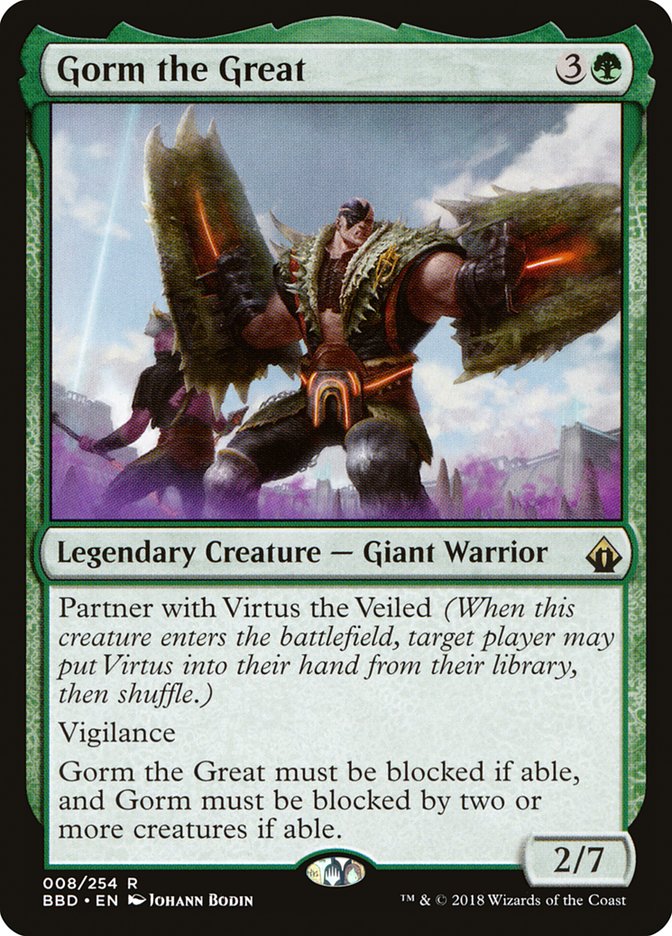 Gorm the Great
If you control both Gorm the Great and Virtus the Veiled, you can attack with both. Gorm's ability forces two or more creatures to block him if able. This often leaves the opponent with no available creatures to block Virtus, ensuring Virtus connects with the player to trigger his life-loss ability.
If your opponent is at 21 life and Virtus deals 1 combat damage to them, their life total first drops to 20. Then, Virtus's ability triggers. Half of 20 is 10, so the player loses 10 life, leaving them at 10 life total.
 Roaming Throne
With Roaming Throne on the battlefield naming 'Assassin', Virtus's ability triggers twice. If an opponent at 21 life takes 1 damage from Virtus, they go to 20. The first trigger resolves, causing them to lose 10 life (dropping them to 10). The second trigger then resolves, causing them to lose half of 10, which is 5. The player ends up at 5 life from a single 1-power attack.
Guide written with AI from the official text and rulings. Official English text prevails.
How it works : Virtus the Veiled
Original English text — Wizards of the Coast / Scryfall
- #1· Wizards of the Coast
Virtus's last ability triggers and resolves after combat damage is dealt. For example, if Virtus deals 1 combat damage to a player with 10 life, combat damage will reduce that player's life total to 9. Then its ability will cause the player to lose 5 life, leaving the player at 4.
No other card is named in this ruling.
- #2· Wizards of the Coast
In a Two-Headed Giant game, a player's life total is the same as their team's life total.
No other card is named in this ruling.
- #3· Wizards of the Coast
"Partner with [name]" represents two abilities. The first is a triggered ability: "When this permanent enters the battlefield, target player may search their library for a card named [name], reveal it, put it into their hand, then shuffle their library."
No other card is named in this ruling.
- #4· Wizards of the Coast
Note that the target player searches their library (which may be affected by effects such as that of Stranglehold) and that the card they find is revealed, even though these words aren't included in the ability's reminder text.
No other card is named in this ruling.
- #5· Wizards of the Coast
The second ability represented by the "partner with [name]" keyword modifies the rules for deck construction in the Commander variant and has no function outside of that variant. If a legendary creature card with "partner with [name]" is designated as your commander, the named legendary creature card can also be designated as your commander. For more information on the Commander variant, please visit Wizards.com/Commander.
No other card is named in this ruling.
- #6· Wizards of the Coast
If your Commander deck has two commanders, you can only include cards whose own color identities are also found in your commanders' combined color identities. If Khorvath and Sylvia are your commanders, your deck may contain cards with red and/or white in their color identity, but not blue, black, or green.
No other card is named in this ruling.
- #7· Wizards of the Coast
Both commanders start in the command zone, and the remaining 98 cards of your deck are shuffled to become your library.
No other card is named in this ruling.
- #8· Wizards of the Coast
To have two commanders, both must have the partner ability (featured in the Magic: The Gathering—Commander™ (2016 Edition) set) or corresponding "partner with" abilities as the game begins. A creature with a "partner with" ability can't partner with any creature other than its designated partner. Losing a partner ability during the game doesn't cause either to cease to be your commander.
No other card is named in this ruling.
- #9· Wizards of the Coast
Once the game begins, your two commanders are tracked separately. If you cast one, you won't have to pay an additional
 the first time you cast the other. A player loses the game after having been dealt 21 damage from one of them, not from both of them combined. Command Beacon's effect puts one into your hand from the command zone, not both.
No other card is named in this ruling.
- #10· Wizards of the Coast
An effect that checks whether you control your commander is satisfied if you control one or both of your two commanders.
No other card is named in this ruling.
- #11· Wizards of the Coast
The triggered ability of the "partner with" keyword still triggers in a Commander game. If your other commander has somehow ended up in your library, you can find it. You can also target another player who might have that card in their library.
No other card is named in this ruling.
Popular combos
Real combos played by the community, sorted by popularity.
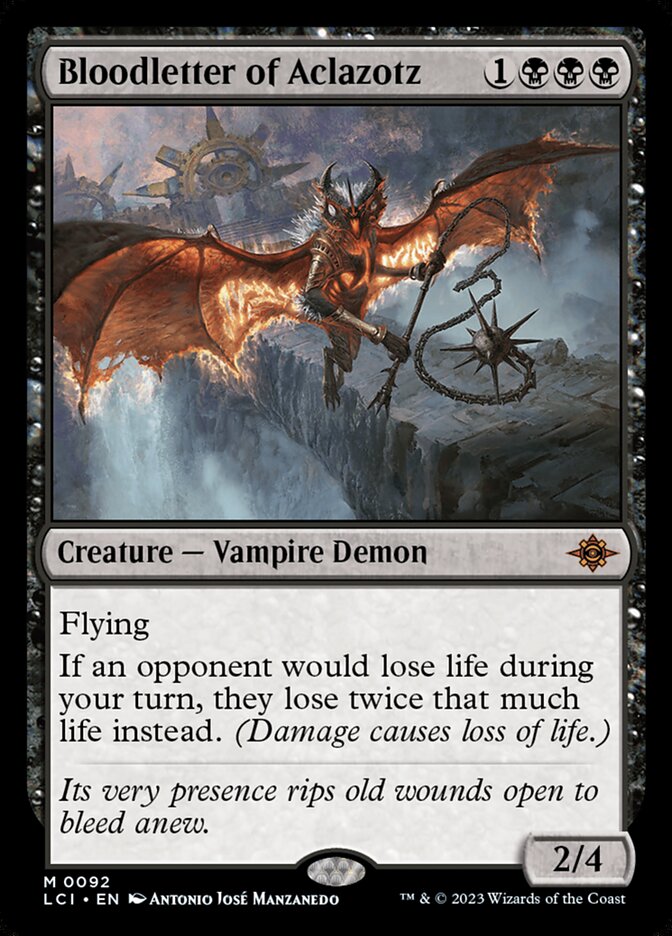
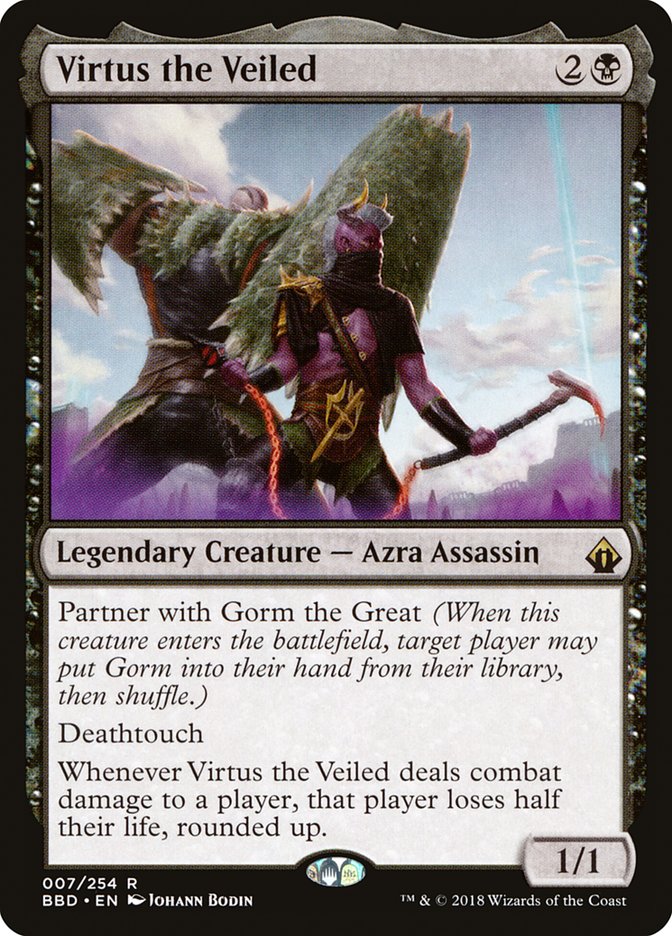
Bloodletter of Aclazotz + Virtus the Veiled
- 1Deal combat damage to an opponent using Virtus the Veiled.
- 2Virtus the Veiled triggers, causing the defending opponent to lose their entire life total due to Bloodletter of Aclazotz.
- 3The opponent loses the game due to having 0 or less life.
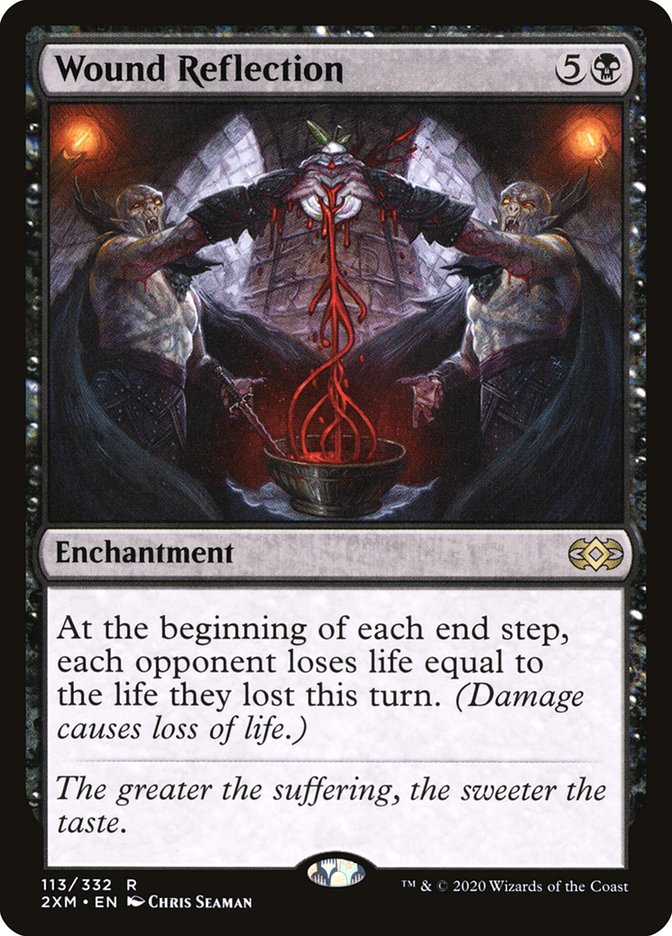
Virtus the Veiled + Wound Reflection
- 1Attack the opponent with Virtus.
- 2At end of turn, Reflection triggers.

Virtus the Veiled + Archfiend of Despair
- 1Deal combat damage to an opponent with Virtus.
- 2Virtus triggers, causing the opponent to lose half their life total, rounded up.
- 3At the beginning of your end step, Archfiend of Despair triggers, causing the opponent to lose life equal to the life they lost this turn.
- 4The opponent loses the game due to having zero or less life.
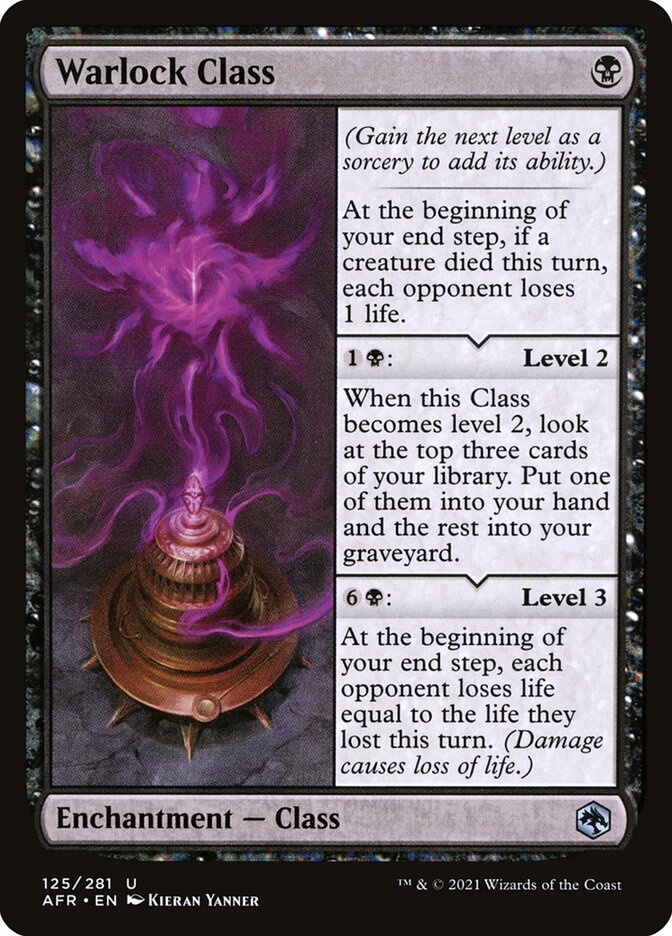
Virtus the Veiled + Warlock Class
- 1Deal combat damage to an opponent with Virtus.
- 2Virtus triggers, causing the opponent to lose half their life total, rounded up.
- 3At the beginning of your end step, Warlock Class triggers, causing the opponent to lose life equal to the life they lost this turn.
- 4The opponent loses the game due to having zero or less life.
Blitzwing, Cruel Tormentor // Blitzwing, Adaptive Assailant + Virtus the Veiled
- 1Deal combat damage to an opponent with Virtus.
- 2Virtus triggers, causing the opponent to lose half their life total, rounded up.
- 3At the beginning of your end step, Blitzwing triggers, causing the opponent to lose life equal to the life they lost this turn.
- 4The opponent loses the game due to having zero or less life.
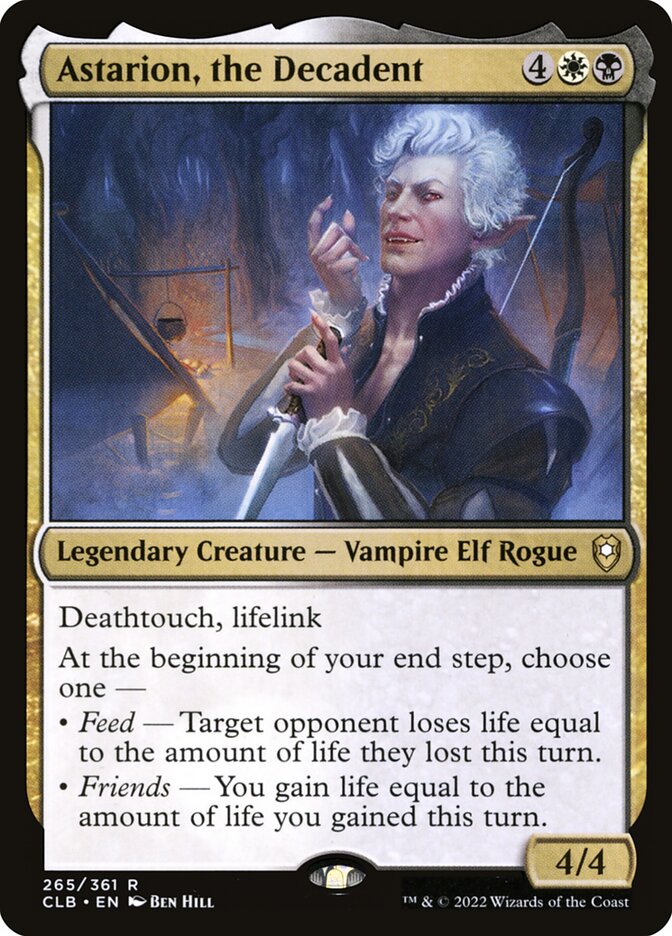
Astarion, the Decadent + Virtus the Veiled
- 1Deal combat damage to an opponent with Virtus.
- 2Virtus triggers, causing the opponent to lose half their life total, rounded up.
- 3At the beginning of your end step, Astarion triggers, causing the opponent to lose life equal to the life they lost this turn.
- 4The opponent loses the game due to having zero or less life.
Interactions with other cards
These cards' text mentions Virtus the Veiled.
Related cards and tokens
Legal formats
Commentaires
- Sois le premier à commenter cette carte.
Read next

Meta decks with Virtus the Veiled
No archived Top 8 deck with this card yet.