
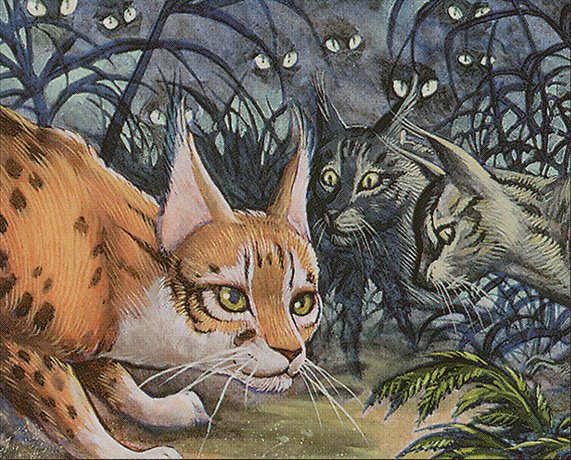
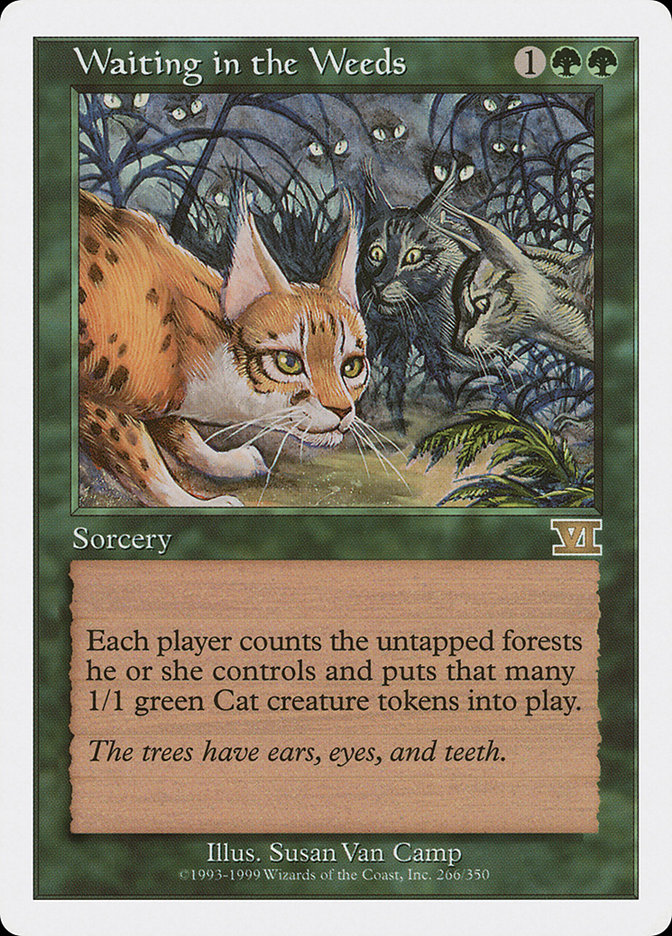
Waiting in the Weeds is one of those cards players keep asking about. Here is, in plain words, what its official text says, the rulings published by Wizards of the Coast, and the combos players actually run.
Official card text
Each player creates a 1/1 green Cat creature token for each untapped Forest they control.
Complete guide
Waiting in the Weeds is a classic green sorcery that rewards players who maintain a healthy ecosystem of untapped lands. By checking your board for specific land types, it allows you to suddenly swarm the battlefield with feline allies. It is a powerful tool for creature-based strategies that can catch an opponent off guard if they have tapped out.
What It Does
When Waiting in the Weeds resolves, it checks every player's board state for untapped lands with the 'Forest' subtype. Each player then creates a number of 1/1 green Cat creature tokens equal to the number of untapped Forests they currently control. Note that this counts any land with the Forest subtype, including non-basic lands, as long as they are untapped at the moment of resolution.
How It Resolves Step by Step
First, you cast the spell by paying one generic and two green mana. Upon resolution, the game counts how many untapped Forests you control and how many untapped Forests each opponent controls. Then, simultaneously, all players create the appropriate number of 1/1 green Cat creature tokens. Because the tokens are created during resolution, you cannot use the mana from those Forests to cast this spell and still have them count toward the token total.
Common Mistakes
A frequent error is tapping all your Forests to pay for the spell's mana cost. Since the spell counts 'untapped' Forests upon resolution, any land you tapped to cast Waiting in the Weeds will not be counted. To maximize the effect, you should use non-Forest mana sources or mana dorks to pay the casting cost. Additionally, remember that this effect is symmetrical; if your opponent also controls untapped Forests, they will receive Cat tokens as well.
When to Play It
This card is best played in a deck with a heavy concentration of Forests, often alongside ways to put extra lands onto the battlefield. It is most effective when you have alternative ways to produce mana, such as artifacts or creatures, allowing your Forests to remain untapped. It also serves as a great recovery tool after a board wipe if you have managed to keep your land base intact.
Interaction examples
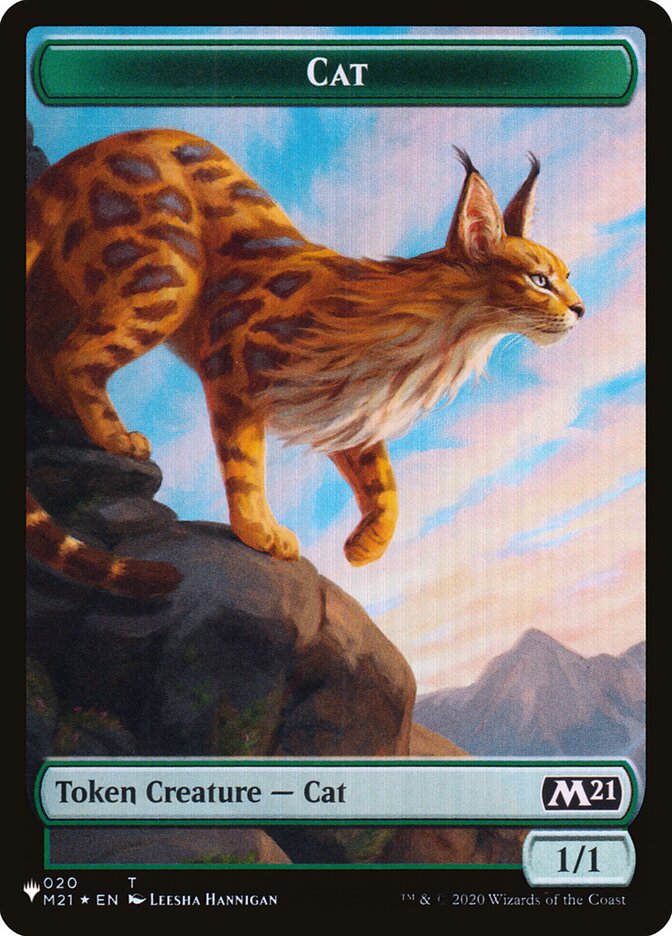 Cat
If you control five Forests and two Llanowar Elves, you can tap the two Elves and one Forest to cast Waiting in the Weeds. Upon resolution, the game sees your four remaining untapped Forests, and you create four 1/1 green Cat creature tokens.
 Cultivate
You cast Cultivate, putting one basic Forest onto the battlefield tapped and one into your hand. On your next turn, you play the Forest from your hand. When you later cast Waiting in the Weeds, both of these Forests will count toward your total Cats as long as they remain untapped.
 Farseek
Guide written with AI from the official text and rulings. Official English text prevails.
How it works : Waiting in the Weeds
Original English text — Wizards of the Coast / Scryfall
No additional ruling has been published for this card.
Related cards and tokens
Legal formats
Commentaires
- Sois le premier à commenter cette carte.
Read next
Meta decks with Waiting in the Weeds
No archived Top 8 deck with this card yet.