


Dragonshift is one of those cards players keep asking about. Here is, in plain words, what its official text says, the rulings published by Wizards of the Coast, and the combos players actually run.
Official card text
Until end of turn, target creature you control becomes a blue and red Dragon with base power and toughness 4/4, loses all abilities, and gains flying. Overload(You may cast this spell for its overload cost. If you do, change "target" in its text to "each.")


Complete guide
Dragonshift is a versatile Izzet instant that can transform a single lowly creature or an entire army into fearsome 4/4 Dragons. Whether you are seeking a surprise blocker or a massive aerial finishing move, this card offers a dramatic shift in board presence. Mastering its layer interactions is key to ensuring your draconic transformation goes exactly as planned.
What Dragonshift Does
Dragonshift modifies creatures you control by changing their base power and toughness to 4/4, making them blue and red Dragons, and giving them flying. Crucially, the affected creatures lose all existing abilities during this transformation. You can cast it for its standard cost to target one creature, or pay the Overload cost to apply these changes to every creature you control without targeting them.
How it Resolves Step by Step
When Dragonshift resolves, it checks which creatures it is affecting (either the single target or all creatures you control if overloaded). First, it strips away all existing creature types and colors, replacing them with the Dragon type and the colors blue and red. Second, it removes all existing abilities from those creatures. Third, it sets their base power and toughness to 4/4. Finally, it grants them the flying ability. These effects last until the end of the current turn.
Layer Interactions and Common Mistakes
A common point of confusion involves 'base' power and toughness versus modifiers. Dragonshift overwrites previous base power/toughness setting effects, but +1/+1 counters and effects from cards like anthems still apply on top of the 4/4 base. Another vital note: if you pay the Overload cost, the spell no longer targets. This means it can affect your creatures even if they have shroud or hexproof, and your opponent cannot use 'hexproof' responses to fizzle the spell.
When to Play Dragonshift
Dragonshift is best used during the declare attackers or declare blockers step. Because it grants flying, it can make your ground-based army unblockable by your opponent's non-flying creatures. Defensively, it can turn 1/1 tokens into 4/4 Dragons to eat attacking creatures. Always remember that since it is an instant, you can wait for your opponent to tap out before committing to the high Overload cost.
Interaction examples
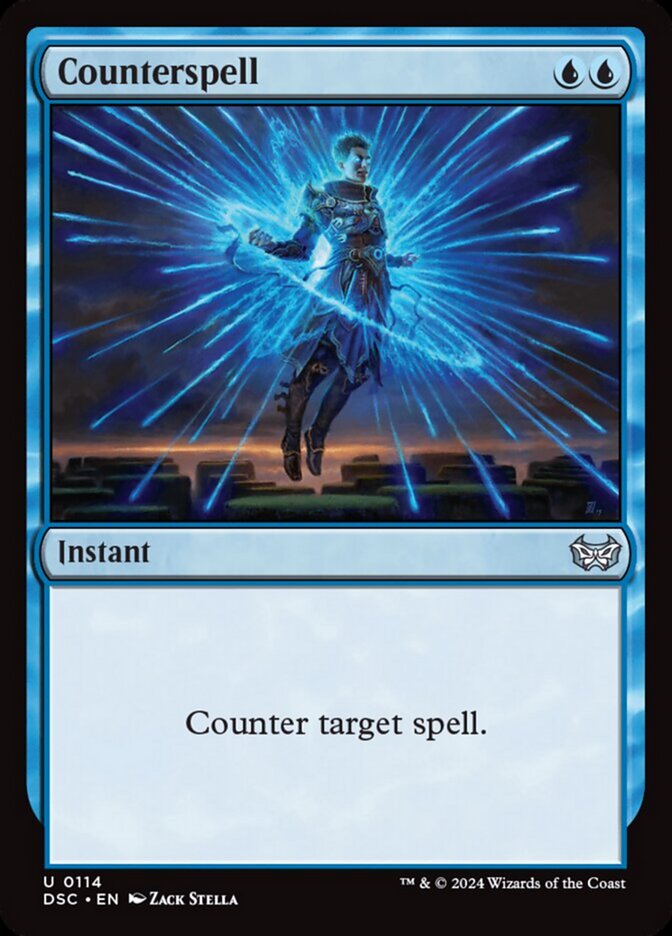 Counterspell
If you cast Dragonshift for its Overload cost, it is still a spell on the stack. Your opponent can cast Counterspell targeting Dragonshift. If Counterspell resolves, Dragonshift is put into the graveyard and none of your creatures will transform into Dragons, regardless of how much mana you spent.
 Chaos Warp
If you cast Dragonshift targeting a single creature and your opponent responds with Chaos Warp on that same creature, the target becomes illegal. Dragonshift will fail to resolve and stay in the graveyard with no effect. However, if you cast Dragonshift for its Overload cost, it does not target. If a creature is removed via Chaos Warp in response, all your remaining creatures will still successfully transform into 4/4 Dragons.
You have a 1/1 Soldier token. During your opponent's turn, they attack with a 3/3 creature. You cast Dragonshift for its normal cost of {1}{U}{R} targeting your token. The token becomes a 4/4 Dragon with flying and no other abilities. You block their 3/3, destroying it while your newly shifted Dragon survives the combat.
Guide written with AI from the official text and rulings. Official English text prevails.
How it works : Dragonshift
Original English text — Wizards of the Coast / Scryfall
- #1· Wizards of the Coast
If you don't pay the overload cost of a spell with overload, that spell will have a single target. If you pay the overload cost, the spell won't have any targets.
No other card is named in this ruling.
- #2· Wizards of the Coast
Because a spell with overload doesn't target when its overload cost is paid, it may affect permanents with hexproof or with protection from the appropriate color.
No other card is named in this ruling.
- #3· Wizards of the Coast
To determine the total cost of a spell, start with the mana cost or alternative cost you're paying (such as an overload cost), add any cost increases, then apply any cost reductions. The mana value of the spell remains unchanged, no matter what the total cost to cast it was.
No other card is named in this ruling.
- #4· Wizards of the Coast
If you are instructed to cast a spell with overload "without paying its mana cost," you can't choose to pay its overload cost instead.
No other card is named in this ruling.
- #5· Wizards of the Coast
Dragonshift overwrites all previous effects that set a creature's power or toughness to specific values. However, effects that set a creature's power or toughness to specific values that start to apply after Dragonshift resolves will overwrite this effect.
No other card is named in this ruling.
- #6· Wizards of the Coast
If you cast Dragonshift using overload, only creatures you control when it resolves will be affected. Creatures that come under your control later in the turn will not.
No other card is named in this ruling.
- #7· Wizards of the Coast
Effects that modify the power or toughness of an affected creature, such as the effects of Phytoburst or Legion's Initiative, will apply to it no matter when they started to take effect. The same is true for counters that change the creature's power or toughness (such as +1/+1 counters) and effects that switch its power and toughness.
No other card is named in this ruling.
- #8· Wizards of the Coast
Each affected creature will lose all other colors and creature types and be only red, blue, and a Dragon. Each will retain any other types it may have had, such as artifact.
No other card is named in this ruling.
- #9· Wizards of the Coast
Each affected creature will lose any abilities it may have gained prior to Dragonshift resolving. Notably, this includes the ability to cast the copies of a card with cipher that's encoded on the creature, although that ability will return after the turn ends.
No other card is named in this ruling.
- #10· Wizards of the Coast
If any of the affected creatures gains an ability after Dragonshift resolves, it will keep that ability.
No other card is named in this ruling.
Legal formats
Commentaires
- Sois le premier à commenter cette carte.
Read next
Meta decks with Dragonshift
No archived Top 8 deck with this card yet.