


Fury is one of those cards players keep asking about. Here is, in plain words, what its official text says, the rulings published by Wizards of the Coast, and the combos players actually run.
Official card text
Double strike When this creature enters, it deals 4 damage divided as you choose among any number of target creatures and/or planeswalkers. Evoke—Exile a red card from your hand.
Complete guide
Fury is a powerful Elemental Incarnation that offers massive board control and tactical flexibility. Whether cast for its full mana cost or evoked for free by exiling a red card, its ability to divide 4 damage makes it a staple for clearing out multiple threats at once.
What It Does
Fury is a 3/3 creature with Double strike. Its primary strength lies in its enters-the-battlefield ability, which allows you to distribute 4 damage among any number of target creatures and/or planeswalkers. Additionally, its Evoke ability allows you to cast it for zero mana by exiling a red card from your hand, though doing so means the creature must be sacrificed once it hits the table.
How It Resolves Step by Step
When Fury enters the battlefield, its damage ability triggers. You must choose your targets and announce how the 4 damage is divided at the moment the ability is put onto the stack. Each target must be assigned at least 1 damage, meaning you can target up to four different permanents. If Fury was cast for its Evoke cost, a second triggered ability also goes onto the stack. You can choose the order: usually, you resolve the damage first, then the sacrifice trigger. If a target becomes illegal (like leaving the battlefield) before the ability resolves, the damage meant for it is simply lost; it cannot be reassigned to the remaining legal targets.
Common Mistakes
A common error is trying to deal 0 damage to a creature just to target it—this is not allowed by the rules. You also cannot change your mind about the damage distribution once the ability is on the stack. Note that even if you Evoke Fury, its mana value is always 5. Finally, remember that while you can cast instants in response to the Evoke sacrifice trigger, the sacrifice itself does not use the stack once that specific trigger starts to resolve.
When to Play It
Fury is best used to stabilize against aggressive decks. It can pick off multiple small creatures, such as tokens or mana dorks, or focus all 4 damage on a single high-priority target like a Planeswalker. If you have ways to sacrifice it for value or blink it before the Evoke trigger resolves, you can extract even more utility from its powerful entrance.
Interaction examples
 Roaming Throne
If you have Roaming Throne on the battlefield with 'Elemental' chosen as the creature type, Fury's damage ability will trigger an additional time when it enters. You will get two separate instances of '4 damage divided as you choose,' allowing you to deal a total of 8 damage across various targets.
If you cast Fury for its Evoke cost, its sacrifice trigger goes on the stack. Before that trigger resolves, you can cast the instant side of Kazuul's Fury, sacrificing Fury as a cost. Kazuul's Fury will deal 3 damage (Fury's power) to any target, and you still get to resolve Fury's original 4-damage trigger. This allows you to deal a total of 7 damage before the creature would have died anyway.
If your opponent controls Freyalise, Llanowar's Fury and several Elf tokens, you can play Fury and divide the 4 damage. For example, you could assign 3 damage to Freyalise and 1 damage to an Elf Druid token. This highlights Fury's ability to pressure both a player's board presence and their Planeswalkers simultaneously.
 Solemn Simulacrum
When Fury enters, it can target Solemn Simulacrum for 2 damage and use the remaining 2 damage for other threats. Because Fury has Double strike, if it survives the turn (by being cast for its full mana cost), it can effectively trade with or kill larger creatures in combat after its initial enter-the-battlefield trigger has already softened the opponent's defenses.
Guide written with AI from the official text and rulings. Official English text prevails.
How it works : Fury
Original English text — Wizards of the Coast / Scryfall
- #1· Wizards of the Coast
If some of the targets are illegal as the triggered ability tries to resolve, the original division of damage still applies, but the damage that would have been dealt to the illegal targets isn't dealt at all.
No other card is named in this ruling.
- #2· Wizards of the Coast
If you pay the evoke cost, you can have the creature's own triggered ability resolve before the evoke triggered ability. You can cast spells after that ability resolves but before you have to sacrifice the creature.
No other card is named in this ruling.
- #3· Wizards of the Coast
You divide the damage as you put the triggered ability on the stack, not as it resolves. Each target must be assigned at least 1 damage. You can't choose more than four targets and deal 0 damage to some of them.
No other card is named in this ruling.
- #4· Wizards of the Coast
To determine the total cost of a spell, start with the mana cost or alternative cost you're paying (such as an evoke cost), add any cost increases, then apply any cost reductions. The mana value of the spell is determined by only its mana cost, no matter what the total cost to cast that spell was.
No other card is named in this ruling.
Interactions with other cards
These cards' text mentions Fury.
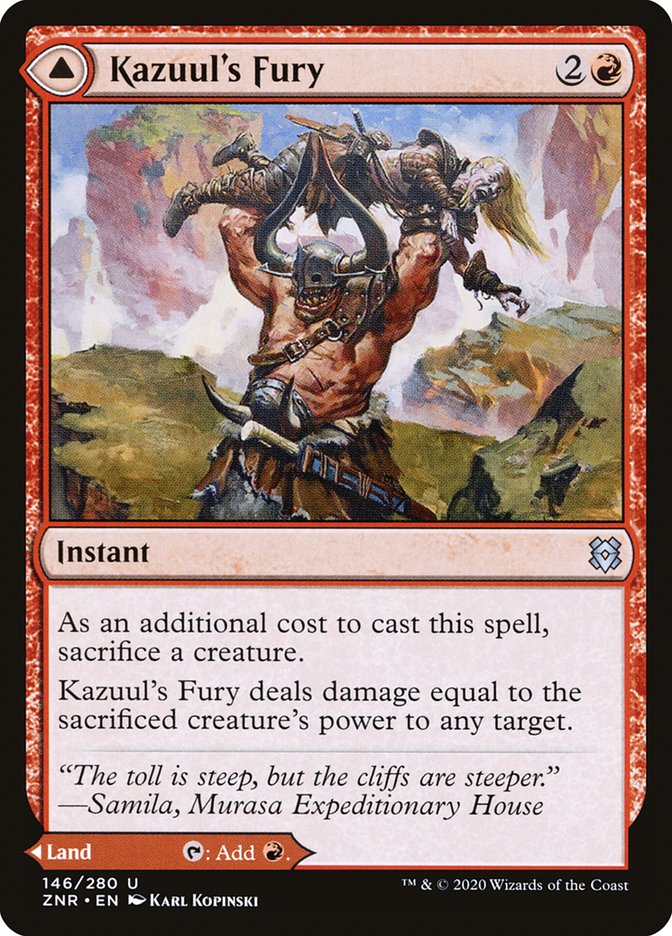
As an additional cost to cast this spell, sacrifice a creature. Kazuul's Fury deals damage equal to the sacrificed creature's power to any target. This land enters tapped. {T}: Add {R}.
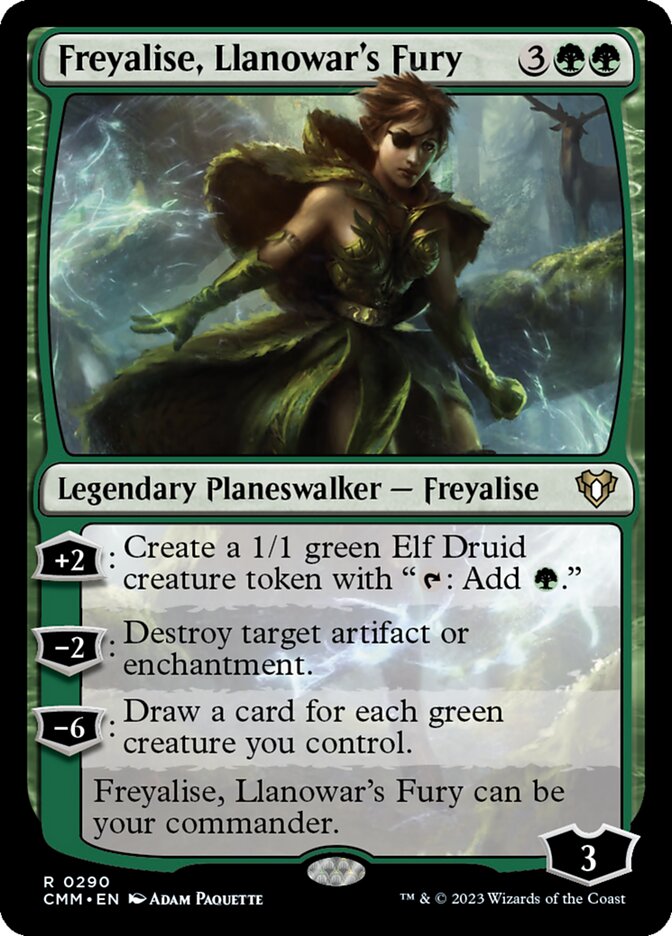
+2: Create a 1/1 green Elf Druid creature token with "{T}: Add {G}." −2: Destroy target artifact or enchantment. −6: Draw a card for each green creature you control. Freyalise, Llanowar's Fury can be your commander.
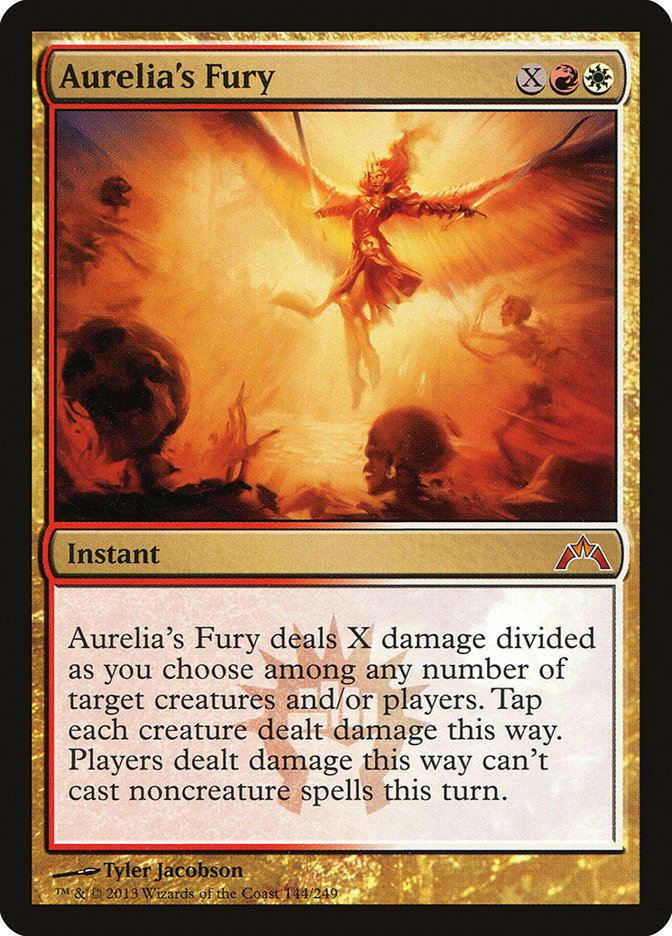
Aurelia's Fury deals X damage divided as you choose among any number of targets. Tap each creature dealt damage this way. Players dealt damage this way can't cast noncreature spells this turn.
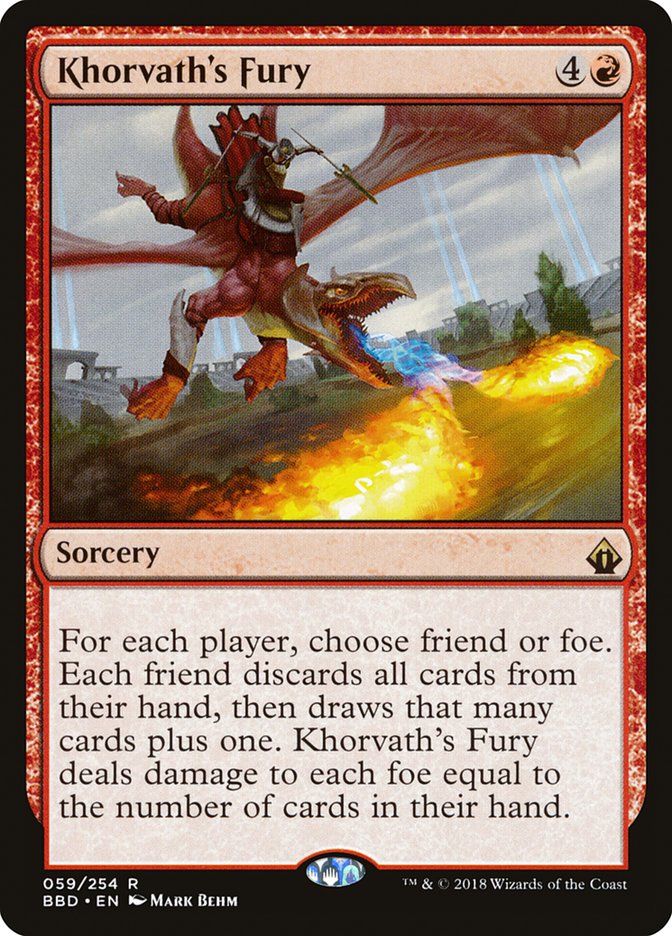
For each player, choose friend or foe. Each friend discards all cards from their hand, then draws that many cards plus one. Khorvath's Fury deals damage to each foe equal to the number of cards in their hand.

Power-up — {W}{U}{B}{R}{G}: Put two +1/+1 counters on Nick Fury, then look at the top seven cards of your library. You may put a Hero, Equipment, or Vehicle card from among them onto the battlefield. If it's a double-faced card, you may transform it. Put the rest on the bottom of your library in a random order. (Activate each power-up ability only once. Reduce the cost by his mana cost if he entered this turn.)
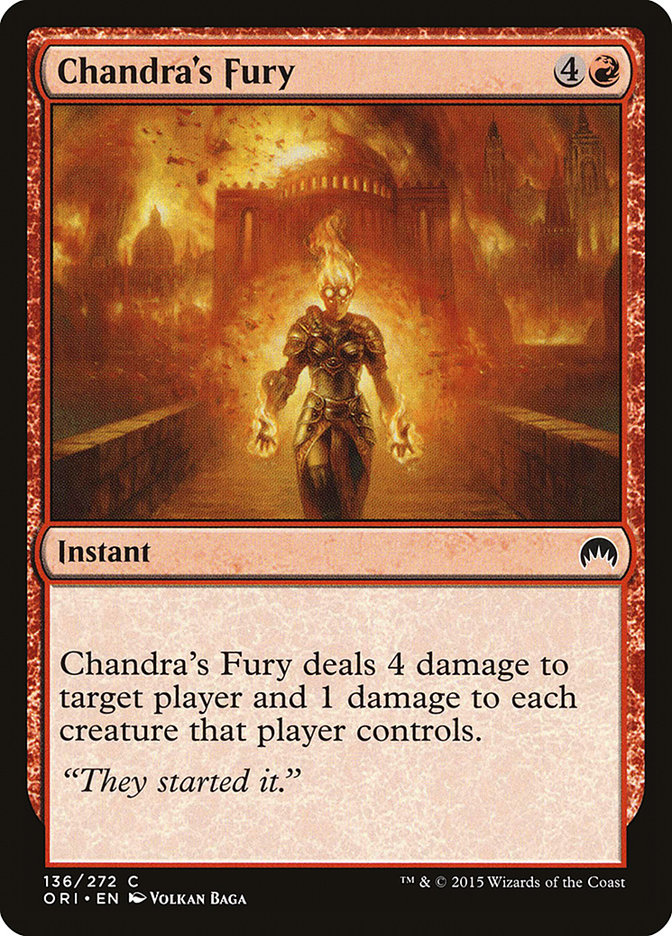
Chandra's Fury deals 4 damage to target player or planeswalker and 1 damage to each creature that player or that planeswalker's controller controls.
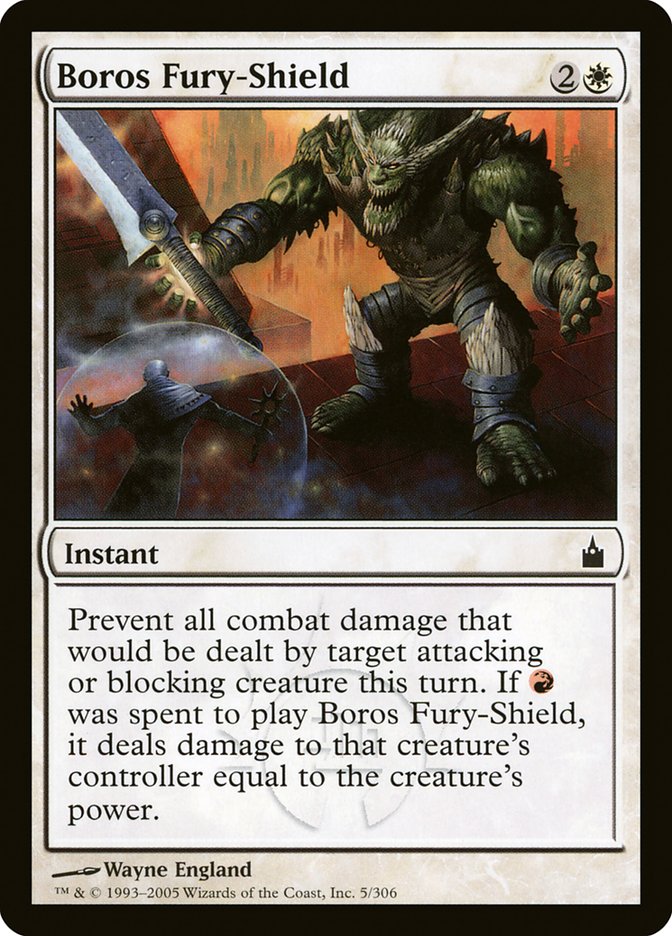
Prevent all combat damage that would be dealt by target attacking or blocking creature this turn. If {R} was spent to cast this spell, Boros Fury-Shield deals damage to that creature's controller equal to the creature's power.
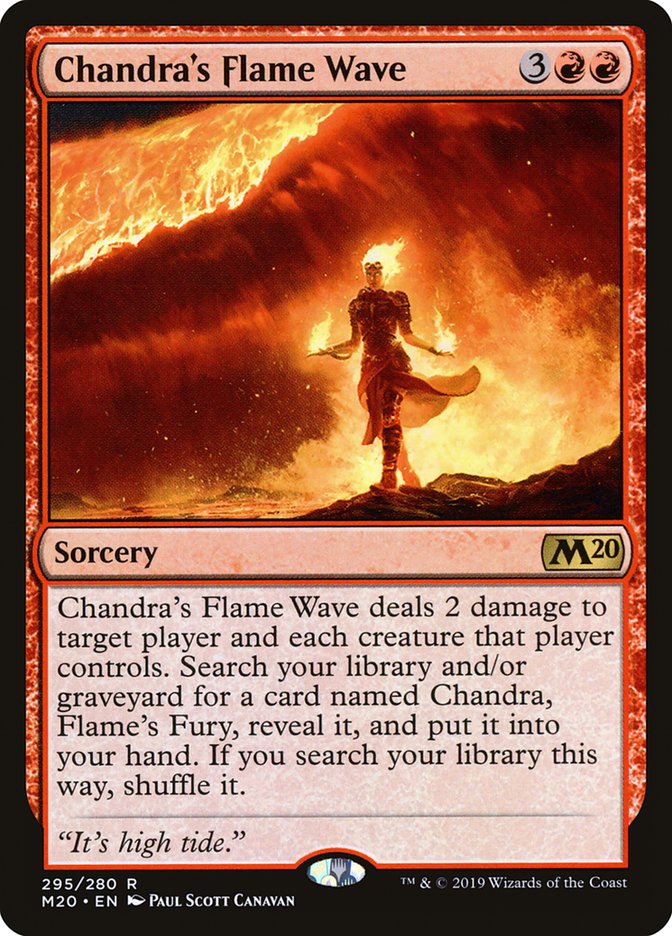
Chandra's Flame Wave deals 2 damage to target player and each creature that player controls. Search your library and/or graveyard for a card named Chandra, Flame's Fury, reveal it, and put it into your hand. If you search your library this way, shuffle.
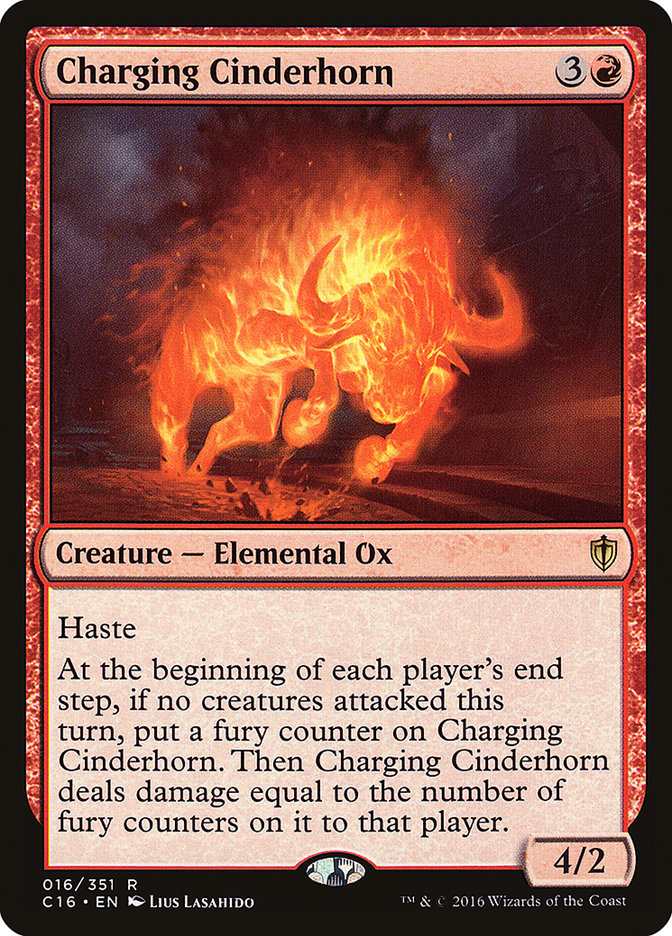
Haste At the beginning of each player's end step, if no creatures attacked this turn, put a fury counter on this creature. Then this creature deals damage equal to the number of fury counters on it to that player.
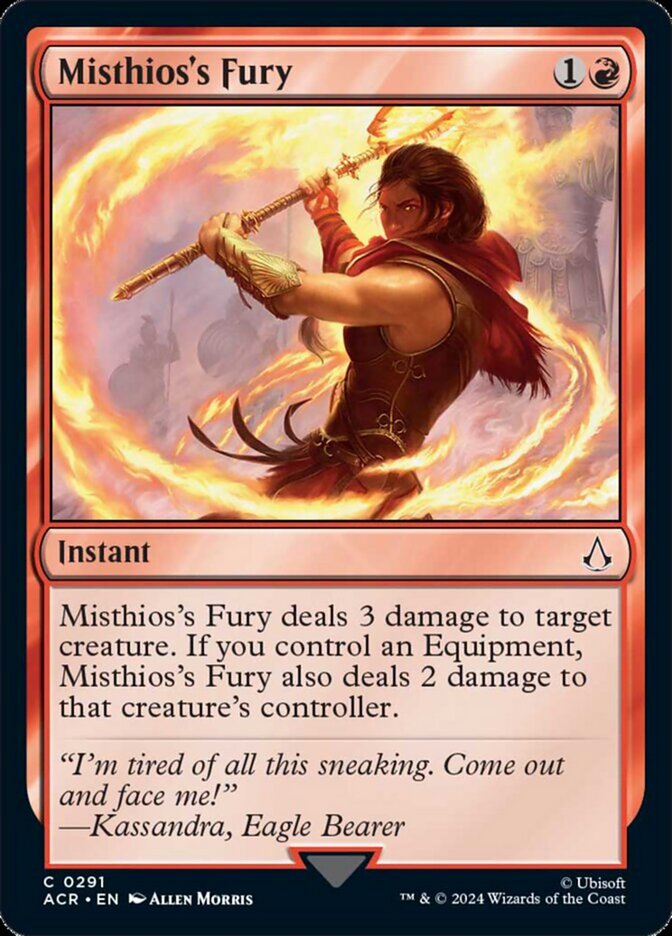
Misthios's Fury deals 3 damage to target creature. If you control an Equipment, Misthios's Fury also deals 2 damage to that creature's controller.
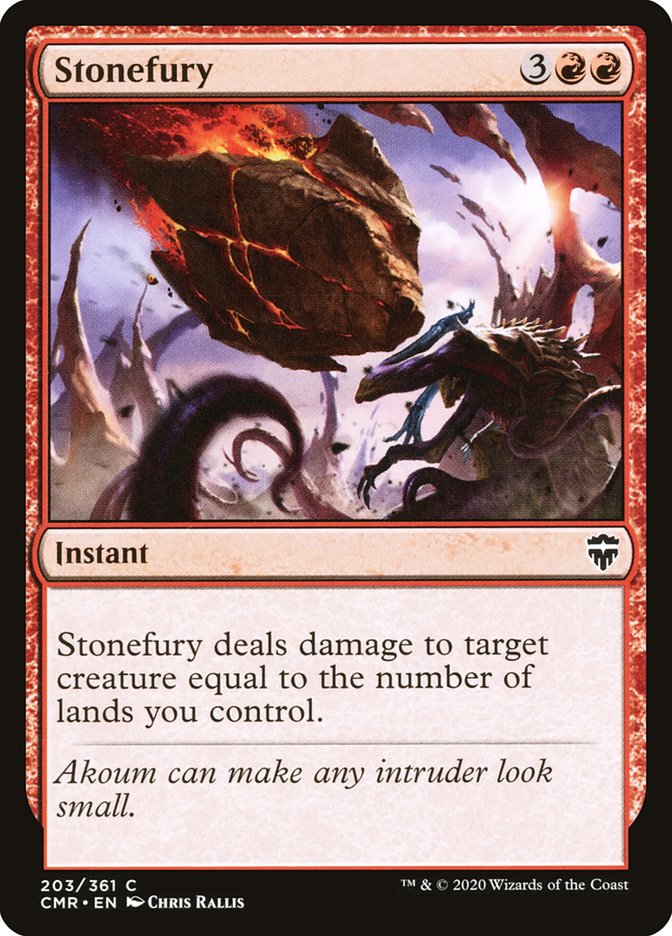
Stonefury deals damage to target creature equal to the number of lands you control.
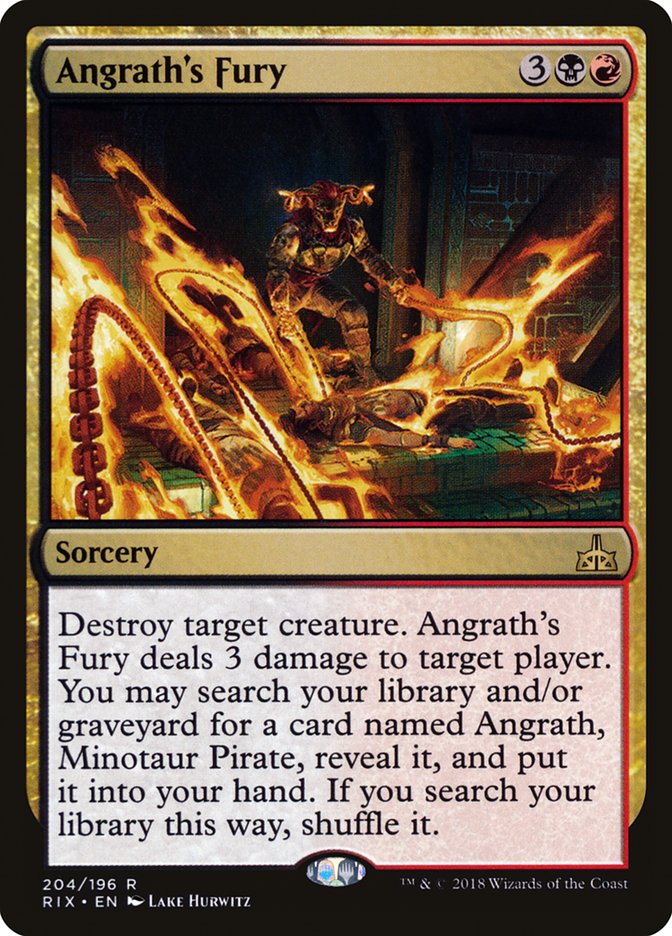
Destroy target creature. Angrath's Fury deals 3 damage to target player or planeswalker. You may search your library and/or graveyard for a card named Angrath, Minotaur Pirate, reveal it, and put it into your hand. If you search your library this way, shuffle.
Legal formats
Commentaires
- Sois le premier à commenter cette carte.
Read next
Meta decks with Fury
No archived Top 8 deck with this card yet.