


Rite of Consumption is one of those cards players keep asking about. Here is, in plain words, what its official text says, the rulings published by Wizards of the Coast, and the combos players actually run.
Official card text
As an additional cost to cast this spell, sacrifice a creature. Rite of Consumption deals damage equal to the sacrificed creature's power to target player or planeswalker. You gain life equal to the damage dealt this way.
Complete guide
Rite of Consumption is a powerful black sorcery that turns your creatures into direct damage and life gain. By sacrificing a creature as part of its cost, you can bypass traditional combat to finish off an opponent or stabilize your life total.
Sacrifice as a Cost
The sacrifice required by Rite of Consumption is an additional cost to cast the spell. This means you choose the creature and move it to the graveyard at the same time you pay the mana. Because this happens during the casting process, your opponent cannot use a removal spell to destroy the creature before you sacrifice it; by the time they get priority to respond, the creature is already in the graveyard and the spell is on the stack.
Resolving the Rite
When the spell resolves, it checks the power the sacrificed creature had at the last moment it was on the battlefield. It then deals that much damage to the chosen player or planeswalker. Immediately after the damage is dealt, you gain life equal to that amount. If the target is no longer legal when the spell tries to resolve, the entire spell fails and you will not gain any life.
Common Pitfalls
A frequent mistake is trying to sacrifice multiple creatures to increase the damage. You must sacrifice exactly one creature—no more, no less. Additionally, remember that because this is a sorcery, you cannot use it in response to an opponent's board wipe unless you have a way to cast spells as though they had flash.
Strategy and Timing
This card is best utilized when a creature's presence on the board is less valuable than a direct burst of damage, or when a creature has been targeted by an opponent's exile effect. It is a fantastic 'finisher' in decks that can produce high-power creatures quickly.
Interaction examples
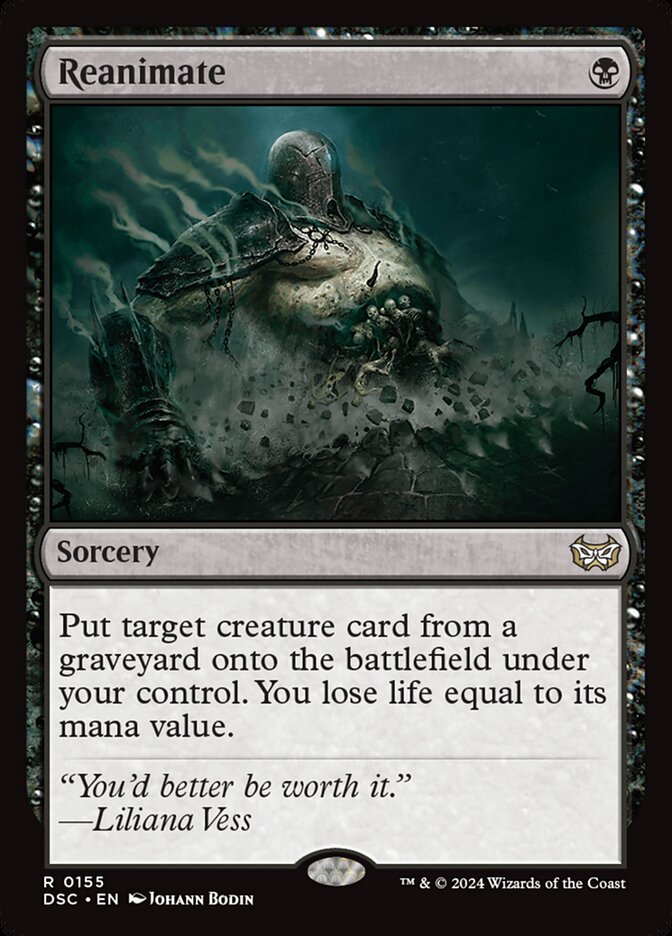 Reanimate
If you use Reanimate to bring a high-power creature like a 7/7 from your graveyard to the battlefield, you lose 7 life. You can then immediately cast Rite of Consumption, sacrificing that creature to deal 7 damage to your opponent and gain back the 7 life you just lost, effectively negating the downside of the Reanimate spell.
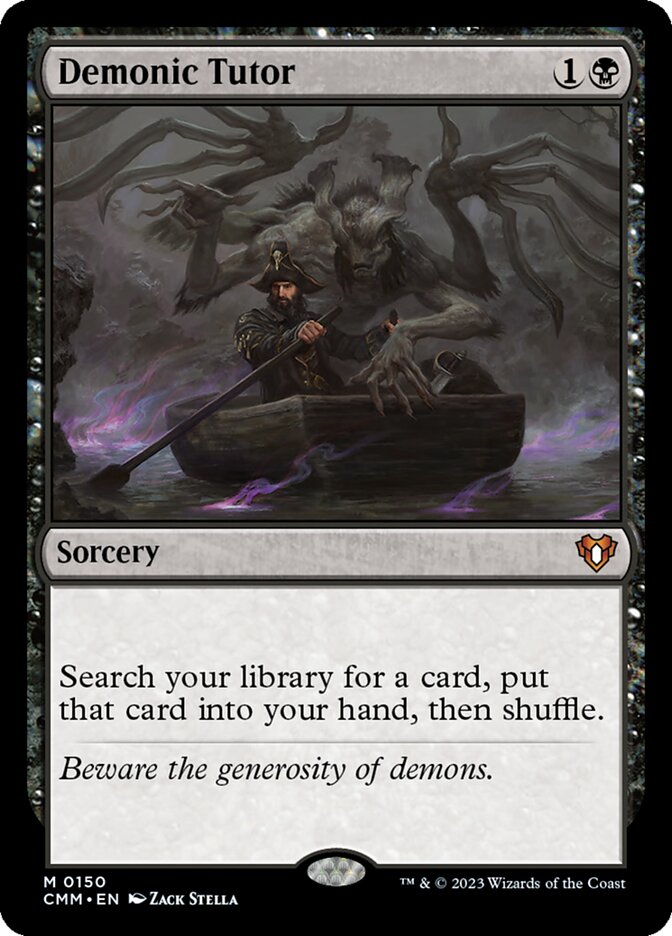 Demonic Tutor
In a situation where your opponent is at low life but has a strong defensive line of blockers, you can use Demonic Tutor to search your library for Rite of Consumption. Once it is in your hand, you can cast it and sacrifice your largest creature to deal the lethal damage directly to the opponent, ignoring their blockers entirely.
Guide written with AI from the official text and rulings. Official English text prevails.
How it works : Rite of Consumption
Original English text — Wizards of the Coast / Scryfall
- #1· Wizards of the Coast
You must sacrifice exactly one creature to cast this spell; you cannot cast it without sacrificing a creature, and you cannot sacrifice additional creatures.
No other card is named in this ruling.
- #2· Wizards of the Coast
Players can only respond once this spell has been cast and all its costs have been paid. No one can try to destroy the creature you sacrificed to prevent you from casting this spell.
No other card is named in this ruling.
Legal formats
Commentaires
- Sois le premier à commenter cette carte.
Read next
Meta decks with Rite of Consumption
No archived Top 8 deck with this card yet.