
Zirda, the Dawnwaker is one of those cards players keep asking about. Here is, in plain words, what its official text says, the rulings published by Wizards of the Coast, and the combos players actually run.
Official card text
Companion — Each permanent card in your starting deck has an activated ability. (If this card is your chosen companion, you may put it into your hand from outside the game foras a sorcery.) Abilities you activate that aren't mana abilities cost
less to activate. This effect can't reduce the mana in that cost to less than one mana.
,
: Target creature can't block this turn.
Complete guide
Zirda, the Dawnwaker is a powerful Elemental Fox that rewards decks focused on activated abilities by drastically reducing their costs. Whether serving as your chosen companion or a member of your main deck, it provides both mana efficiency and a way to push damage through blockers.
What It Does
Zirda, the Dawnwaker has three distinct parts. First, it can be your Companion if every permanent card in your starting deck has an activated ability (noted by a colon). Second, it features a static ability that reduces the cost of activated abilities you use by {2}, though it cannot reduce the mana cost below one mana. Finally, it has an activated ability of its own: you can pay {1} and tap Zirda to prevent a target creature from blocking for the rest of the turn.
How It Resolves Step by Step
When Zirda is on the battlefield, its cost-reduction effect is continuous. When you choose to activate an ability of a permanent you control, you first determine the total cost. You take the original cost, apply any increases, and then apply Zirda's {2} reduction. However, if the reduction would bring the mana cost to zero, the game forces it to remain at exactly one mana. Note that this only applies to the mana portion of the cost; it does not affect tap symbols or other non-mana costs.
Common Mistakes
A frequent error is trying to reduce the cost of mana abilities. Zirda specifically excludes mana abilities—those that produce mana upon resolution. Additionally, remember that the 'can't block' ability must be activated during the beginning of combat or the declare attackers step at the latest. Once a creature has been declared as a blocker, activating Zirda's ability will not remove it from combat or make the attacking creature unblocked.
When to Play It
Play Zirda when you have several permanents with high mana activation costs, such as equipment or creatures with firebreathing effects. If using it as a Companion, ensure every single permanent in your deck (including lands, which have intrinsic mana abilities) qualifies. In game, wait to play Zirda until you can immediately benefit from the discount to ensure you get value before your opponent can remove it.
Interaction examples
 Solemn Simulacrum
If you want Zirda, the Dawnwaker as your companion, you cannot include Solemn Simulacrum in your starting deck. Solemn Simulacrum only has triggered abilities (starting with 'When'), not activated abilities (containing a colon). Because it is a permanent card without an activated ability, it violates Zirda's companion requirement.
 Roaming Throne
 is a permanent card that lacks an activated ability; it has a static choice ability and a triggered ability ('If... triggers'). Therefore, you cannot use Roaming Throne in a deck where Zirda is the companion. Furthermore, because Roaming Throne's effect only doubles 'triggered' abilities, it would not interact with Zirda's own 'can't block' activated ability even if they were both on the battlefield together.
Zirda's final ability costs {1} and {T}. If you have Zirda on the battlefield, you might expect the {2} reduction to make this ability free. However, Zirda's static ability states it cannot reduce the mana in a cost to less than one. Since the cost is already {1}, the discount does nothing, and you must still pay {1} and tap it to prevent a creature from blocking.
Guide written with AI from the official text and rulings. Official English text prevails.
How it works : Zirda, the Dawnwaker
Original English text — Wizards of the Coast / Scryfall
- #1· Scryfall
Wizards of the Coast has issued functional errata for the Companion mechanic. Instead of casting companions from outside the game: Once per game, any time you could cast a sorcery (during your main phase when the stack is empty), you can pay
to put your companion from your sideboard into your hand. This is a special action, not an activated ability. It happens immediately and can’t be responded to. It can’t be countered or stopped by cards like Phyrexian Revoker. For more information please see https://magic.wizards.com/en/articles/archive/news/june-1-2020-banned-and-restricted-announcementNo other card is named in this ruling.
- #2· Wizards of the Coast
If you reveal a companion outside the game, for as long as it remains there, you may pay
any time you could cast a sorcery (that is, you have priority during your main phase and the stack is empty). Once you do, you put it into your hand and behaves like any other card you've brought into the game. For example, if it's discarded, countered, or destroyed, it's put into your graveyard, remaining in the game. This is a change from previous rules.No other card is named in this ruling.
- #3· Wizards of the Coast
Paying
to put your companion into your hand is a special action. It doesn't use the stack and players can't respond to it. Once you take this action, you may cast that card if it's legal to do so before any other player can take actions.No other card is named in this ruling.
- #4· Wizards of the Coast
Permanent cards are artifact, creature, enchantment, land, and planeswalker cards. Land cards with basic land types have intrinsic activated mana abilities associated with those types.
No other card is named in this ruling.
- #5· Wizards of the Coast
Activated abilities contain a colon. They're generally written "[Cost]: [Effect]." Some keyword abilities are activated abilities (such as cycling) and will have colons in their reminder text.
No other card is named in this ruling.
- #6· Wizards of the Coast
An activated mana ability is one that produces mana as it resolves, not one that costs mana to activate.
No other card is named in this ruling.
- #7· Wizards of the Coast
Effects that reduce the generic mana cost of an activation cost can't reduce that cost's colored mana requirements. The activation cost is reduced by only
if doing so reduces that cost to one mana. For example, a cycling cost of would become , and one of  would become . The activation cost is unaffected if it already costs one or zero mana (such as the activation cost of Zirda's last ability).
No other card is named in this ruling.
- #8· Wizards of the Coast
Activating Zirda's last ability after a creature has blocked won't remove the blocking creature from combat or cause the creature it blocked to become unblocked.
No other card is named in this ruling.
- #9· Wizards of the Coast
Your companion begins the game outside the game. In tournament play, this means your sideboard. In casual play, it's simply a card you own that's not in your starting deck.
No other card is named in this ruling.
- #10· Wizards of the Coast
Before shuffling your deck to become your library, you may reveal one card from outside the game to be your companion if your starting deck meets the requirements of the companion ability. You can't reveal more than one. It remains revealed outside the game as the game begins.
No other card is named in this ruling.
- #11· Wizards of the Coast
The requirements of the companion ability apply only to your starting deck. They do not apply to your sideboard.
No other card is named in this ruling.
- #12· Wizards of the Coast
If more than one player wishes to reveal a companion, the starting player does so first, and players proceed in turn order. Once a player has chosen not to reveal a companion, that player can't change their mind.
No other card is named in this ruling.
- #13· Wizards of the Coast
If you reveal a companion outside the game, for as long as it remains there, you may pay
any time you could cast a sorcery (that is, you have priority during your main phase and the stack is empty). Once you do, you put it into your hand and behaves like any other card you've brought into the game. For example, if it's discard, countered, or destroyed, it's put into your graveyard, remaining in the game. This is a change from previous rules.No other card is named in this ruling.
- #14· Wizards of the Coast
Paying
to put your companion into your hand is a special action. It doesn't use the stack and players can't respond to it. Once you take this action, you may cast that card if it's legal to do so before any other player can take actions.No other card is named in this ruling.
- #15· Wizards of the Coast
The companion's other abilities apply only if the creature is on the battlefield. They have no effect while the companion is outside the game.
No other card is named in this ruling.
- #16· Wizards of the Coast
The companion ability has no effect if the card is in your starting deck and creates no restriction on putting a card with a companion ability into your starting deck. For example, Zirda may be in your starting deck even if your other permanent cards don't all have activated abilities.
No other card is named in this ruling.
- #17· Wizards of the Coast
You may have one companion in the Commander variant. Your deck, including your commander, must meet its companion requirement. Your companion is not one of your one hundred cards.
No other card is named in this ruling.
Popular combos
Real combos played by the community, sorted by popularity.
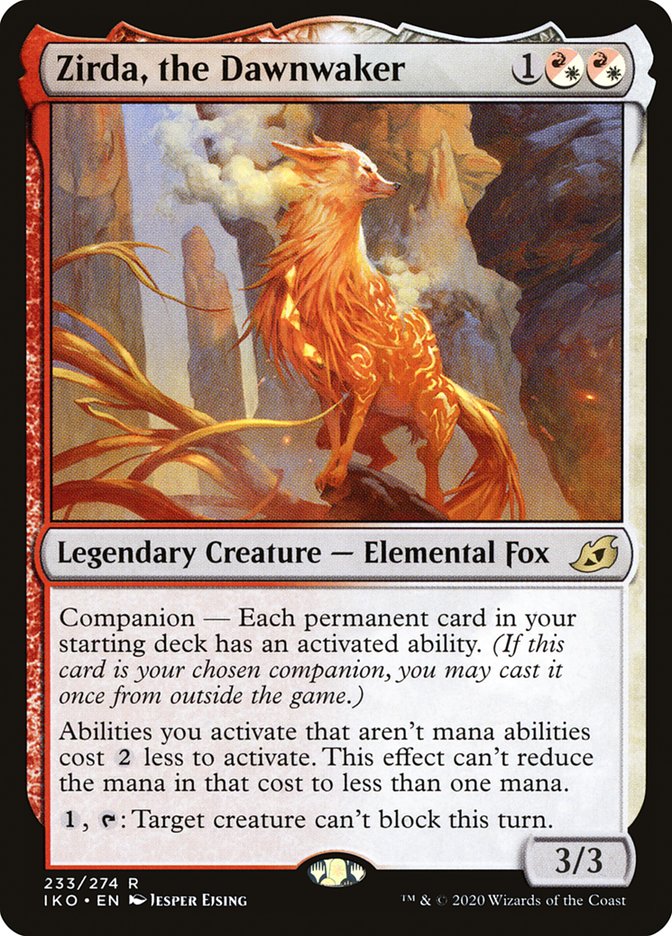
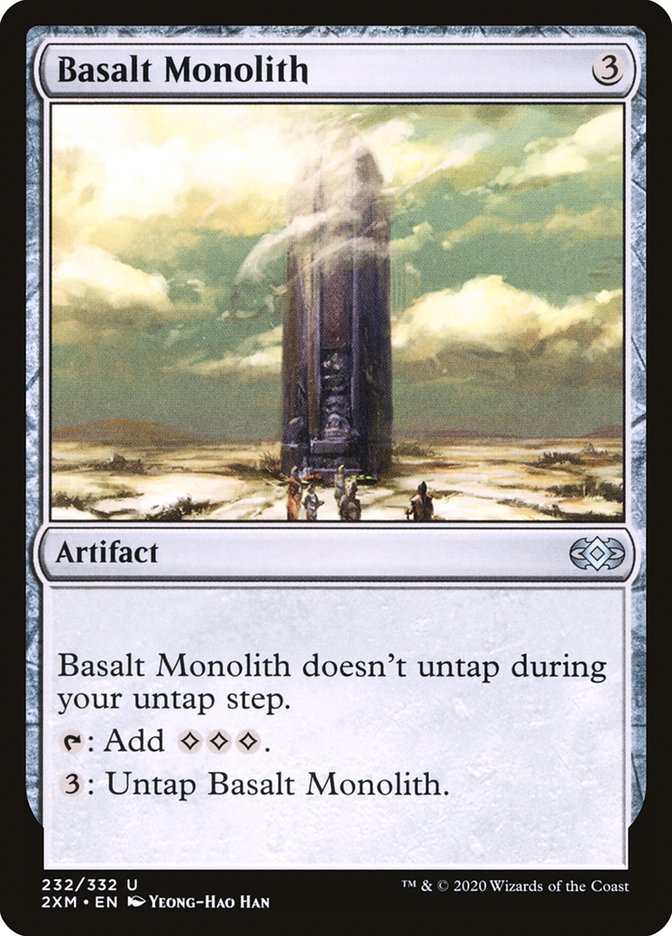
Zirda, the Dawnwaker + Basalt Monolith
- 1Activate Basalt Monolith's first ability by tapping it, adding
 .
- 2Activate Basalt Monolith's last ability by paying , untapping it.
- 3Repeat.
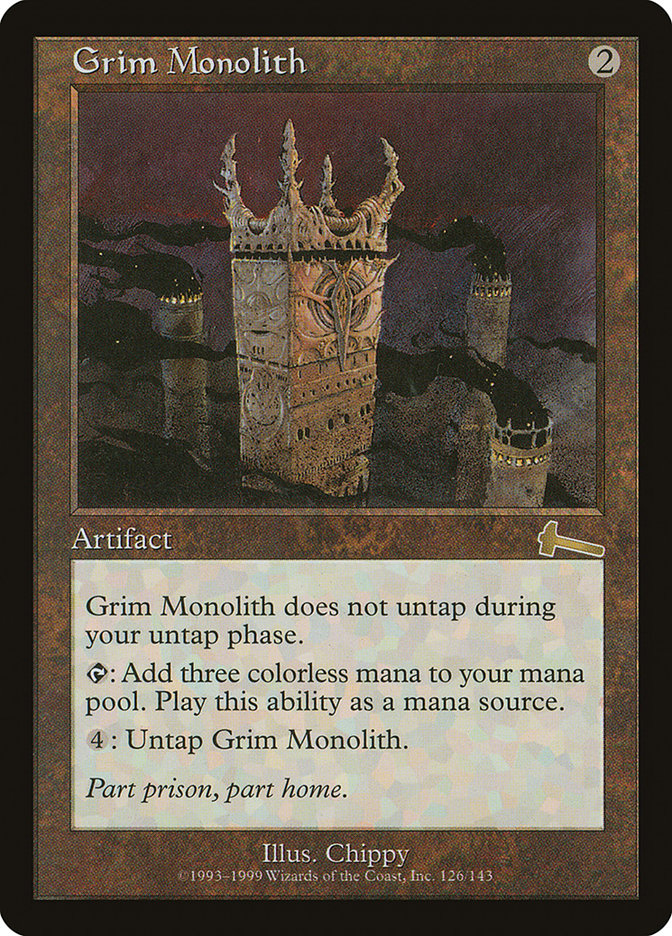
Zirda, the Dawnwaker + Grim Monolith
- 1Activate Grim Monolith's first ability by tapping it, adding .
- 2Activate Grim Monolith's second ability by paying , untapping it.
- 3Repeat.

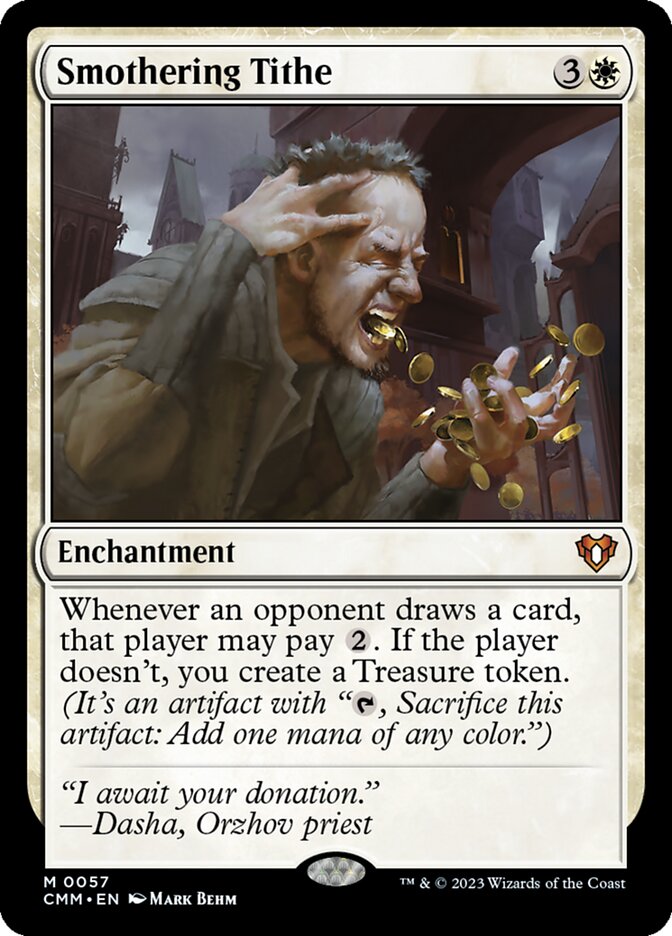
Faerie Mastermind + Smothering Tithe + Zirda, the Dawnwaker
- 1Activate Faerie Mastermind by paying
 , causing each player to draw a card.
- 2Smothering Tithe triggers for each opponent you have, creating at least three Treasure tokens.
- 3Activate two Treasures by tapping and sacrificing them, adding .
- 4Repeat.

Gleaming Splendor + Smothering Tithe + Zirda, the Dawnwaker
- 1Activate Gleaming Splendor by paying
 due to Zirda, causing an opponent and another player to each draw a card.
- 2Smothering Tithe triggers for each opponent who drew a card this way, creating a Treasure token for each opponent that cannot pay for the trigger.
- 3Activate a Treasure by tapping and sacrificing it, adding .
- 4Repeat.
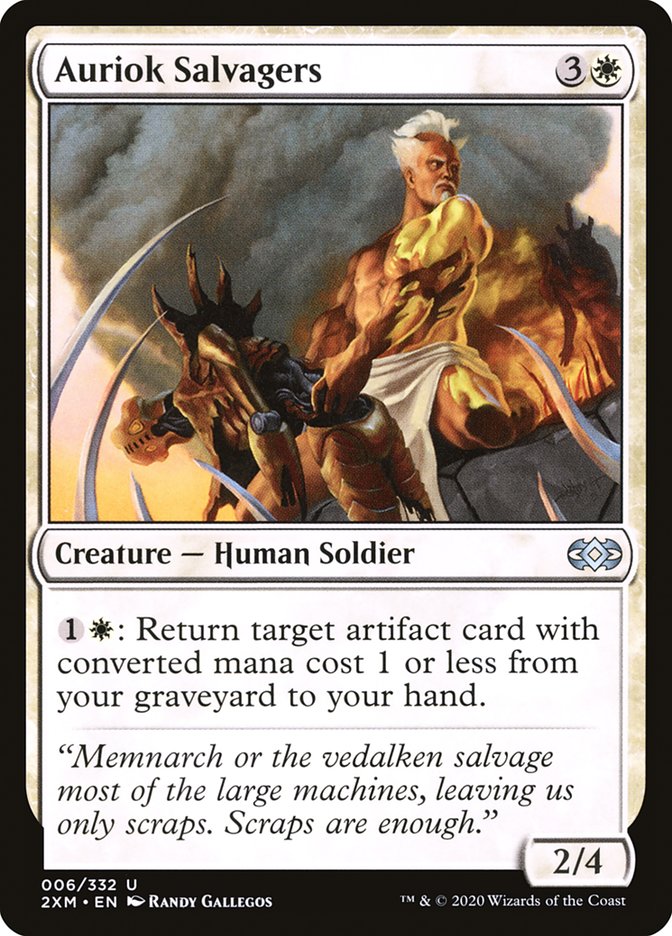
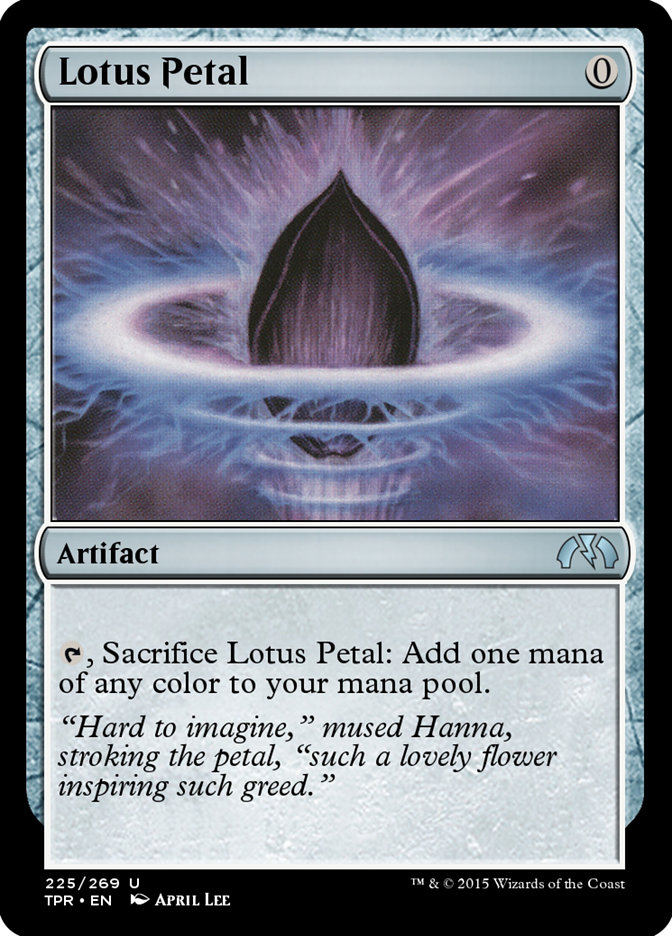
Zirda, the Dawnwaker + Auriok Salvagers + Lotus Petal
- 1Tap Lotus Petal, sacrificing it to add .
- 2Pay to Auriok Salvager, returning Lotus Petal from your graveyard to your hand.
- 3Cast Lotus Petal.
- 4Repeat.

Super-Skrull + Smothering Tithe + Zirda, the Dawnwaker
- 1Activate Super-Skrull's fourth ability by paying due to Zirda, causing an opponent to draw four cards.
- 2Smothering Tithe triggers four times, causing you to create four Treasure tokens.
- 3Activate the Treasures by tapping and sacrificing them, adding .
- 4Repeat.
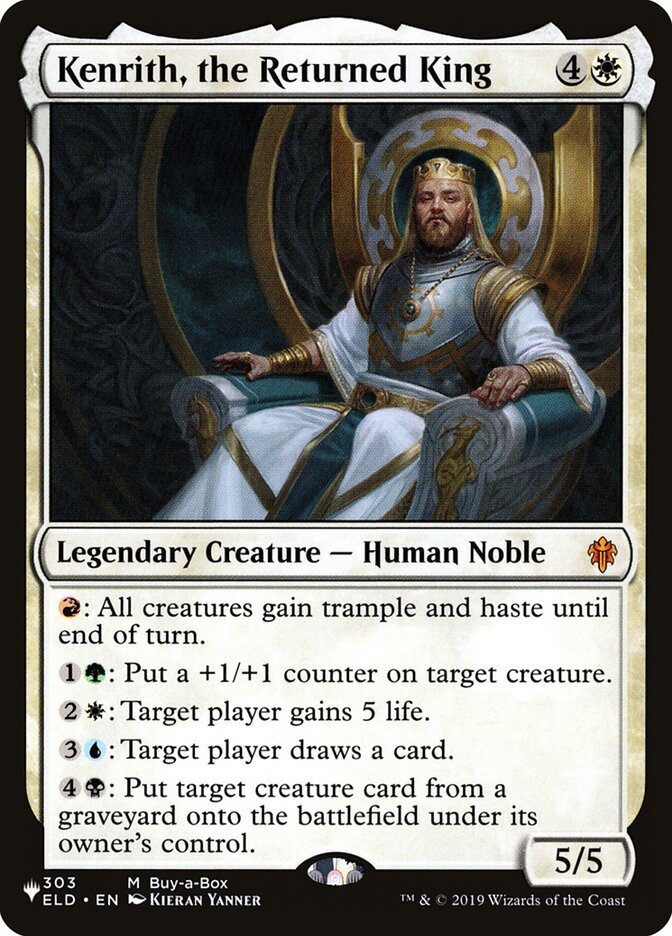
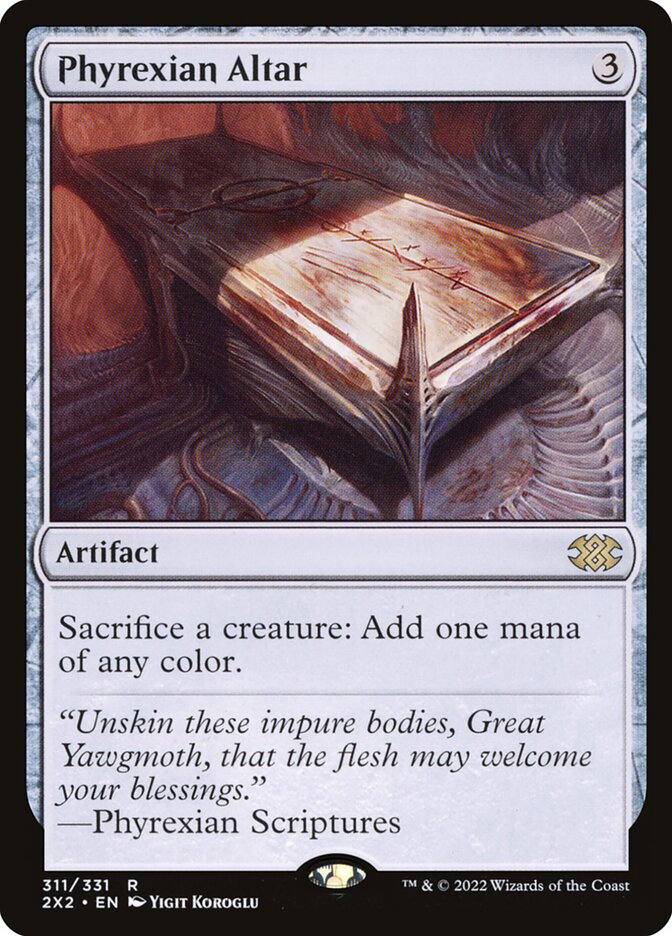
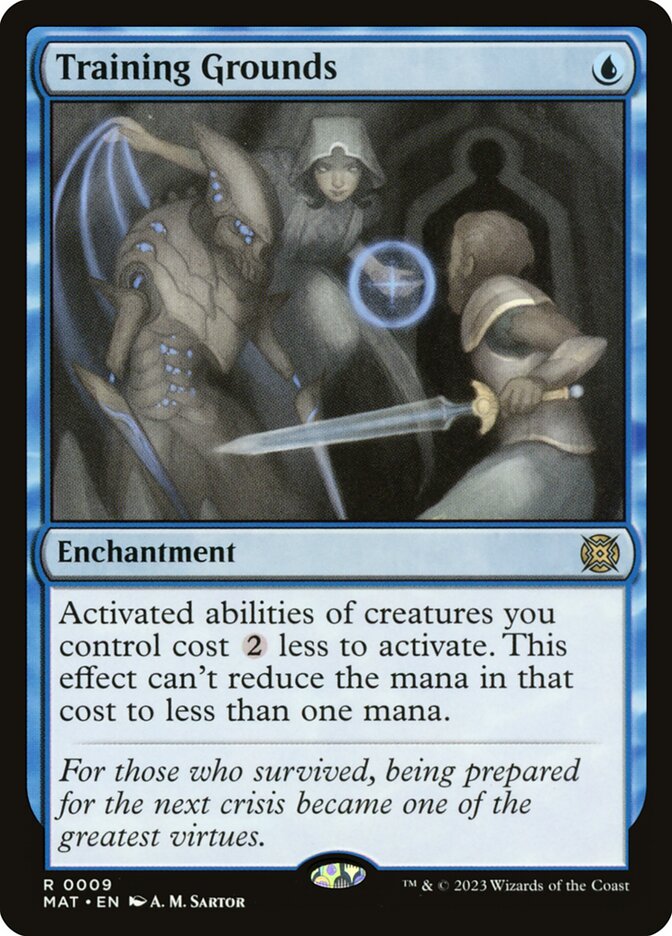
Kenrith, the Returned King + Phyrexian Altar + Training Grounds + Zirda, the Dawnwaker
- 1Activate Phyrexian Altar by sacrificing another nontoken creature, adding
 .
- 2Activate Kenrith's fifth ability by paying due to Training Grounds and Zirda, putting the creature card onto the battlefield from your graveyard.
- 3Repeat.
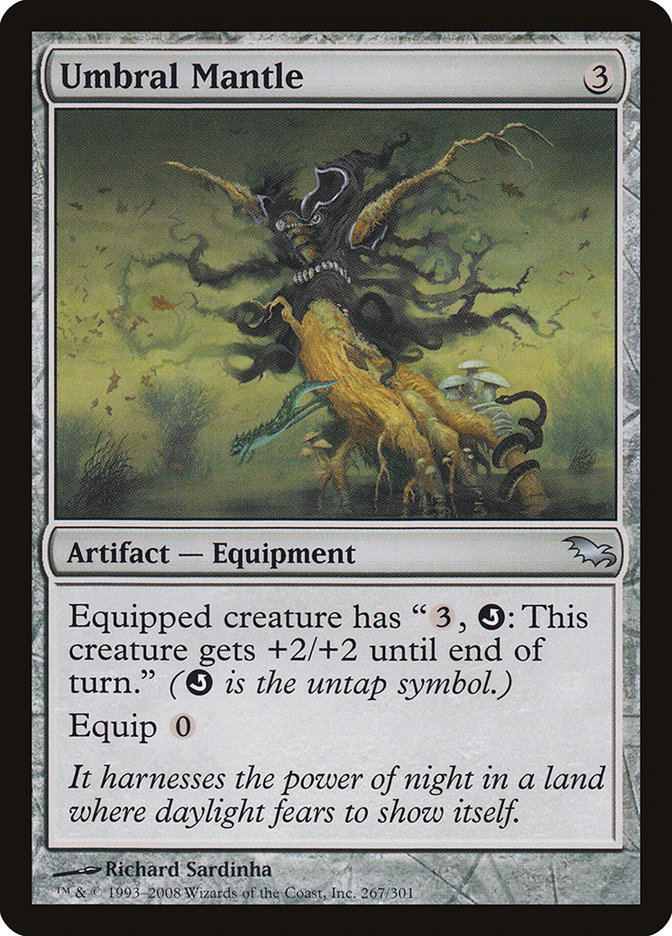
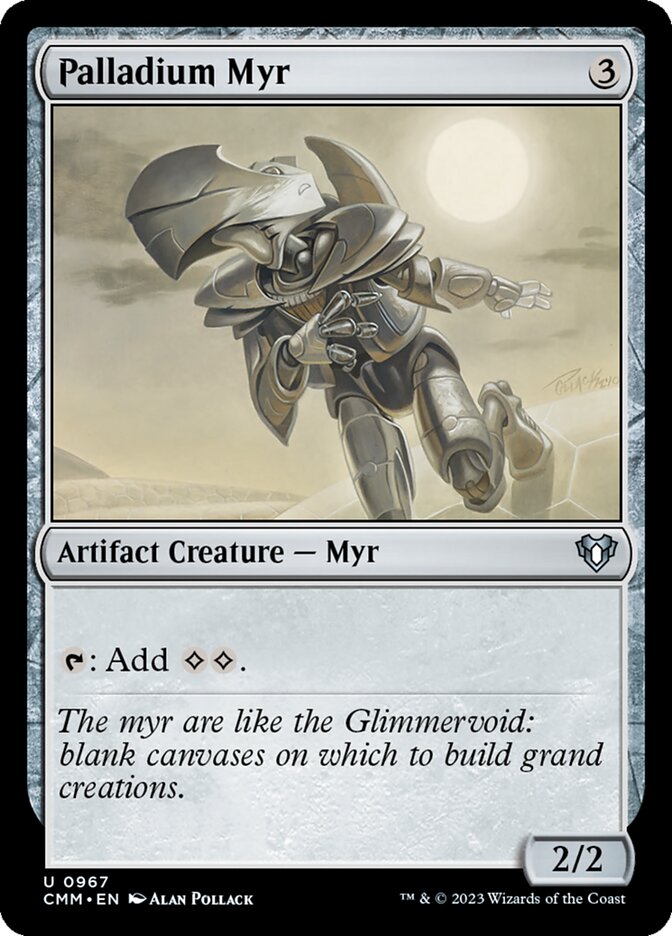
Zirda, the Dawnwaker + Umbral Mantle + Palladium Myr
- 1Tap Palladium Myr for .
- 2Pay to untap Palladium Myr.
- 3Repeat.
Legal formats
Commentaires
- Sois le premier à commenter cette carte.
Read next
Meta decks with Zirda, the Dawnwaker
