
Esior, Wardwing Familiar is one of those cards players keep asking about. Here is, in plain words, what its official text says, the rulings published by Wizards of the Coast, and the combos players actually run.
Official card text
Flying Spells your opponents cast that target one or more commanders you control costmore to cast. Partner (You can have two commanders if both have partner.)
Complete guide
Meet Esior, Wardwing Familiar, a legendary Bird that provides exceptional protection for your deck's leaders. This nimble flyer ensures that any opponent trying to interfere with your commanders will have to pay a steep price in mana. Whether flying solo or with a partner, Esior makes your board significantly harder to disrupt.
A Taxing Defense
Esior, Wardwing Familiar features a static ability that increases the cost of spells cast by your opponents. Specifically, if an opponent casts a spell that targets one or more commanders you control, that spell costs {3} more to cast. This tax applies regardless of which commander is targeted, and even if a single spell targets multiple commanders you control simultaneously, the cost increase remains exactly {3}.
Calculating the Total Cost
When an opponent casts a spell targeting your commander, they must follow a specific order to determine the final cost. First, they start with the mana cost or an alternative cost. Second, they add any cost increases, such as Esior's {3} tax. Finally, they apply any cost reductions. It is important to remember that while the total cost paid increases, the spell's mana value remains unchanged, as it is derived only from the mana symbols in the top corner of the card.
Partner and Commander Mechanics
Because Esior has Partner, you can have two commanders if both possess the ability. During the game, both commanders are tracked separately for the 'commander tax'—casting Esior from the command zone multiple times does not increase the cost of your other commander. Additionally, if an effect checks whether you control your commander, having either Esior or your other partner on the battlefield satisfies that requirement.
When to Play Esior
Esior is best deployed early in the game, often on turn two, to establish a protective layer before your higher-impact commander hits the table. Because it has Flying, it also serves as a reliable way to chip away at opponents' life totals or trigger 'combat damage to a player' abilities while your opponents struggle to find the extra mana to remove it.
Interaction examples
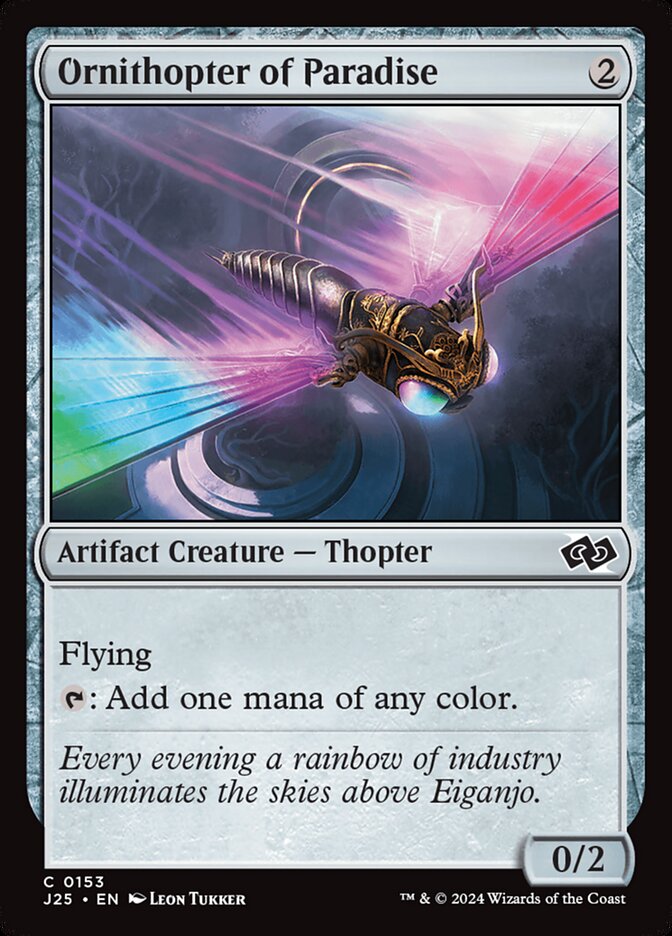 Ornithopter of Paradise
With Esior, Wardwing Familiar on the battlefield, you cast Ornithopter of Paradise. Although Ornithopter of Paradise is not a commander and does not benefit from the tax, Esior itself is a commander. If an opponent attempts to cast a spell like Murder targeting Esior, they must pay {1}{B}{B} plus the {3} tax from Esior's ability, totaling {4}{B}{B}.
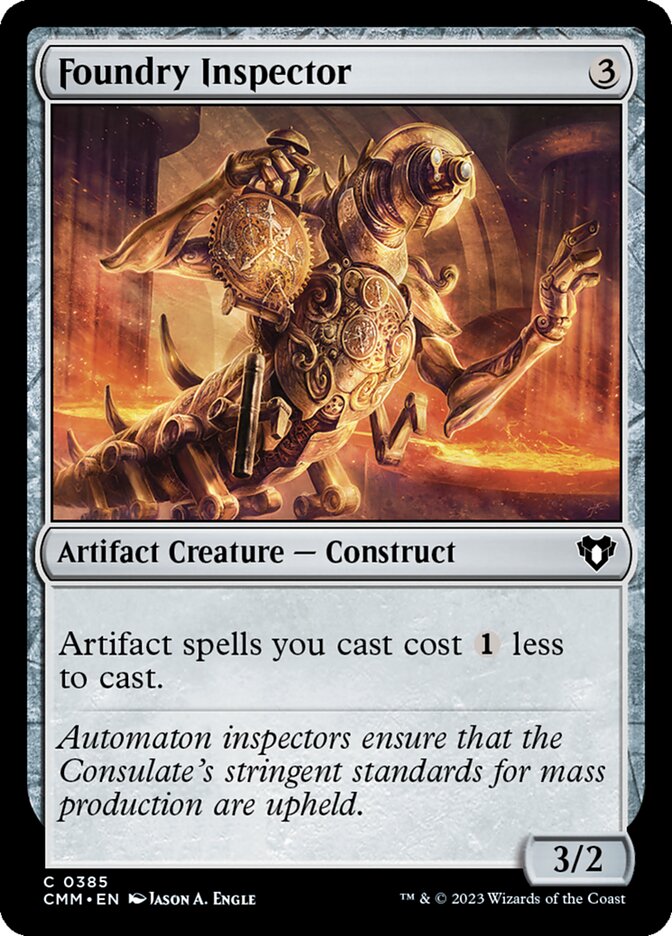 Foundry Inspector
Imagine your opponent controls Foundry Inspector and attempts to cast a generic artifact spell that targets your Esior, Wardwing Familiar. To calculate the cost, the opponent starts with the artifact's mana cost, adds {3} due to Esior, and then subtracts {1} because of Foundry Inspector. The tax and the reduction both apply to reach the final amount of mana required.
Guide written with AI from the official text and rulings. Official English text prevails.
How it works : Esior, Wardwing Familiar
Original English text — Wizards of the Coast / Scryfall
- #1· Wizards of the Coast
To determine the total cost of an opponent's spell that targets a commander you control, start with the mana cost or alternative cost that player is paying, add any cost increases (such as that of Esior's middle ability), then apply any cost reductions. The mana value of the spell is determined only by its mana cost, no matter what the total cost to cast the spell was.
No other card is named in this ruling.
- #2· Wizards of the Coast
Spells that target more than one commander you control cost only
more to cast.No other card is named in this ruling.
- #3· Wizards of the Coast
If your Commander deck has two commanders, you can only include cards whose own color identities are also found in your commanders' combined color identities. If Falthis and Kediss are your commanders, your deck may contain cards with black and/or red in their color identity, but not cards with green, white, or blue.
No other card is named in this ruling.
- #4· Wizards of the Coast
Both commanders start in the command zone, and the remaining 98 cards (or 58 cards in a Commander Draft game) of your deck are shuffled to become your library.
No other card is named in this ruling.
- #5· Wizards of the Coast
To have two commanders, both must have the partner ability as the game begins. Losing the ability during the game doesn't cause either to cease to be your commander.
No other card is named in this ruling.
- #6· Wizards of the Coast
Once the game begins, your two commanders are tracked separately. If you cast one, you won't have to pay an additional
 the first time you cast the other. A player loses the game after having been dealt 21 damage from any one of them, not from both of them combined.
No other card is named in this ruling.
- #7· Wizards of the Coast
If something refers to your commander while you have two commanders, it refers to one of them of your choice. If you are instructed to perform an action on your commander (e.g. put it from the command zone into your hand due to Command Beacon), you choose one of your commanders at the time the effect happens.
No other card is named in this ruling.
- #8· Wizards of the Coast
An effect that checks whether you control your commander is satisfied if you control one or both of your two commanders.
No other card is named in this ruling.
- #9· Wizards of the Coast
You can choose two commanders with partner that are the same color or colors. In Commander Draft, you can even choose two of the same commander with partner if you drafted them. If you do this, make sure you keep the number of times you've cast each from the command zone clear for "commander tax" purposes.
No other card is named in this ruling.
Popular combos
Real combos played by the community, sorted by popularity.
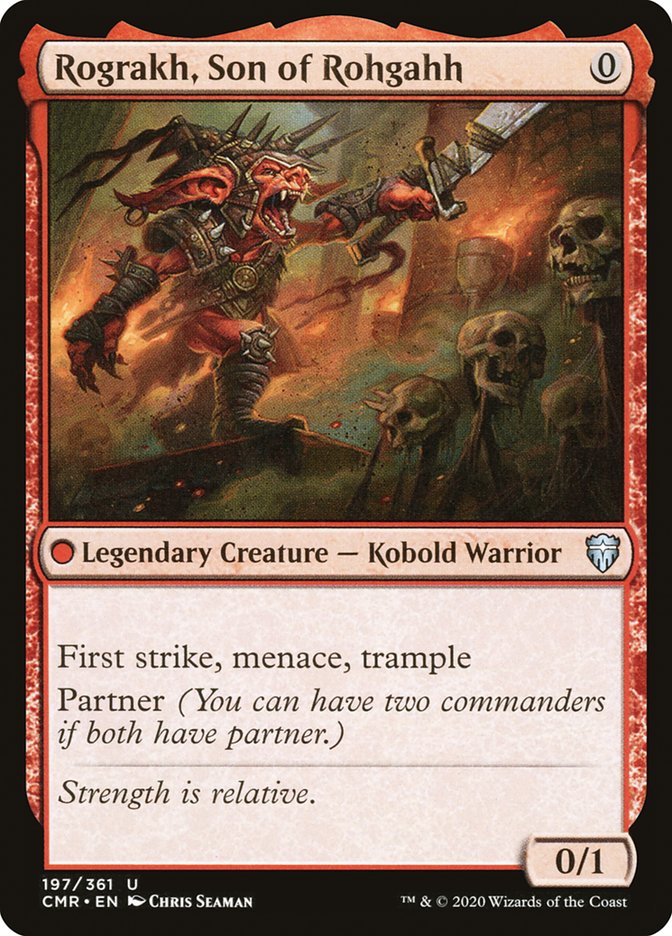
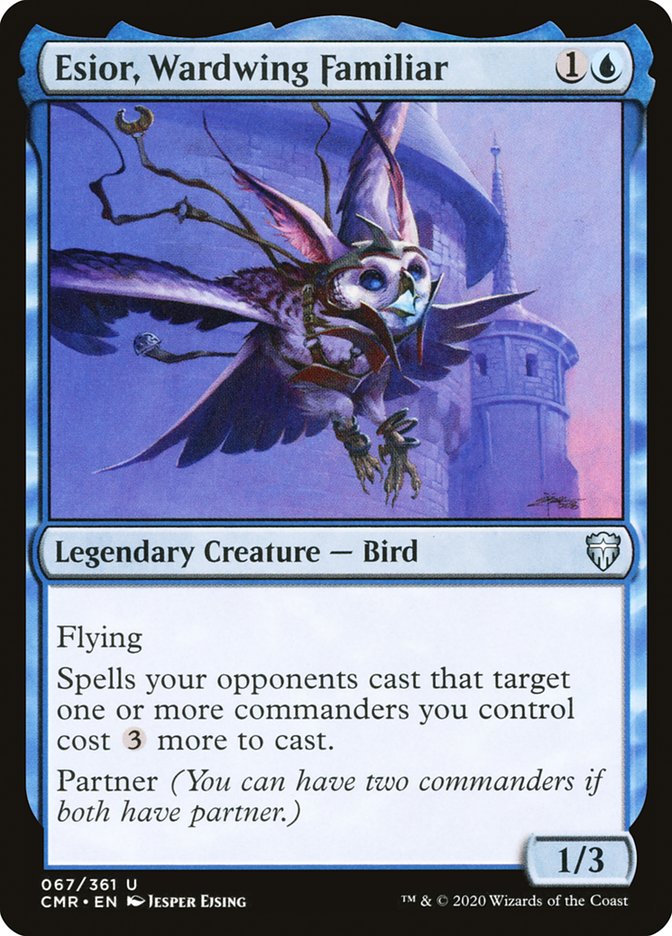
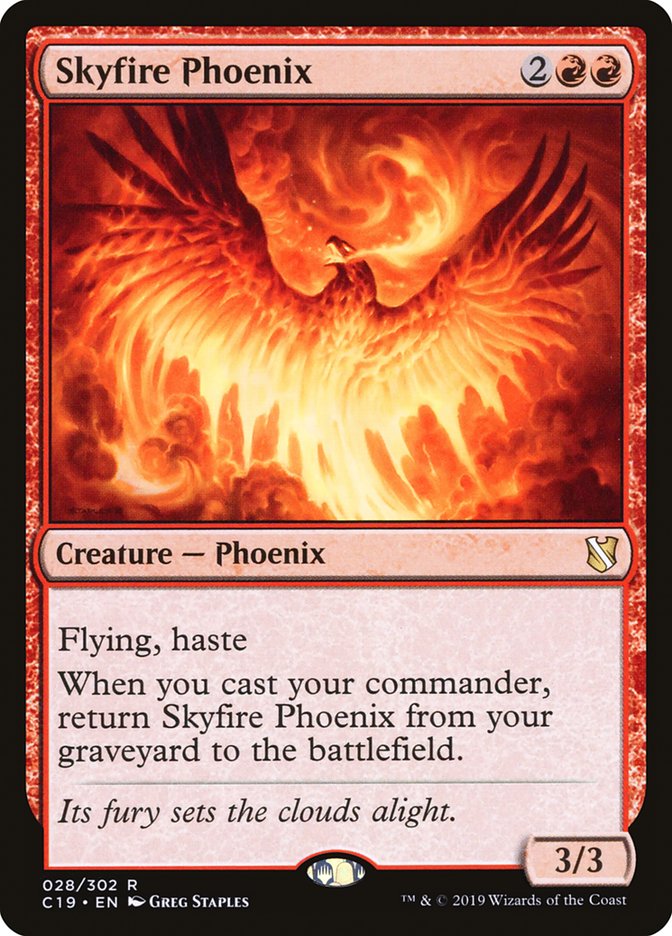
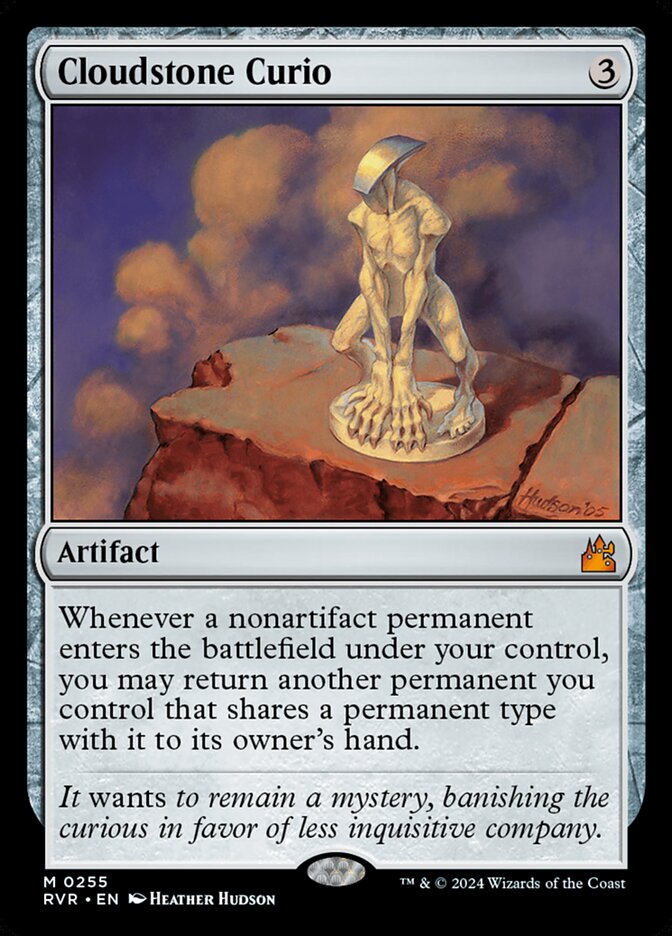
Rograkh, Son of Rohgahh + Esior, Wardwing Familiar + Skyfire Phoenix + Cloudstone Curio
- 1Activate Phyrexian Altar by sacrificing Skyfire Phoenix, adding
 .
- 2Cast Rograkh either from your hand or from the command zone by paying
 plus commander tax, if applicable.
- 3Skyfire Phoenix triggers, returning itself to the battlefield from your graveyard.
- 4When Skyfire Phoenix enters the battlefield, Cloudstone Curio triggers, returning Esior to your hand from the battlefield.
- 5When Rograkh enters the battlefield, Cloudstone Curio triggers, returning nothing to your hand from the battlefield.
- 6Activate Phyrexian Altar by sacrificing Skyfire Phoenix, adding
 .
- 7Cast Esior by paying .
- 8Skyfire Phoenix triggers, returning itself to the battlefield from your graveyard.
Legal formats
Commentaires
- Sois le premier à commenter cette carte.
Read next
Meta decks with Esior, Wardwing Familiar
