

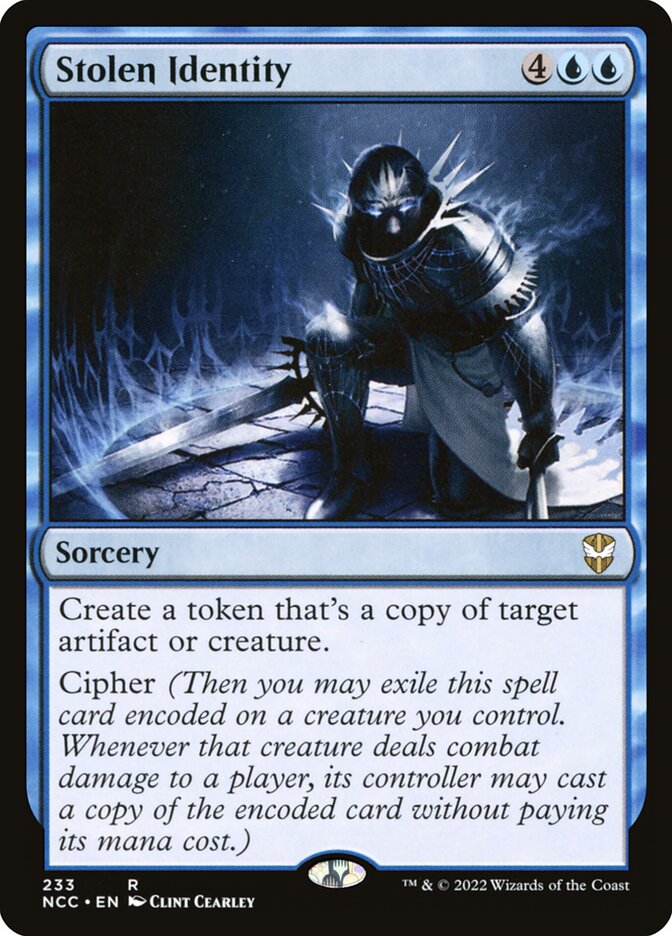
Stolen Identity is one of those cards players keep asking about. Here is, in plain words, what its official text says, the rulings published by Wizards of the Coast, and the combos players actually run.
Official card text
Create a token that's a copy of target artifact or creature. Cipher (Then you may exile this spell card encoded on a creature you control. Whenever that creature deals combat damage to a player, its controller may cast a copy of the encoded card without paying its mana cost.)
Complete guide
Stolen Identity is a powerful blue sorcery that combines the versatility of cloning with the recursive potential of the Cipher keyword. By transforming one spell into a repeatable engine, it allows you to dominate the battlefield using your opponent's own resources. Whether you are duplicating a massive threat or a utility artifact, this card provides immense value over multiple turns.
Creating a Mirror Image
When you cast Stolen Identity, you first target an artifact or creature on the battlefield. Upon resolution, you create a token that is an exact copy of that permanent. Because it is a copy effect, the token will trigger any 'enters the battlefield' abilities, and it inherits the printed characteristics of the original, including mana cost and card type. If the original was a token itself, your new token will share all the characteristics defined by the effect that created the first token.
The Cipher Mechanic Step by Step
After the token is created, the Cipher ability triggers. You may choose a creature you control to 'encode' Stolen Identity onto. The card is moved directly from the stack to the exile zone. Once encoded, the chosen creature gains a triggered ability: 'Whenever this creature deals combat damage to a player, its controller may cast a copy of the encoded card without paying its mana cost.' This copy is cast from exile during the resolution of the trigger, allowing you to ignore normal timing restrictions for sorceries.
Common Mistakes and Nuances
It is important to remember that Cipher does not target the creature it encodes; you choose the creature only as the spell resolves. If the encoded creature leaves the battlefield, Stolen Identity remains in exile and can no longer be cast. Additionally, if the creature deals combat damage to multiple players simultaneously (such as in a multiplayer game or via damage redirection), the ability triggers once for each player, potentially giving you multiple free copies of the spell.
When to Play Stolen Identity
Stolen Identity is most effective when you have an unblockable or evasive creature ready to attack. Because you can encode the spell onto the very token you just created, you can immediately start a chain of clones. It is best used to replicate high-impact artifacts or creatures with powerful passive abilities, ensuring that every successful strike further tips the scales in your favor.
Interaction examples
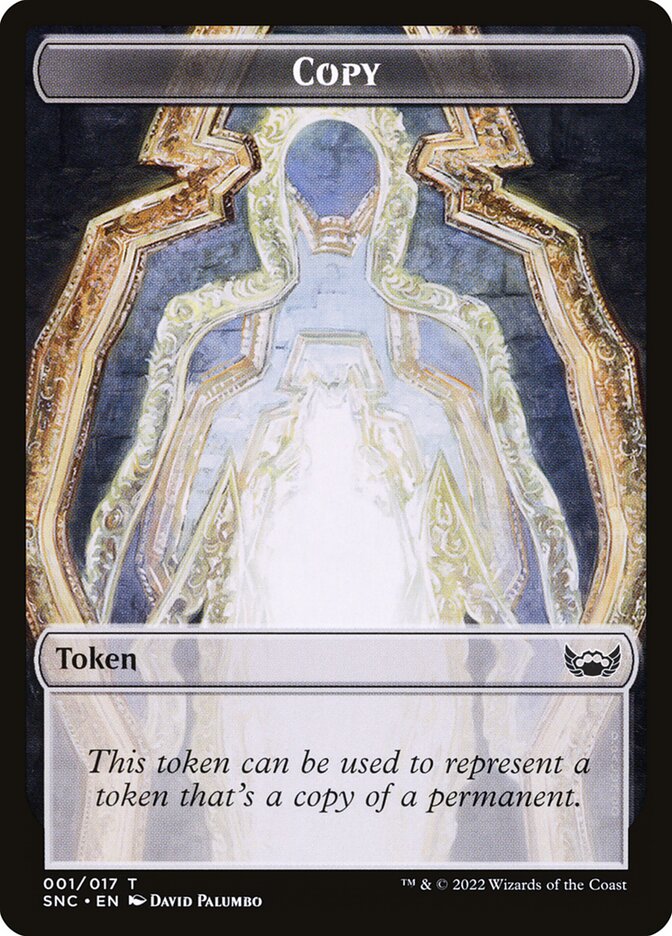 Copy
You cast Stolen Identity targeting a powerful creature. As the spell resolves, you create a Copy token. Because Cipher happens after the token creation, you can choose to encode Stolen Identity onto that new Copy token immediately, provided it is a creature.
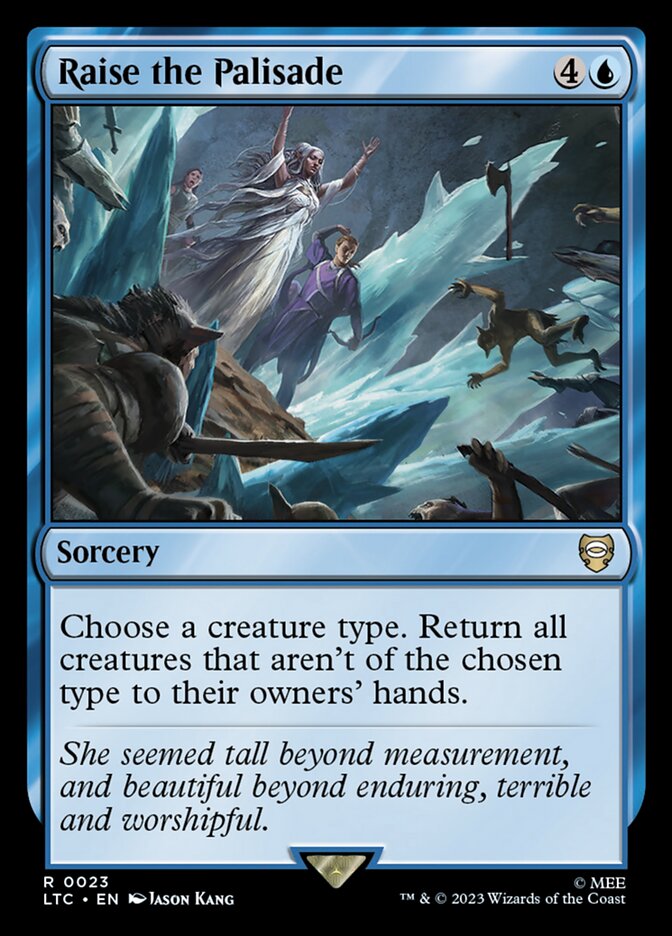 Raise the Palisade
If you have Stolen Identity encoded on a Human creature and you cast Raise the Palisade choosing 'Human,' your encoded creature stays on the board. However, if you choose 'Elf' and your encoded creature is returned to your hand, Stolen Identity stays in exile and is no longer encoded. You lose the ability to cast it for free.
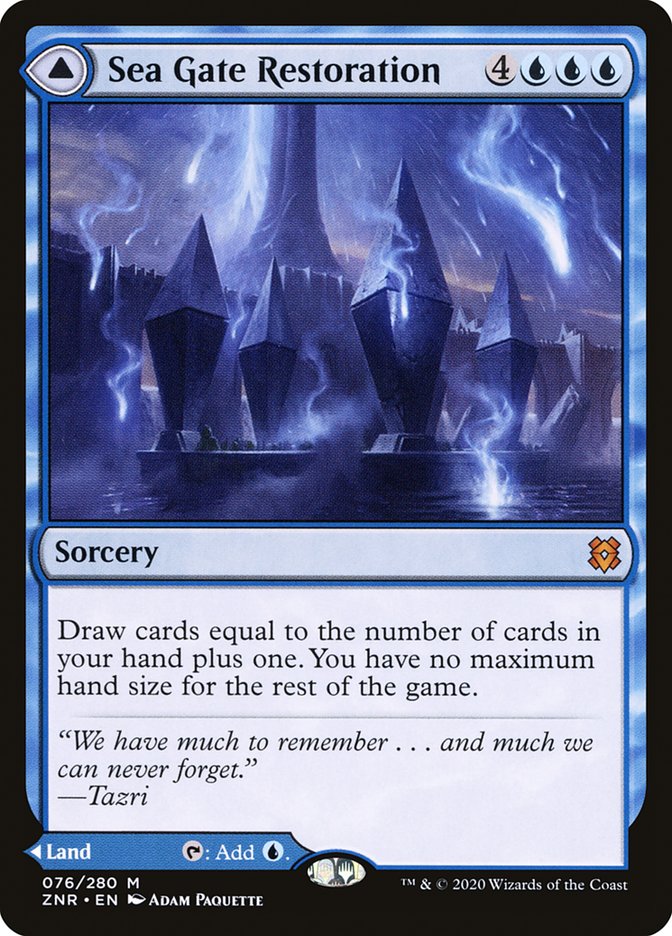 Sea Gate Restoration // Sea Gate, Reborn
While Stolen Identity is encoded, you might have a massive hand thanks to Sea Gate Restoration. When your encoded creature deals combat damage, you cast the copy of Stolen Identity for free. The copy doesn't come from your hand, so it doesn't affect your hand size, but the new token it creates could trigger further card-draw effects you may have on the board.
Guide written with AI from the official text and rulings. Official English text prevails.
How it works : Stolen Identity
Original English text — Wizards of the Coast / Scryfall
- #1· Wizards of the Coast
If a creature with an encoded card deals combat damage to more than one player simultaneously (perhaps because some of the combat damage was redirected), the triggered ability will trigger once for each player it deals combat damage to. Each ability will create a copy of the exiled card and allow you to cast it.
Card named in this ruling
- #2· Wizards of the Coast
If you want to encode the card with cipher onto a noncreature permanent such as a Keyrune that can turn into a creature, that permanent has to be a creature before the spell with cipher starts resolving. You can choose only a creature to encode the card onto.
No other card is named in this ruling.
- #3· Wizards of the Coast
The copy of the card with cipher is created in and cast from exile.
Card named in this ruling
- #4· Wizards of the Coast
You cast the copy of the card with cipher during the resolution of the triggered ability. Ignore timing restrictions based on the card's type.
Card named in this ruling
- #5· Wizards of the Coast
If you choose not to cast the copy, or you can't cast it (perhaps because there are no legal targets available), the copy will cease to exist the next time state-based actions are performed. You won't get a chance to cast the copy at a later time.
Card named in this ruling
- #6· Wizards of the Coast
The exiled card with cipher grants a triggered ability to the creature it's encoded on. If that creature loses that ability and subsequently deals combat damage to a player, the triggered ability won't trigger. However, the exiled card will continue to be encoded on that creature.
No other card is named in this ruling.
- #7· Wizards of the Coast
If another player gains control of the creature, that player will control the triggered ability. That player will create a copy of the encoded card and may cast it.
Card named in this ruling
- #8· Wizards of the Coast
The spell with cipher is encoded on the creature as part of that spell's resolution, just after the spell's other effects. That card goes directly from the stack to exile. It never goes to the graveyard.
No other card is named in this ruling.
- #9· Wizards of the Coast
You choose the creature as the spell resolves. The cipher ability doesn't target that creature, although the spell with cipher may target that creature (or a different creature) because of its other abilities.
No other card is named in this ruling.
- #10· Wizards of the Coast
If the spell with cipher doesn't resolve, none of its effects will happen, including cipher. The card will go to its owner's graveyard and won't be encoded on a creature.
No other card is named in this ruling.
- #11· Wizards of the Coast
If the creature leaves the battlefield, the exiled card will no longer be encoded on any creature. It will stay exiled.
No other card is named in this ruling.
- #12· Wizards of the Coast
The token copies exactly what was printed on the original artifact or creature and nothing else (unless that permanent is copying something else or is a token; see below). It doesn't copy whether it is tapped or untapped, whether it has any counters on it or Auras and Equipment attached to it, or any non-copy effects that have changed its power, toughness, types, color, or so on.
Card named in this ruling
- #13· Wizards of the Coast
If the copied permanent has
 in its mana cost, X is considered to be zero.
No other card is named in this ruling.
- #14· Wizards of the Coast
If the copied permanent is copying something else (for example, if the copied creature is a Clone), then the token enters as whatever that creature copied.
Card named in this ruling
- #15· Wizards of the Coast
If the copied permanent is a token, the token that's created copies the original characteristics of that token as stated by the effect that put the token onto the battlefield.
No other card is named in this ruling.
- #16· Wizards of the Coast
Any "enters" abilities of the copied permanent will trigger when the token enters the battlefield. Any "as [this permanent] enters" or "[this permanent] enters with" abilities of the chosen permanent will also work.
No other card is named in this ruling.
- #17· Wizards of the Coast
If the token you create is a copy of a creature, you can exile Stolen Identity encoded on that token.
Card named in this ruling
Popular combos
Real combos played by the community, sorted by popularity.
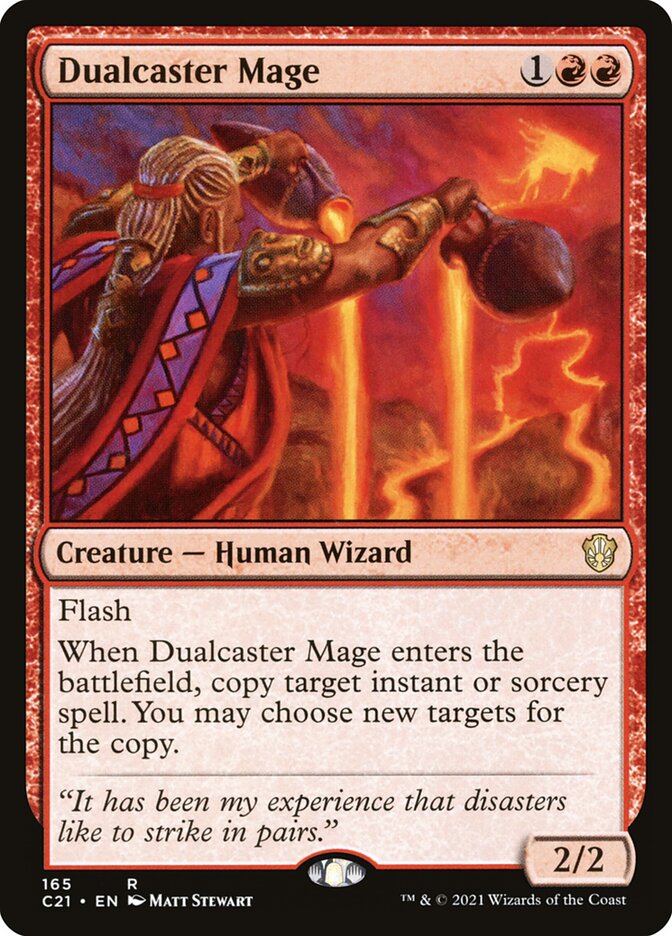
Dualcaster Mage + Stolen Identity
- 1Cast Stolen Identity by paying its mana cost, targeting a creature or artifact.
- 2Holding priority, cast Dualcaster Mage by paying

 .
- 3When Dualcaster Mage enters the battlefield, it triggers, copying Stolen Identity, targeting Dualcaster Mage.
- 4Resolve the copy of Stolen Identity, creating a token copy of Dualcaster Mage.
- 5Repeat from step 3.
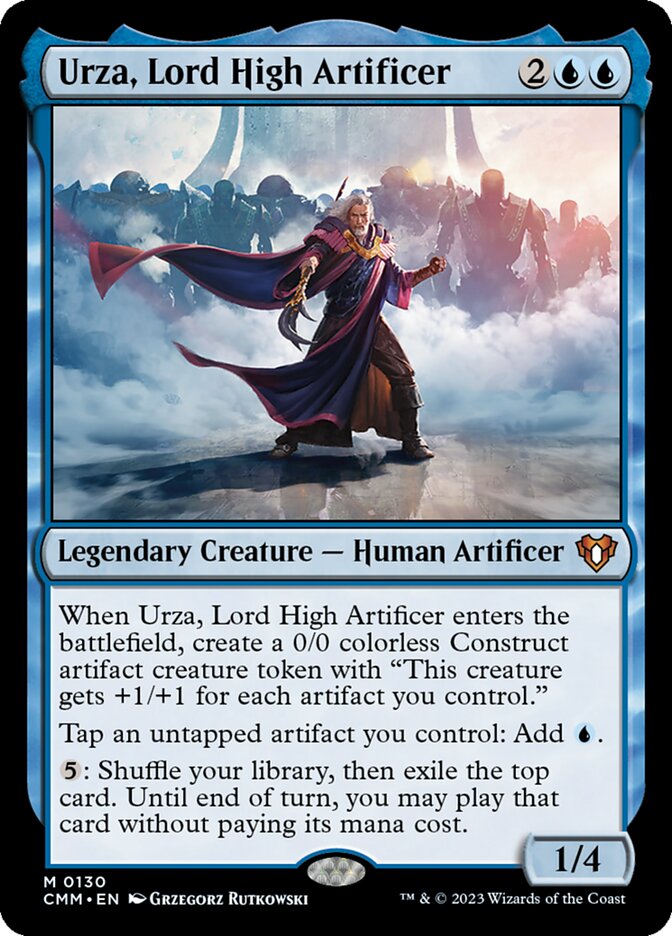
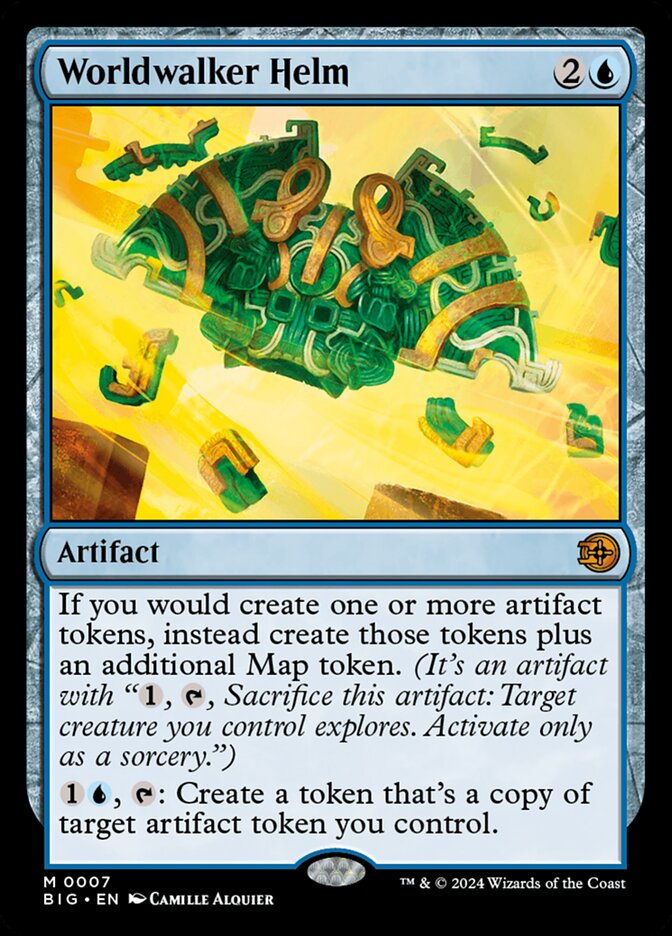
Urza, Lord High Artificer + Worldwalker Helm + Stolen Identity
- 1Cast Stolen Identity by paying

 , creating a token copy of Worldwalker Helm and a Map token.
- 2Activate Urza's first ability by tapping a Worldwaker Helm and a Map, adding .
- 3Activate a Worldwalker Helm by paying and tapping it, creating a token copy of the Worldwalker Helm token plus a Map token for each Worldwalker Helm you control.
- 4Activate Urza's first ability twice by tapping two Maps, adding .
- 5Repeat from step 3.


Brudiclad, Telchor Engineer + Combat Celebrant + Stolen Identity
- 1Cast Stolen Identity by paying , creating a token copy of Combat Celebrant.
- 2At the beginning of your combat phase, Brudiclad triggers, creating a 2/1 Phyrexian Myr creature token, then choosing to have all tokens you control become copies of the Combat Celebrant token.
- 3Declare one of the Combat Celebrant copy as an attacker, choosing to exert it as it attacks.
- 4The Combat Celebrant copy triggers, untapping all other creatures you control and causing you to get an additional combat phase after this one.
- 5Repeat from step 2.
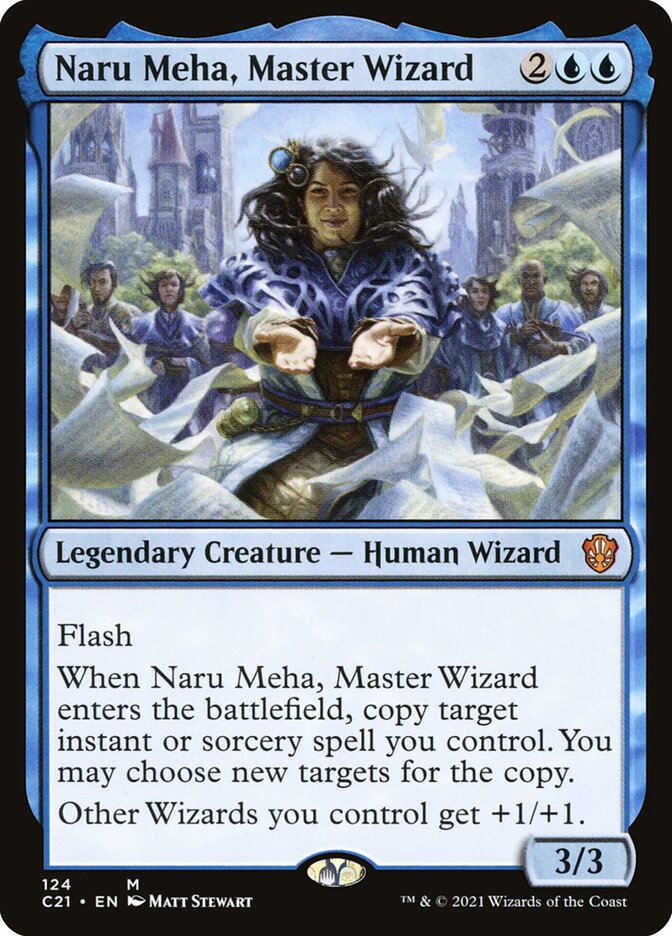
Naru Meha, Master Wizard + Stolen Identity
- 1Cast Stolen Identity by paying its mana cost, targeting a creature or artifact.
- 2Holding priority, cast Naru Meha either from your hand or from the command zone by paying
 plus commander tax, if applicable.
- 3When Naru Meha enters the battlefield, it triggers, copying Stolen Identity, targeting Naru Meha.
- 4Resolve the copy of Stolen Identity, creating a token copy of Naru Meha.
- 5Put either Naru Meha into your graveyard due to the legend rule.
- 6Repeat from step 3.
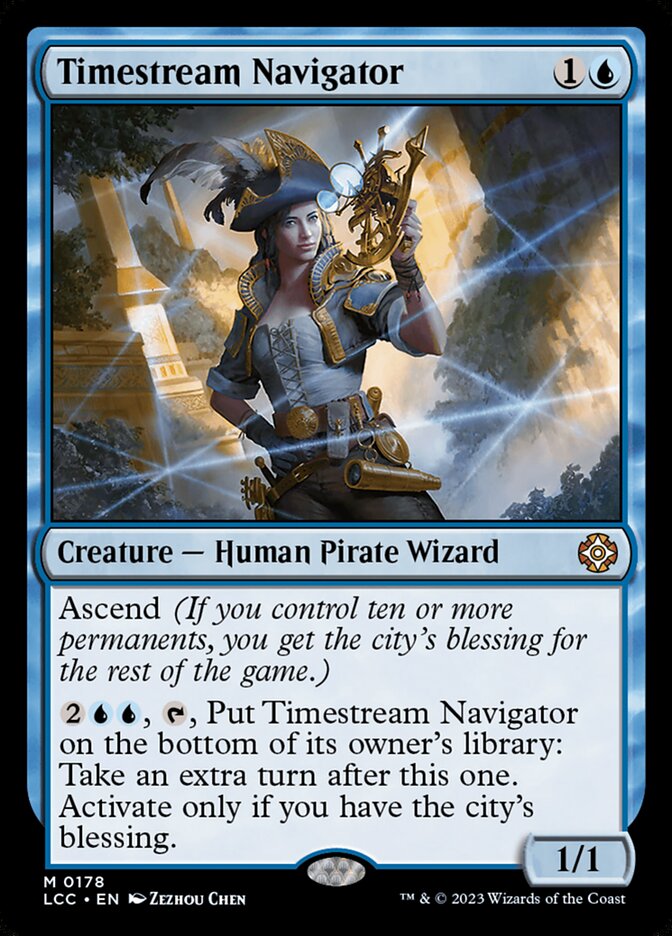
Brudiclad, Telchor Engineer + Timestream Navigator + Stolen Identity
- 1Cast Stolen Identity by paying , creating a token copy of Timestream Navigator.
- 2At the beginning of your combat phase, Brudiclad triggers, creating a 2/1 Phyrexian Myr creature token, then choosing to have all tokens you control become copies of the Timestream Navigator token.
- 3Activate Timestream Navigator by paying and tapping it and putting it onto the bottom of your library, causing you to take an extra turn after this one.
- 4Move to your next turn.
- 5Repeat from step 2.
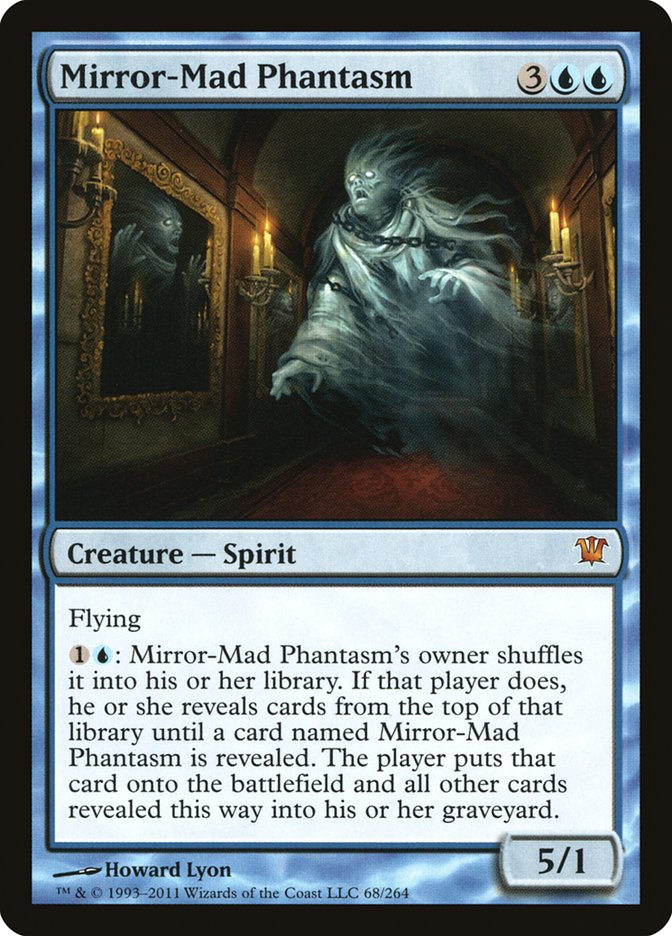
Mirror-Mad Phantasm + Stolen Identity
- 1Cast Stolen Identity by paying its mana cost, creating a token copy of Mirror-Mad Phantasm.
- 2Activate the Mirror-Mad Phantasm token by paying , shuffling the token into your library and milling your entire library due to it not having a card named Mirror-Mad Phantasm in it.

Combat Celebrant + Stolen Identity + Anger
- 1Declare Combat Celebrant and the creature with Stolen Identity encoded as attackers, choosing to exert Combat Celebrant as it attacks.
- 2Combat Celebrant triggers, untapping all other creatures you control and to get an additional combat phase after this one.
- 3Deal combat damage to an opponent using the creature that has Stolen Identity encoded.
- 4Stolen Identity triggers, casting a copy of itself without paying its mana cost.
- 5Resolve Stolen Identity, creating a token copy of Combat Celebrant.
- 6Repeat each combat phase using the Combat Celebrant token instead.
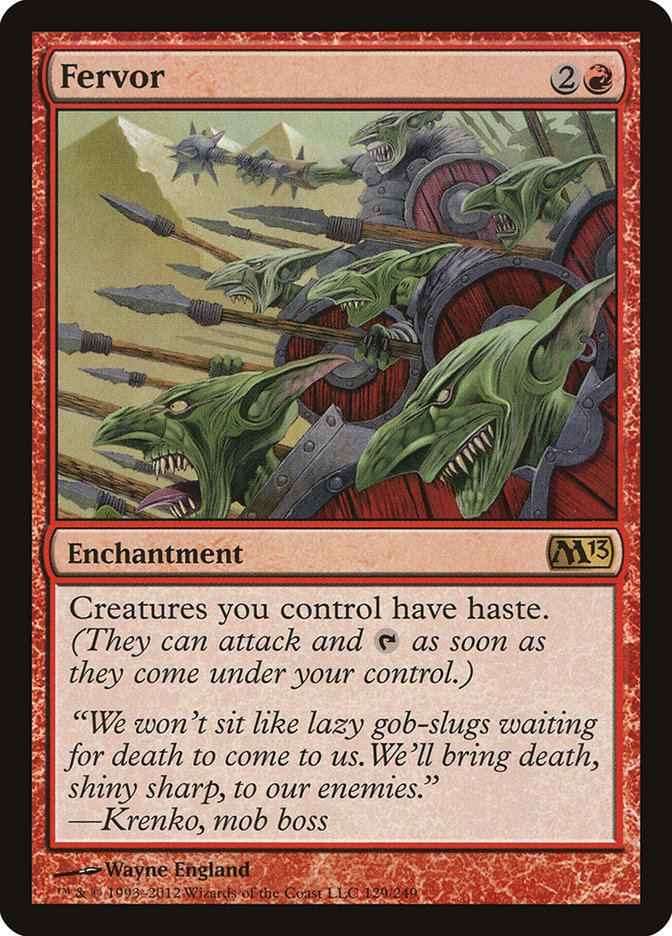
Combat Celebrant + Stolen Identity + Fervor
- 1Declare Combat Celebrant and the creature with Stolen Identity encoded as attackers, choosing to exert Combat Celebrant as it attacks.
- 2Combat Celebrant triggers, untapping all other creatures you control and to get an additional combat phase after this one.
- 3Deal combat damage to an opponent using the creature that has Stolen Identity encoded.
- 4Stolen Identity triggers, casting a copy of itself without paying its mana cost.
- 5Resolve Stolen Identity, creating a token copy of Combat Celebrant.
- 6Repeat each combat phase using the Combat Celebrant token instead.
Related cards and tokens
Legal formats
Commentaires
- Sois le premier à commenter cette carte.
Read next
Meta decks with Stolen Identity
No archived Top 8 deck with this card yet.